

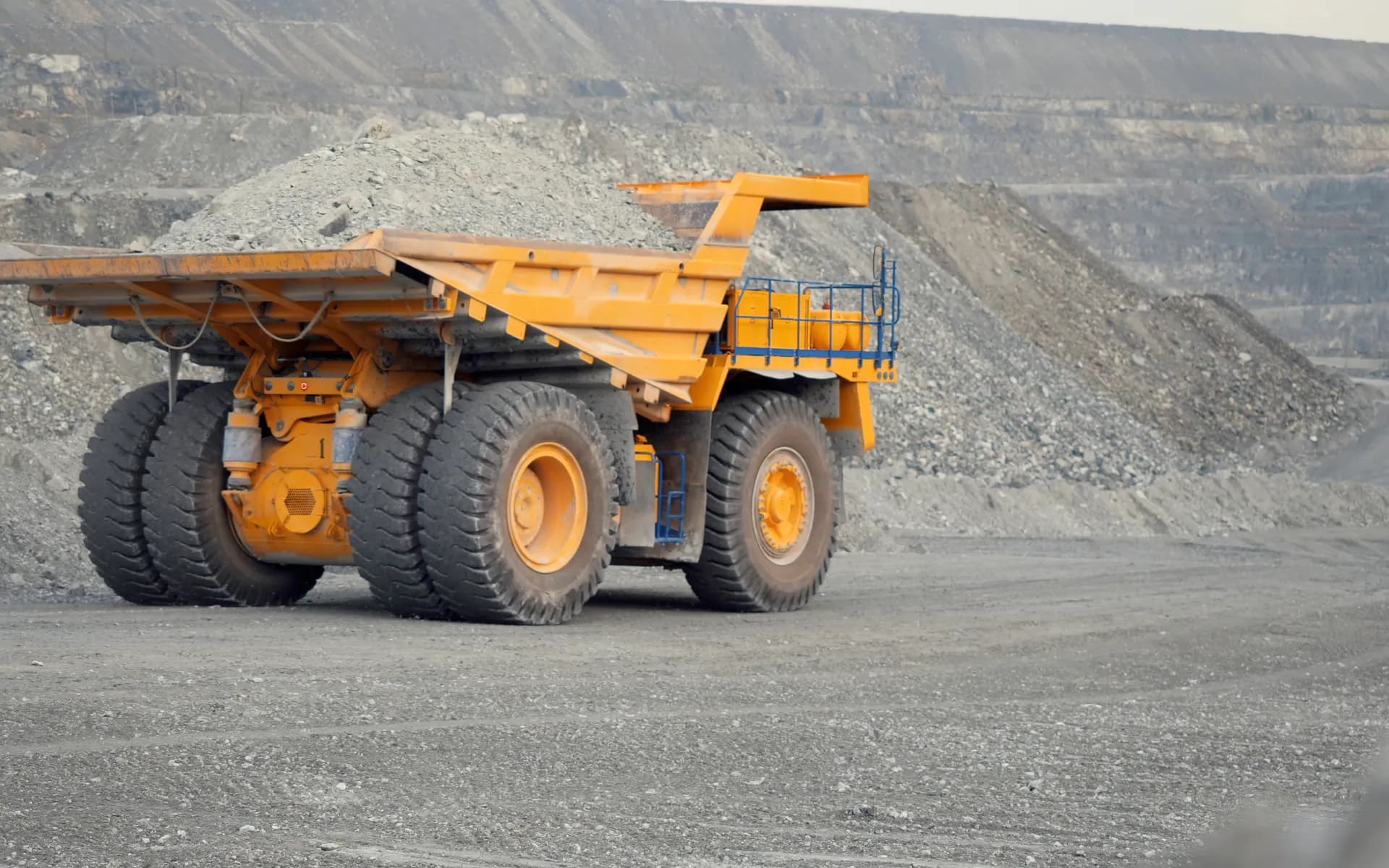
Mining and Haul
Fleet Telematics
Telematics for haul trucks and mine fleets built to hold up to the dust, shock, and heat of a pit. Haul-cycle productivity, collision avoidance, and proximity safety in one rugged platform, with payload, tyre, and compliance data the control room can act on.
 THE CHALLENGE
Mines Need Productivity and Safety in Harsh Conditions
A haul fleet is the most expensive thing moving in a mine, and every minute lost in a cycle costs real tonnes. At the same time the pit is one of the most dangerous places to work, where a loaded truck and a light vehicle meeting at a blind corner can be fatal. Consumer-grade trackers do not survive the vibration and dust, and a productivity tool that ignores safety is half a system. This telematics platform earns its keep on cycle time and keeps people alive, on hardware engineered for the environment.
Sits inside the Telematics and GPS Tracking stack and shares hardware and platform building blocks with Remote Equipment and Machine Monitoring.
WHAT'S INCLUDED
Hardware and Software for the Pit
Rugged Haul Tracker
Trackers built in sealed IP69K enclosures with conformal-coated boards, vibration-isolated mounting, and screw-locked connectors. They run on the truck supply with surge and reverse-polarity protection so they survive haul-road shock, dust, and heat.
Haul-Cycle Analytics
Every cycle is segmented into spotting, loading, loaded haul, dumping, and empty return, with timestamps and positions for each transition. Reports show cycle times, loader and dump queue time, tonnes per hour per truck, and where the cycle bleeds time.
Collision and Proximity Safety
Each vehicle ranges against others nearby and warns both operators when they close within a danger zone, scaled to speed and approach angle. Light vehicles and pedestrians raise higher-priority alerts. It works around blind corners and dust that defeat cameras.
Optional AI Detection
On trucks where it pays off, a forward camera with on-device object detection classifies and confirms hazards ahead and cuts nuisance alerts. The AI layer is optional and stacks on top of the ranging core rather than replacing it.
Payload and Tyre Monitoring
Payload is read from the truck system or from strut-pressure and inclination sensors to flag under and overloading per cycle, and tyre pressure and temperature monitoring is integrated so a developing haul-tyre failure is caught before it strands a truck.
Compliance and Dashboard
Speed against zone limits, seatbelt and pre-start status, fatigue and operator-ID events, and proximity incidents are logged and rolled into compliance reports aligned to your mine safety management plan, all in one fleet dashboard.
SAFETY SYSTEM
Proximity Detection That Does Not Depend on the Network
Mine safety cannot wait for a network round trip. Collision avoidance runs peer-to-peer between assets so a warning fires even where there is no coverage, and the productivity and compliance data syncs whenever the truck is back in range.
Peer-to-Peer Ranging
Vehicle units measure range and bearing to each other directly. There is no central server in the loop for a warning, so collision avoidance keeps working on a far bench or in a dead spot where cellular and mesh do not reach.
Graded Alerts
Warnings scale with closing speed, approach angle, and asset type. A loaded truck approaching a light vehicle raises the highest priority, while two trucks queueing at a loader at low speed do not flood the cab with noise.
Incident Recording
Every proximity event is timestamped, geotagged, and logged with the assets involved and their speeds. That gives safety investigations a clear record and lets you find the corners and zones that generate repeat near-misses.
ARCHITECTURE
From Truck to Control Room
In-Cab Unit
The tracker runs firmware on an STM32 with a u-blox GNSS receiver, an accelerometer for shock and event detection, a CAN interface for the truck bus, and the proximity radio. A rugged in-cab display drives operator warnings and the pre-start checklist.
Connectivity and Buffering
Units use the mine private LTE or Wi-Fi mesh where it exists and fall back to cellular at the boundary, publishing over MQTT. They buffer cycle and safety data locally and forward it on return to coverage so no record is lost.
Backend and Dashboard
The backend stores cycle, payload, tyre, and safety data in a time-series database and serves the control-room dashboard with live positions, productivity, and incident views. REST APIs push data into your dispatch, ERP, and safety systems.
STANDARDS AND ENVIRONMENT
Engineered for the Mine
Environmental Hardening
Sealed IP69K enclosures, conformal coating, wide-temperature parts, and vibration-isolated mounts let units run through the dust, washdown, and constant shock of a haul road without the failures consumer trackers suffer in weeks.
Vehicle Integration
The truck CAN bus is read over SAE J1939 for engine, payload, and fault data where the OEM exposes it, with discrete sensors added where it does not, so the unit fits both modern and older machines in a mixed fleet.
Safety Management Alignment
Speed-zone limits, fatigue and operator-ID events, seatbelt and pre-start checks, and proximity incidents map to the controls in your mine safety management plan, producing the geotagged records audits and investigations need.
FAQ
Common Questions
How rugged is the hardware for mine conditions?
The trackers use sealed enclosures rated to IP69K with wide-temperature components, conformal-coated boards, and vibration-isolated mounting designed for the shock and dust of a haul road. Connectors are screw-locked and the units run on the truck supply with surge and reverse-polarity protection, so they survive what an open-pit or quarry environment throws at them.
What haul-cycle data is captured?
Each segment of the cycle is tracked: spotting, loading, loaded haul, dumping, and empty return, with timestamps and positions for every transition. Reports cover cycle times, queue and wait time at the loader and dump, payload per cycle, and tonnes moved per hour per truck, so you can see exactly where the cycle is losing time.
How does collision avoidance and proximity safety work?
Each vehicle and light vehicle carries a unit that ranges against others nearby. When two assets close within a configured zone, both operators get an in-cab warning sized to speed and approach angle. Pedestrians and light vehicles in a pit raise a higher-priority alert. The system works around blind corners and dust where line-of-sight cameras struggle.
Is the AI collision detection mandatory?
No. Proximity ranging works on its own as the safety core. The AI layer is optional and adds a forward camera with object detection to classify and confirm hazards ahead, which reduces nuisance alerts. You can start with ranging-only and add the AI camera later on the trucks where it earns its place.
Can payload and tyres be monitored?
Yes. Payload is read from the truck system or from strut-pressure and inclination sensors to flag under and overloading per cycle. Tyre pressure and temperature monitoring is integrated, since a single haul tyre failure is expensive and dangerous. Both feed alerts and trend reports per truck.
Does it support mine-safety compliance reporting?
Speed against zone limits, seatbelt and pre-start checklist status, fatigue and operator-ID events, and proximity incidents are logged and rolled into compliance reports aligned to your mine safety management plan. Incidents are timestamped and geotagged so investigations have a clear record.
How does connectivity work across a large pit?
The mine private LTE or Wi-Fi mesh is used where it exists, falling back to cellular at the boundary. Units buffer cycle and safety data locally and forward it when back in coverage, so a truck working a far bench does not lose its record. Safety proximity ranging is peer-to-peer and does not depend on network coverage.
Ready to Run a Safer, Faster Haul Fleet?
Share your fleet, your pit layout, and your safety requirements to get a tailored approach covering the rugged hardware, the proximity safety system, and the haul-cycle analytics.
Schedule a Free Consultation