

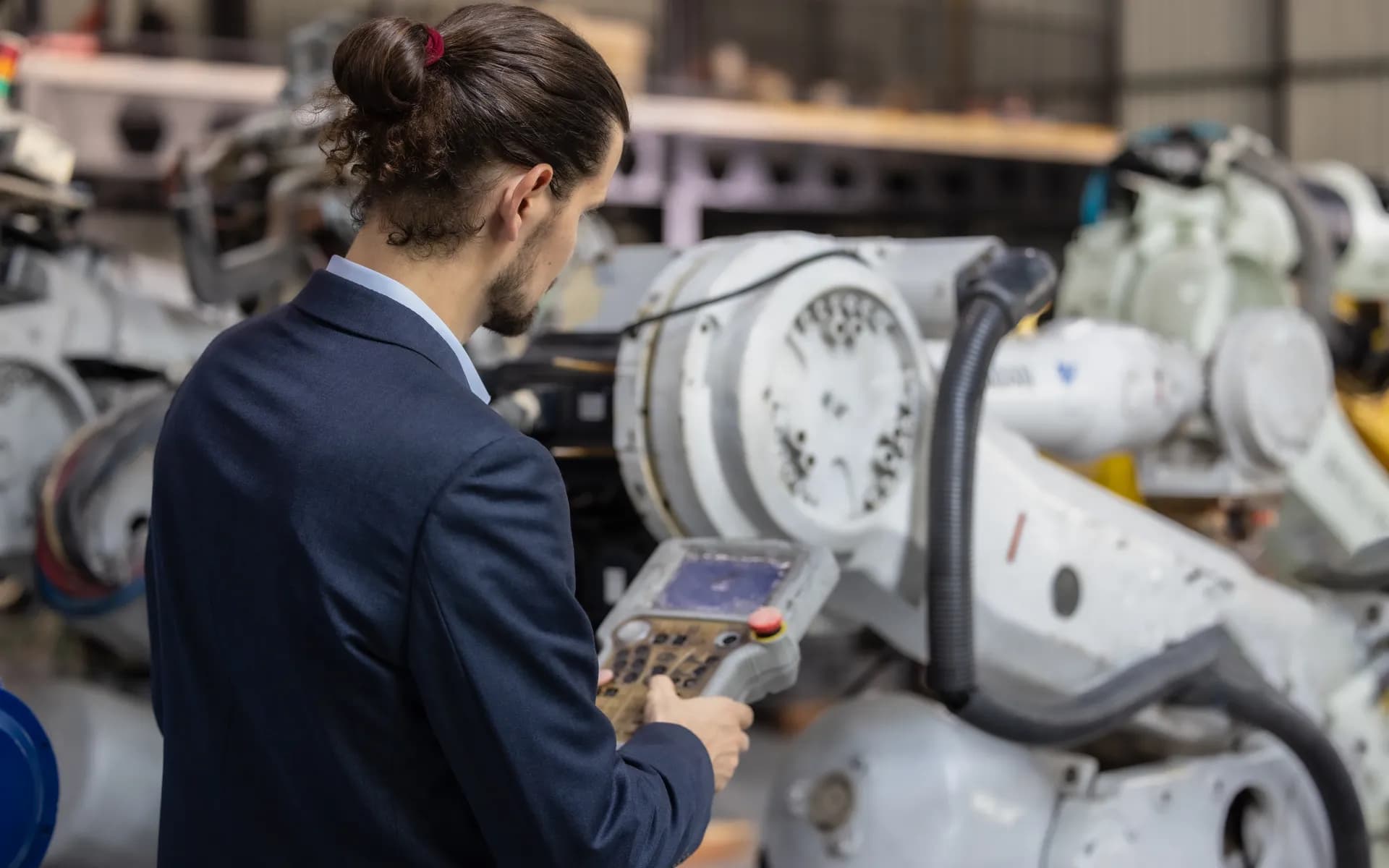
Remote Equipment and
Machine Monitoring
Off-highway and industrial telematics that reads location plus machine health off the J1939 or Modbus bus: engine hours, fuel burn, load, and SPN and FMI fault codes, exchanged to your fleet and dealer systems over ISO 15143-3.
 THE CHALLENGE
A GPS Dot Does Not Tell You the Machine Is Failing
Most equipment telematics stops at where the machine is. That leaves the expensive questions unanswered: is it working or idling, how hard is it loaded, how much fuel is it burning for the work done, and is a controller throwing fault codes that lead to a derate or a breakdown on site. The problem gets worse on a mixed brand fleet, where every OEM ships its own portal and its own data format, so the fleet team is stitching together six dashboards that never agree on hours or fuel. The solution reads machine state straight off the J1939 or Modbus controller, normalizes it to ISO 15143-3 so brands line up, and turns engine hours, load, and fault trends into maintenance and utilisation you can act on.
Built within the Telematics and GPS Tracking ecosystem, and frequently paired with Asset Tracking Solutions.
WHAT'S INCLUDED
Bus-Level Telematics for Off-Highway and Industrial Machines
CAN and Modbus Gateway with Sensors
A hardened gateway reads J1939 CAN on mobile equipment and Modbus RTU on stationary plant, with analogue and digital inputs for fuel level, temperature, and door or PTO sensing where the bus does not carry it. NavIC and GPS give position on remote sites with no other infrastructure.
Utilisation and Duty-Cycle Analytics
True engine hours are separated from idle, and duty cycle is computed from load and RPM. That exposes underused machines, over-idling that burns fuel for nothing, and the real working hours that drive both maintenance schedules and defensible rental invoices.
AEMP and ISO 15143-3 Data Exchange
The ISO 15143-3 fleet and fault endpoints let machines from different OEMs report hours, fuel, location, and faults in one standard model. Your fleet system pulls a single normalized feed instead of integrating each manufacturer portal by hand.
Dealer and Fleet System Integration
Output maps onto your dealer DMS, ERP, or CMMS over REST and webhooks. Engine hours trigger service intervals, fault codes open work orders with the SPN and FMI attached, and utilisation rolls up for billing, so telematics feeds your existing tools.
Predictive Maintenance from Usage Trends
Fuel burn per hour, idle ratio, load, exhaust and coolant temperature, and fault recurrence are trended per machine. A slow drift or a code that returns on a tightening interval flags a component before it strands the machine, so service stays planned and ahead of failure.
Fault-Code Telematics
J1939 DM1 active fault messages are decoded into readable SPN and FMI text, routed by severity, and trended for repeats. A derate-causing aftertreatment fault pages service at once, while a low-severity intermittent code is logged for the maintenance review.
HOW THE MACHINE IS READ
From the Controller Bus to a Clean Signal
The accuracy of everything downstream depends on where the data comes from. Data is pulled from the machine controller wherever possible, decoded against the right standard, with wired sensing used only as a fallback when the bus is unavailable. Each path produces the same clean parameters so a mixed fleet reads consistently.
J1939 on Mobile Equipment
On excavators, loaders, dozers, and agricultural machines, J1939 PGNs are decoded for engine hours (SPN 247), fuel rate (SPN 183), total fuel used (SPN 250), engine load, and DM1 diagnostics, the most accurate source on modern off-highway iron.
Modbus on Stationary Plant
On gensets, compressors, pumps, and fixed industrial machines, Modbus RTU holding registers are polled against a defined map for runtime, load, pressure, and alarm state, reading the controller the equipment already ships with.
Sensor Fallback
Where a bus is locked or absent, ignition, an alternator or vibration sense line, and analogue sensors for fuel level and temperature are hardwired, then run-hours and idle are derived from that so older machines still report consistent data.
STANDARDS AND EXCHANGE
One Normalized Feed Across Brands
ISO 15143-3 Fleet Model
The standard fleet endpoint reports location, cumulative hours, fuel, odometer, and active fault data in one schema. A Cat, Komatsu, Volvo, or JCB machine all land in the same fleet record instead of six different portals.
SPN and FMI Fault Mapping
An SPN and FMI lookup turns a J1939 DM1 message into readable text that names the component and the failure mode, with occurrence counts trended per machine for severity routing and recurrence detection.
APIs into Your Systems
The normalized feed is pushed into your DMS, ERP, rental, or CMMS over REST and webhooks, so engine hours drive service triggers and faults open work orders with the SPN and FMI already attached, no manual re-keying.
PREDICTIVE MAINTENANCE
Service Driven by Real Machine Use
A machine running heavy load eight hours a day reaches its service point long before one that mostly idles, yet calendar-based plans treat them the same. Maintenance is driven off measured engine hours and duty cycle, with trend detection layered on top so a developing fault shows up as a pattern before it becomes a breakdown.
Hours-Based Service Triggers
Service intervals fire on metered engine hours and duty cycle per machine, so a hard-worked unit is serviced when it has earned it and a light one is not pulled in early for no reason.
Trend Detection
Fuel rate per hour, idle ratio, load, and exhaust and coolant temperatures are trended. A slow drift in any of these is an early signal that something is wearing, surfaced well before a hard failure.
Fault Recurrence Analysis
A fault code that returns on a tightening interval is a stronger signal than a single occurrence. Recurrence is tracked per SPN so a component on its way out is flagged for planned replacement ahead of a roadside callout.
FAQ
Common Questions
How is machine health read off an off-highway controller?
The gateway taps the J1939 CAN bus and decodes the parameter groups that carry engine hours (SPN 247), fuel rate and total fuel used (SPN 183 and 250), engine load, coolant and oil values, and DM1 active diagnostic messages. For machines on a Modbus RTU controller, typically gensets, pumps, and stationary plant, holding registers are polled on a defined map instead. Where a controller is locked or absent, a hardwired ignition and analogue sense path provides the fallback. The result is true machine state rather than a position dot.
What does AEMP and ISO 15143-3 give a mixed fleet?
ISO 15143-3, the standard that grew out of the AEMP telematics API, defines a common data model so a Caterpillar, Komatsu, Volvo, and JCB machine all report location, hours, fuel, odometer, and fault data in the same structure. The standard fleet and fault endpoints are implemented so your fleet system pulls one normalized feed instead of integrating six proprietary OEM portals. That is what makes a mixed brand fleet manageable from a single screen.
How are J1939 fault codes turned into something useful?
A raw DM1 message is an SPN and FMI pair, a suspect parameter number that names the failing component and a failure mode indicator that says how it failed, plus an occurrence count. An SPN and FMI lookup turns a code into readable text, routes it by severity, and trends recurring codes per machine. A derate-causing aftertreatment fault pages the service desk immediately, while a low-severity intermittent code is logged for the maintenance review rather than waking anyone at night.
Can the data flow into your dealer or maintenance system?
Yes. A REST API and webhooks expose the output, mapped onto whatever schema your downstream system expects, whether that is a dealer DMS, an ERP work-order module, or a CMMS. Engine hours drive service-interval triggers, fault codes open work orders with the SPN and FMI already attached, and utilisation rolls up for rental billing. The telematics layer feeds your existing tools instead of becoming another silo.
How does predictive maintenance work from usage data?
Maintenance triggers run off measured engine hours and duty cycle rather than a wall calendar, so a machine on heavy load reaches service sooner than one that idles. On top of that, fuel burn per hour, idle ratio, exhaust and coolant temperatures, and fault recurrence are trended. A slow drift in fuel rate or a fault code that returns on a tightening interval flags a component before it strands the machine on site, which is where the cost actually lands.
Ready to Read Your Machines, Beyond Finding Them?
Share your fleet, the OEMs and controllers in the mix, and the systems you want fed, to get a walkthrough of the gateway, the ISO 15143-3 exchange, and the maintenance and utilisation analytics.
Schedule a Free Consultation