

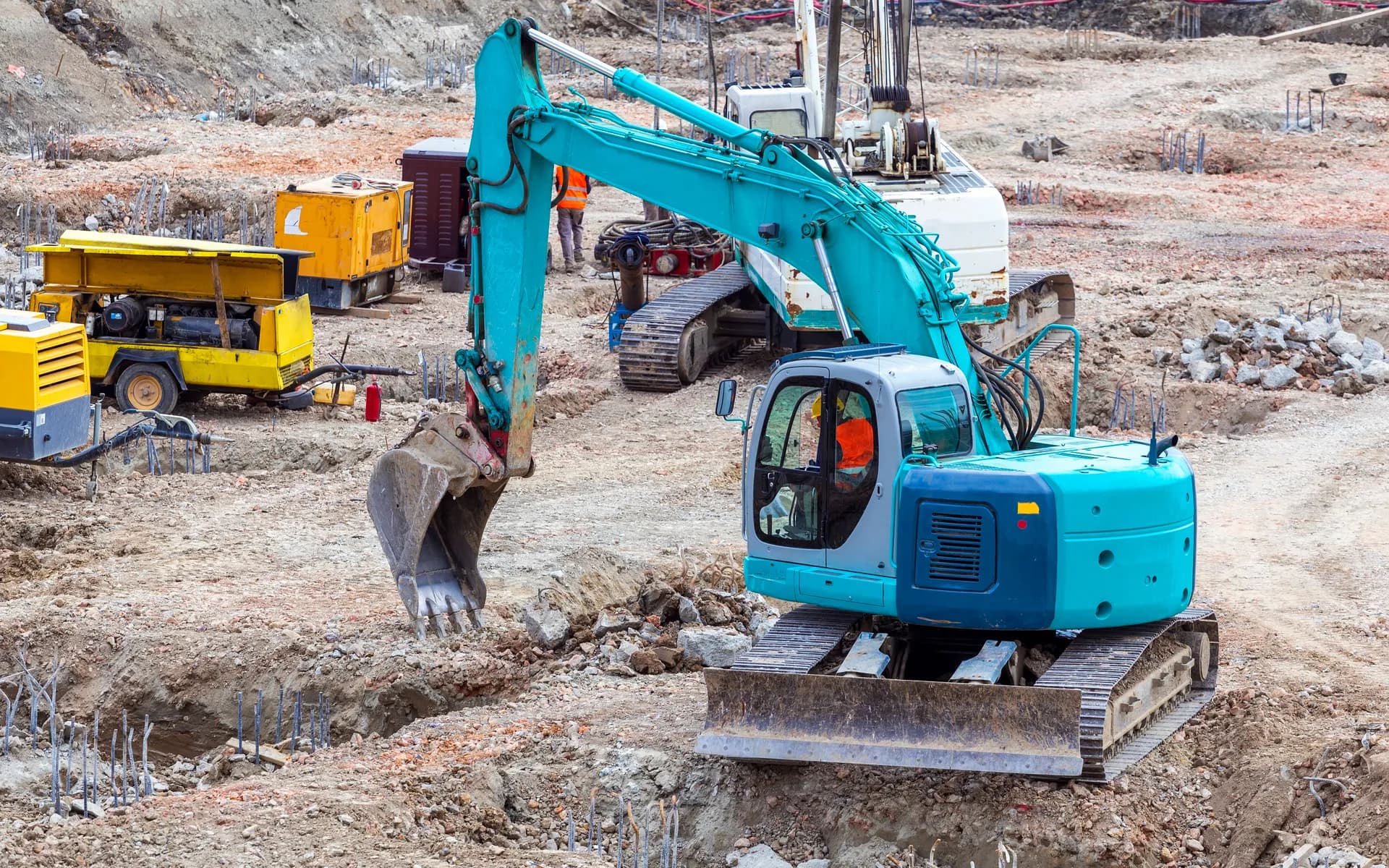
Construction and Heavy
Equipment Tracking
Rugged tracking for excavators, loaders, and heavy plant. CAN and J1939 run-hours, fuel, geofence theft alerts, and utilisation analytics you can bill rental against.
 THE CHALLENGE
Expensive Iron That Idles, Walks Off, or Cannot Be Billed
A single excavator or loader is a large capital cost, and most of the day no one knows whether it is working, idling, or sitting cold. Machines vanish from open sites overnight. Rental operators argue over hours used because the numbers are soft. And without real utilisation data, the fleet stays unbalanced, some assets overworked while others gather dust. Rugged trackers read true run-hours and idle off the machine bus, guard each site with geofences, and turn the data into utilisation you can act on and bill against.
Built within the Telematics and GPS Tracking ecosystem, and frequently paired with Asset Tracking Solutions.
WHAT'S INCLUDED
Rugged Hardware and Utilisation Software
Rugged CAN and J1939 Tracker
A hardened tracker reads the machine CAN or J1939 bus for engine hours, RPM, idle, and fault codes, with a hardwire fallback for machines without a usable bus. NavIC and GPS give position on remote sites where no other infrastructure exists.
Run-Hours and Idle Metering
True working hours are separated from idle on every machine. That single split exposes underused assets, over-idling that burns fuel for nothing, and the real hours that drive maintenance schedules and rental invoices.
Fuel Monitoring
Fuel level and consumption are read from the bus where available, or from a sensor where not, so you can spot abnormal burn, suspected fuel theft, and the cost of idle in litres rather than guesswork.
Geofence Theft Alerts
A geofence is drawn around each site or yard. Any machine that crosses out of its allowed area, especially after hours, raises an immediate theft alert. Backup power and store-and-forward keep the tracker reporting even if machine power is cut.
Utilisation Analytics for Billing
Metered hours become utilisation reports per machine and per customer that you can bill rental against, with a defensible record of when each machine actually worked. The same view rebalances the fleet toward the assets that earn.
Maintenance and Fault Alerts
Service intervals run off real engine hours, and fault codes pulled from the bus surface as alerts before a small problem becomes a breakdown on site. Maintenance gets scheduled around actual use, replacing the calendar guess with real engine hours.
HARDWARE FOR THE SITE
Built to Survive Dust, Vibration, and Rough Power
A construction site is a hostile place for electronics. The tracker has to take constant vibration, dust, water, and dirty power on machines that run anywhere from 12 to 24 volts. Hardware is designed around those realities so it keeps reporting through a working day on a working site.
9 to 36V Tolerant Power
A wide input range covers both 12 and 24 volt machines and absorbs the spikes and dips of heavy starting loads, so one device fits a mixed fleet without rework.
Vibration-Rated Enclosure
A sealed, vibration-rated enclosure and locking connectors keep the board alive through the constant shock of plant work and resist dust and water ingress.
Backup Power and Buffer
An internal backup cell and a store-and-forward buffer keep the device reporting if machine power is cut or the network drops, which is exactly when theft happens.
STANDARDS AND DATA
Mixed-Fleet Telematics Done Right
CAN and J1939
The machine bus is decoded to pull engine hours, RPM, fuel, and fault codes from the controller, the most accurate source of working data on modern equipment.
AEMP and ISO 15143
Built with the AEMP and ISO 15143 mixed-fleet telematics context in mind, so machines from different makers can be combined into one standard utilisation and fleet view.
APIs and Integration
REST APIs and webhooks expose equipment data so it flows into your ERP, rental management, or maintenance systems instead of sitting in a separate dashboard.
FAQ
Common Questions
How do you read run-hours and idle on heavy equipment?
Where the machine exposes a CAN or J1939 bus, engine hours, idle time, RPM, and fault codes are read directly from the controller, which is the most accurate source. On older or simpler machines without a usable bus, the tracker hardwires to ignition and an alternator or vibration sense line and derives run-hours and idle from that. Either way you get true working hours separated from idle, which is the number that drives billing and maintenance.
Why does idle versus run-hours matter so much?
Idle is expensive and invisible. A machine that sits idling burns fuel, racks up engine hours toward its next service, and earns nothing. By splitting genuine working hours from idle across every machine and site, you see which assets are underused, which are over-idling, and where you are paying for fuel that does no work. That is usually the fastest payback on the whole system.
How does geofence theft protection work on a site?
A geofence is drawn around each site or yard. If a tracked machine crosses out of its allowed area, especially outside working hours, a theft or unauthorised-movement alert is raised immediately. Because the tracker has its own backup power and store-and-forward buffer, it keeps reporting even if someone cuts machine power, which gives you a live trail to support recovery.
Can the data feed rental billing?
Yes. For a rental fleet, billing usually runs on hours used, and disputes come from soft numbers. Metered run-hours become utilisation reports per machine and per customer that you can bill against, with a defensible record of when the machine actually worked. The same data shows which assets earn and which sit, so you can rebalance the fleet.
Will the hardware survive a construction site?
It is built for it. A vibration-rated enclosure, a power input that tolerates roughly 9 to 36 volts so it runs on both 12 and 24 volt machines, and protection against the dust, water, and electrical noise of a working site all come standard. The board and connectors are chosen to survive the environment rather than just pass a bench test.
Do you support standard equipment telematics data formats?
Yes. Built with the AEMP and ISO 15143 mixed-fleet telematics data context in mind, equipment data can be exposed in a standard structure rather than a closed format. That makes it far easier to combine machines from different makers into one utilisation and fleet view.
Ready to See Where Your Iron Really Is?
Share your machines, your sites, and whether you run a rental fleet to get a tailored approach across the rugged hardware, the run-hours metering, and the billing analytics.
Schedule a Free Consultation