
Product Engineering for
Connected Hardware
Design and build products that are ready for volume production from the first build.

Product Engineering
Engineering that turns requirements into a production-ready design.
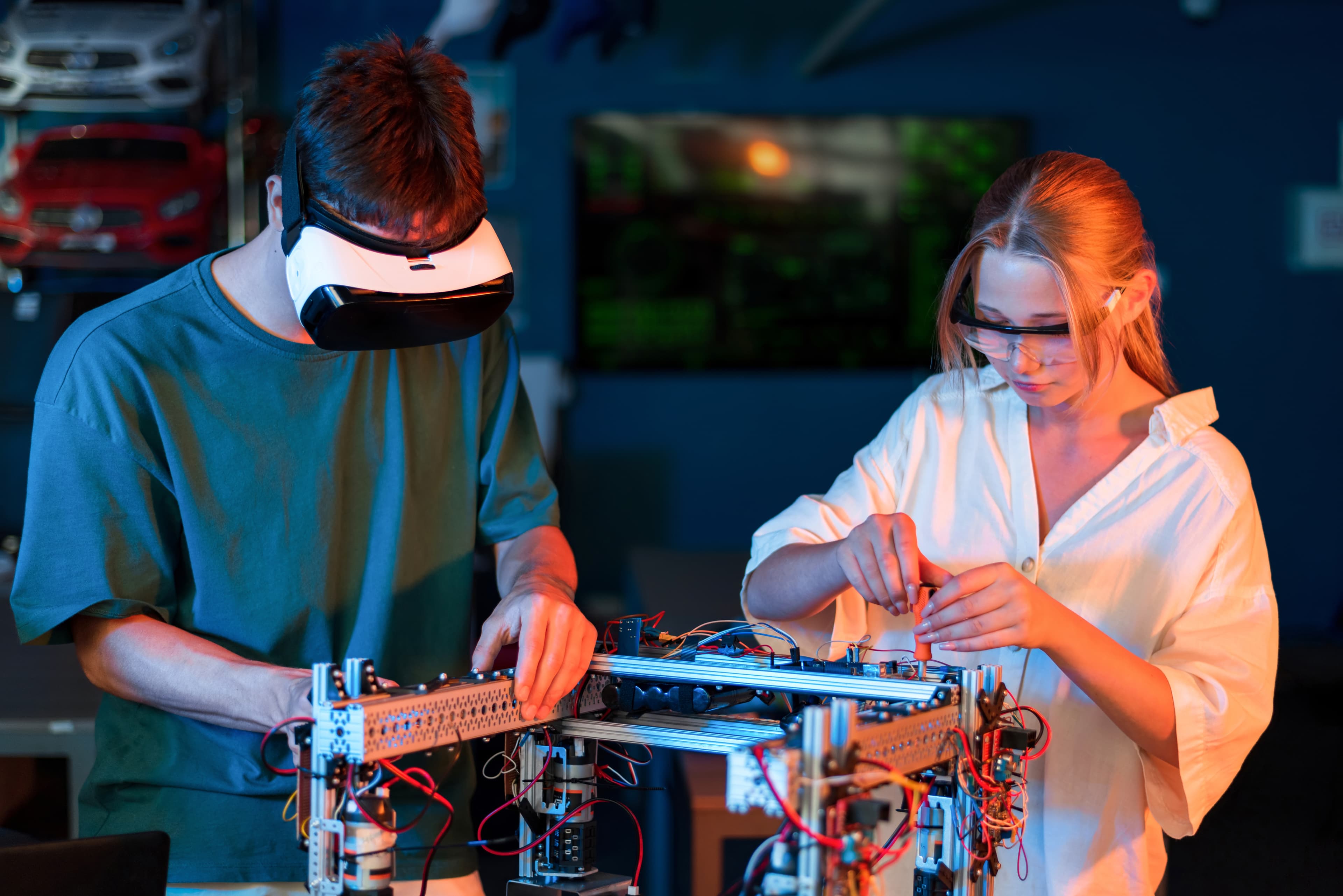
This stage takes a product from requirements and architecture to a validated, production-ready design, with RNDSquare engineering hardware, firmware, cloud, and mechanical together. The result is a design that is ready for production from the first build.
The Product Lifecycle
Three connected stages, engineered, manufactured, and operated by the same team.
Engineering is the first stage, where requirements become a validated, production-ready design. Move between stages below.
Scope
Where this stage begins and ends
Clear boundaries so there is no ambiguity about who owns what between definition, build, and validation.
Requirements and architecture
Product requirements, system context, and constraints. Engineering starts where an idea has to become a defined, buildable system across hardware, firmware, and cloud.
The full engineering stack
Hardware and electronics, embedded firmware, cloud and application layers, mechanical coordination, and validation, engineered together instead of in silos.
A validated, production-ready design
A design that has cleared validation, with a stable BOM, released schematics and mechanicals, firmware ready to load, and test reports ready to hand to manufacturing.
Problems We Solve
What brings teams to this stage
An idea is not a product until it is engineered to be built, integrated, and proven. These are the gaps product engineering closes.
A prototype that cannot be built at scale
A bench build that works once but was never engineered for manufacturability, assembly, or test, so it falls apart the moment it heads toward production.
Hardware, firmware, and cloud built in silos
Separate teams and separate vendors for electronics, firmware, and software, leaving integration gaps that surface late and stall the whole project.
No evidence the design actually holds up
No functional, field, or reliability testing and no test reports, so nobody can prove the product will survive real conditions before it ships.
Not enough specialist engineering in-house
Your team is capable but stretched, missing the hardware, firmware, or cloud specialists a connected product needs, so schedules slip while you hire or wait on outside vendors.
Core Capabilities
Seven capabilities we support end to end
Each capability is a discipline we run directly. Explore any of them in depth.
How We Deliver
A structured path from requirements to a proven design
A single accountable flow, from requirements and architecture through build and validation to a design frozen and ready for manufacturing.
Engineering Delivery Flow
What You Receive
The design files, source, and reports you keep at the end of the engagement.
Real engineering artifacts you own, enough to build, certify, and keep improving the product with or without us in the room.
System Architecture Package
High-level and low-level design (HLD/LLD), interface definitions, technology selection rationale, and the product blueprint that every discipline builds against.
Hardware Design Package
Reviewed schematics, PCB layout with Gerbers, a structured BOM, and mechanical and enclosure files, ready for fabrication and assembly.
Firmware Source & Bootloader
Firmware source with version control, bootloader and FOTA support, connectivity stacks, and build documentation to reproduce every binary.
Cloud & Application Layer
Device management APIs, data pipelines, and dashboards or applications, integrated with the firmware so the connected product works end to end.
Validation & Reliability Reports
Functional, field, and reliability test reports with defined pass and fail criteria, giving documented evidence the design holds up.
Production-Ready Handoff
A compliance preparation package for CE, FCC, and UL, a DFM report, and a frozen design with a stable BOM, ready to enter manufacturing.
Related Solutions
Where this shows up in real products
Product engineering is how these product lines get designed and proven.
OUR PROFILE
We help teams bridge
engineering, manufacturing
and operations.
While we don't showcase case studies publicly, our work lives on in products that perform reliably, every day.
*References available on request
Engineer it to ship.
A technical conversation about turning your requirements into a validated, production-ready design. Start with a scoped call.