
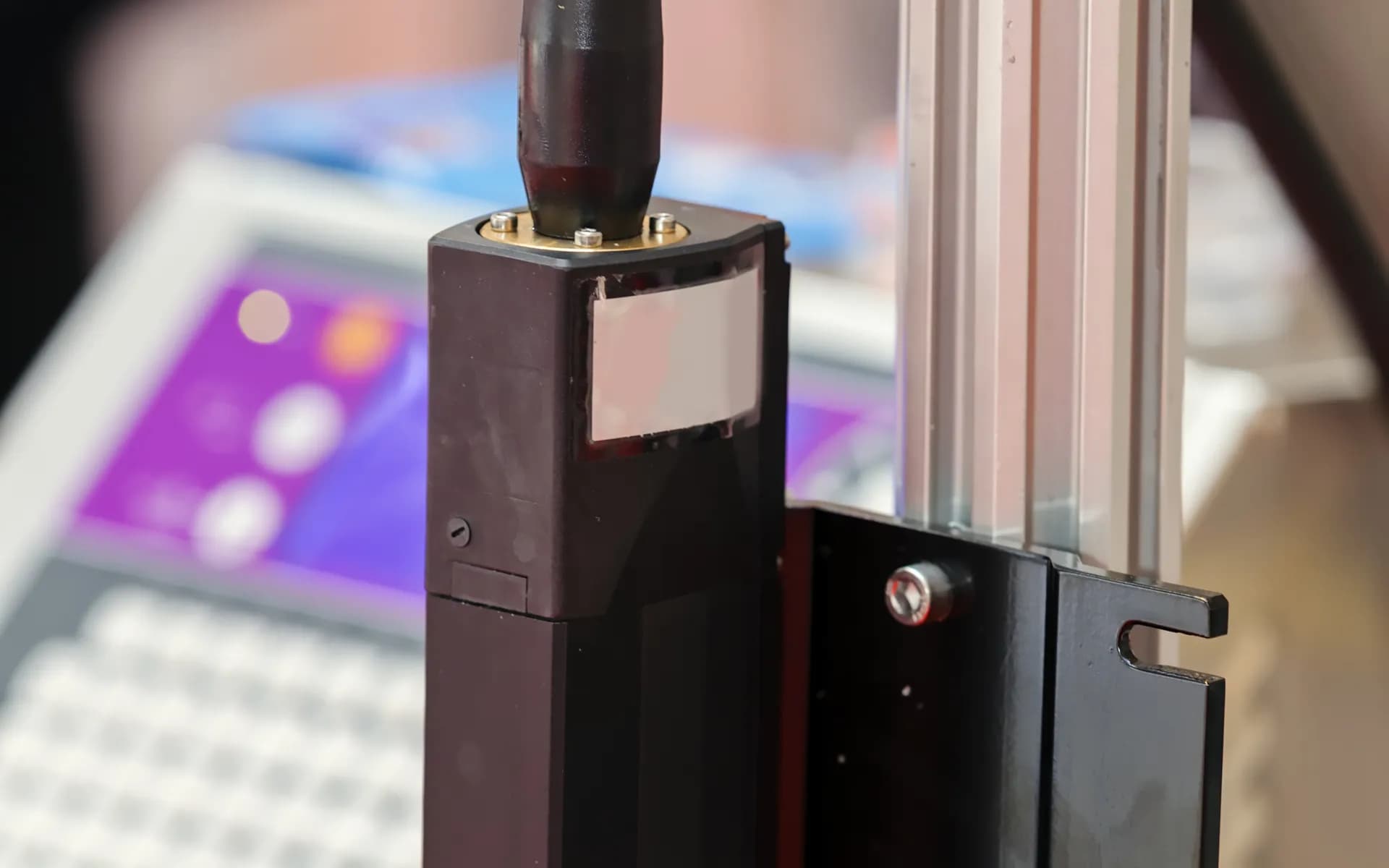
Sense-i wireless
sensor nodes
Wireless nodes for temperature, humidity, current, power and energy, occupancy, water leakage and equipment runtime. Screw them to a wall, configure them from a phone over BLE, and they report over Wi-Fi, 4G or BLE.

WHY WE BUILT IT
The data was there. Getting it into the cloud was the hard part
Customers wanted industrial sensor data they could use in cloud applications and AI tools. In practice, each project hit the same obstacles: pulling cable through occupied buildings and insulated rooms, configuring devices with a laptop, and losing readings whenever the Wi-Fi dropped.
Sense-i is our answer. One family of nodes covers the common measurements, battery versions avoid wiring entirely, setup happens on a phone, and each node keeps tens of thousands of logs in flash until the network comes back. It suits retrofits and any building where cabling is the expensive part of the job.
HOW IT WORKS
From wall to cloud in one visit
One family, many measurements
Variants for current, power, energy, temperature and humidity, plus occupancy, water leakage, equipment runtime and battery monitoring. Other environmental sensors are fitted to suit the application.
The radio that suits the building
Wi-Fi 2.4 GHz, 4G LTE and BLE as standard. LoRa or Zigbee are added on request where range or the site network calls for them, with a gateway sized for the site.
Set up from a phone
Nodes mount on the wall with screws and are configured from a mobile app over BLE. Integrators set thresholds, reporting intervals and outputs while standing next to the sensor.
Decisions on the node
Configurable alarms, threshold actions, relay control and control-signal outputs run on the device. A leak node can close a valve or a temperature node can switch a fan without waiting for the cloud.
AT A GLANCE
Sense-i specification
- Measurements
- Current, power, energy, temperature, humidity, occupancy, water leakage, equipment runtime, battery level
- Connectivity
- Wi-Fi 2.4 GHz, 4G LTE and BLE. LoRa or Zigbee on request
- Setup
- Screw-type wall mount, configured from a mobile app over BLE
- Offline storage
- Roughly 10,000 to 40,000 logs in flash, synced when the connection returns
- Local control
- Alarms, threshold actions, relay control and control-signal outputs
- Power
- Adapter, or battery from about 2,000 mAh, other capacities on request
- Data path
- MQTT over TLS 1.2 to RIOD Live or your own server. Coverage is surveyed on site before rollout
APPLICATIONS
Where Sense-i is applied
- Industrial wireless temperature monitoring
- Wireless warehouse humidity monitoring
- Wireless motor current monitoring
- Wireless pump runtime monitoring
- Wireless compressor monitoring
- Water leakage monitoring for server rooms
- Water leakage monitoring for commercial buildings
- Electrical panel wireless temperature monitoring
- Wireless occupancy monitoring
- Water pump house environmental monitoring
- Greenhouse wireless environmental sensing
- Warehouse door and presence monitoring
- Equipment cabinet leak detection
- Building retrofit sensor network
GUIDES
Application guides
- Industrial wireless temperature monitoring
- Warehouse humidity monitoring
- Motor current monitoring
- Pump runtime monitoring
- Compressor monitoring
- Server room water leak monitoring
- Commercial building leak monitoring
- Electrical panel temperature monitoring
- Occupancy monitoring
- Pump house environmental monitoring
- Greenhouse environmental sensing
- Warehouse door and presence monitoring
- Equipment cabinet leak detection
- Building retrofit sensor network
FAQ
Questions buyers ask us
What is Sense-i?
Sense-i is RNDSquare's family of wireless sensor nodes for industrial and building monitoring. Variants measure temperature, humidity, current, power, energy, occupancy, water leakage and equipment runtime, and report over Wi-Fi, 4G or BLE to RIOD Live or your own server.
Do Sense-i wireless sensors need a gateway?
Wi-Fi and 4G nodes report straight to the cloud. When a site uses LoRa or Zigbee, which we add on request, the nodes report through a gateway that we size for the building during the coverage survey.
What happens to sensor readings when the Wi-Fi goes down?
Each Sense-i node keeps logging to flash memory, holding roughly 10,000 to 40,000 records depending on the variant, and syncs the backlog to the cloud once the connection returns. Alarms and relay actions keep running on the node in the meantime.
How long does it take to install a wireless sensor node?
A node screws to the wall, and the integrator configures it from a mobile app over BLE on the spot. Battery versions need no cabling at all, which is why Sense-i is used in retrofits and buildings where running cable is disruptive.
Monitoring a building where cabling is hard?
Tell us what you need to sense, how many points and what connectivity the site has. We will propose the Sense-i variants and a rollout plan.