
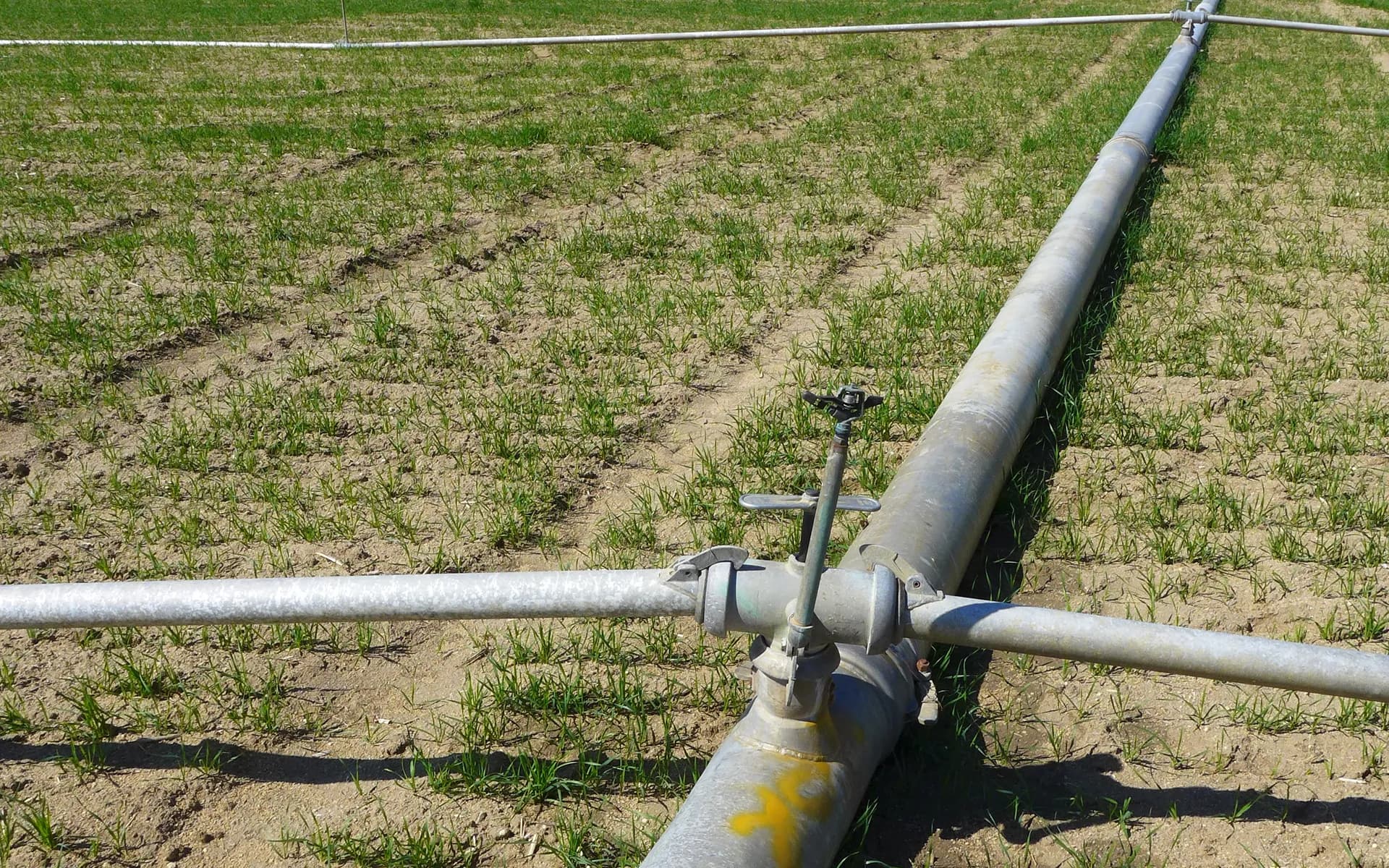
Water pump house
environmental monitoring
Temperature, humidity and floor water in pump houses and pump rooms, reported from Sense-i nodes over 4G or long-range radio. The operator sees the room conditions that damage pumps and panels from wherever they sit.

THE PROBLEM
Pump houses are remote, damp and rarely visited
Water supply pump houses, irrigation stations, building basement pump rooms and treatment plant buildings share a pattern. They are visited once a day or once a week, they sit low where water collects, and they house motors and control panels that hate heat and moisture.
A burst gland or a failed non-return valve can flood the floor and reach the motor terminals. A failed ventilation fan in summer can push the room temperature high enough to trip drives and starters. High humidity corrodes panel contacts over months. Each is easy to fix if someone knows in time.
Many pump houses have no Wi-Fi and thick concrete walls, so the connectivity plan matters as much as the sensors.
HOW WE SET IT UP
Three signals, one room
Leak detection at the low point
Water detection nodes go at the floor sump, near pump glands and under pipe joints. Detection triggers an alert and, if wanted, a relay output to start a drainage pump.
Temperature and humidity at the panel
A temperature and humidity node near the control panel and drives shows ventilation failures and condensation risk before they cause trips.
Connectivity tested on site
We test signal inside the pump house before choosing the radio. 4G nodes report directly; for clusters of pump houses or deep basements, LoRa or Zigbee with a gateway at a better location.
Pump run status on the same screen
Add current sensing on the pump motors and the operator sees room conditions and pump runtime together in RIOD Live.
AT A GLANCE
Pump house monitoring
- Measured
- Room temperature, relative humidity, water leak state
- Hardware
- Sense-i temperature, humidity and leak nodes, with gateway where needed
- Connectivity
- 4G LTE direct, or LoRa or Zigbee with a site gateway; Wi-Fi where available
- Power
- 12 V adapter from the panel supply, or battery from about 2,000 mAh
- Data during outages
- About 10,000 to 40,000 logs stored in flash and synced on reconnection
- Engineering note
- Wireless coverage is tested inside each pump house before the radio is chosen
FAQ
Questions buyers ask us
How do you monitor a remote pump house without Wi-Fi?
With 4G LTE nodes that report directly to the cloud, or with LoRa or Zigbee nodes linked to a gateway placed where a cellular signal is good. We test signal inside the building before choosing.
Can a flood sensor start a drainage pump automatically?
Yes. The node switches a relay output on water detection, locally, which can start a sump pump or sound a local alarm, while the alert goes to the operator.
Why monitor humidity in a pump room?
Persistent high humidity causes condensation on control panels and motor terminals, which leads to corrosion, tracking and nuisance trips. A humidity trend shows whether ventilation or a heater is needed.
What happens if the cellular signal drops?
Nodes keep logging to flash and send the backlog when the connection returns, so the history stays complete.
Running pump houses across a wide area?
Tell us how many sites, how they are powered and what connectivity they have. We will propose nodes and a radio plan for each.