
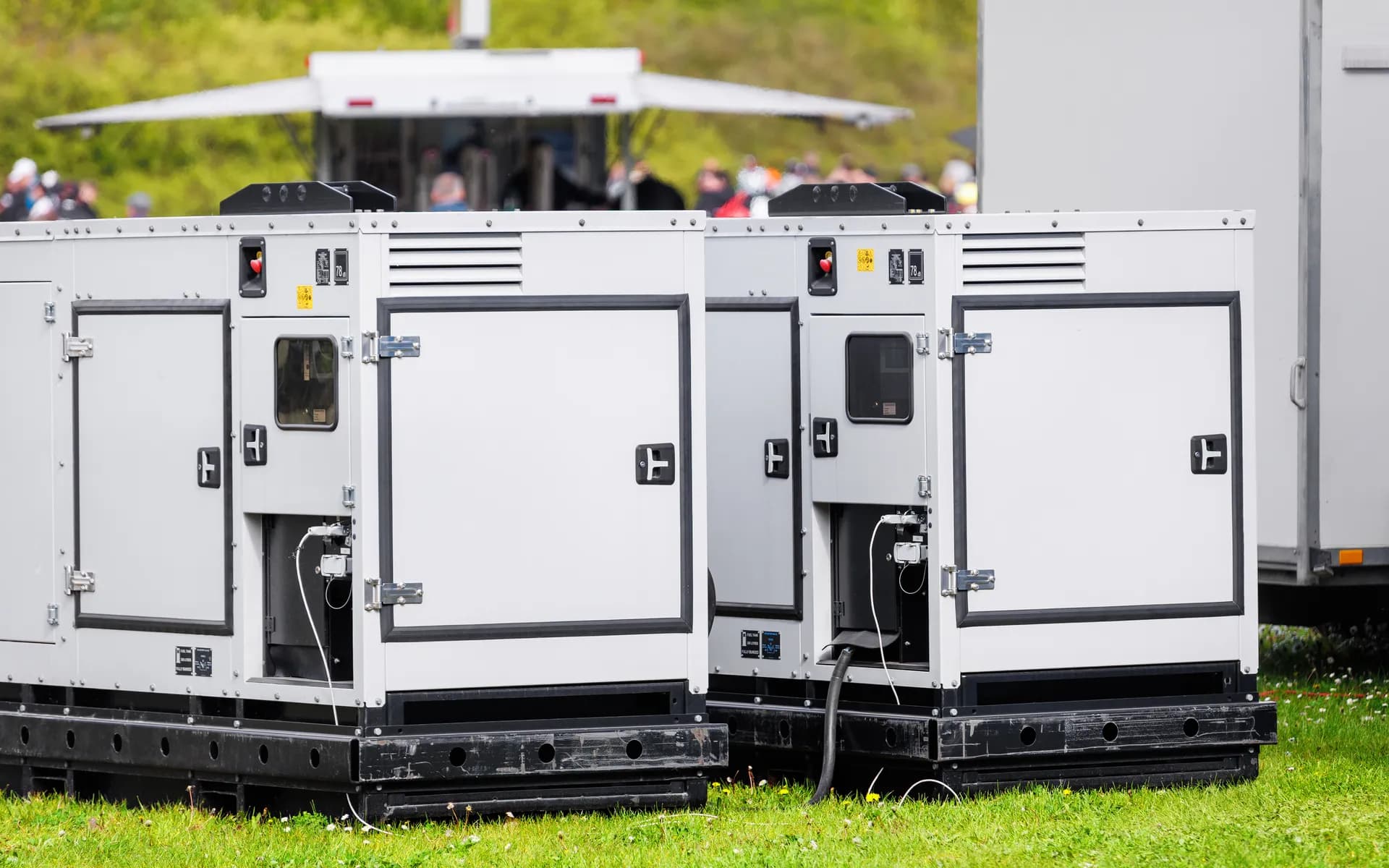
Generator controller
gateway
Electrical values, engine status, run hours and alarms from diesel generator controllers, read over Modbus and uploaded to your monitoring software, so you know the backup actually worked.

THE PROBLEM
Backup power you only check when you need it
A generator spends most of its life waiting. Whether it will start during a mains failure, how long it ran, how much load it carried and whether it shut down on low oil pressure are questions usually answered after the event, if at all.
The generator controller records all of it: voltage, current and kW on each phase, frequency, engine speed, coolant temperature, oil pressure, battery voltage, run hours and the alarm that stopped it. Most controllers make those values available over Modbus.
For hospitals, cold stores, telecom sites and hotels, that record matters. It shows whether the backup held the load, and it gives the service contractor the facts of each run.
HOW WE SET IT UP
From controller registers to a run record
Read the controller
The gateway connects to the controller's RS485 or Ethernet port and reads electrical values, engine parameters, operating mode and alarms from its register map.
Every run, logged
Each start, stop, load period and shutdown is recorded with its time, so you can see whether the generator took over during each mains failure and for how long.
Alerts for failures to start
Fail to start, low fuel, high temperature and battery alarms go to the duty engineer by call, SMS or WhatsApp through RIOD Live rules.
Commands handled separately
The gateway is set up to read. Remote start, stop or mode changes are a separate, authorised function, designed with your engineers and the controller's own protections.
FROM THE FIELD
Where generator data mattered
Cold storage with DG backup
Chamber temperatures monitored alongside the diesel generator, so the operator could see whether the backup power actually held the rooms during a mains failure.
AT A GLANCE
Generator gateway in brief
- What is read
- Voltage, current, kW, frequency, engine speed, temperatures, oil pressure, battery voltage, run hours, mode and alarms where exposed
- Hardware
- RS485 Modbus IoT gateway, Modbus RTU over RS485 and Modbus TCP over Ethernet, master or slave
- Connectivity
- 4G for standalone sets, Ethernet or Wi-Fi where available. MQTT over TLS 1.2
- Power
- 12 V supply, in a plastic, metal or custom enclosure
- Where data goes
- Your monitoring software through an API, or RIOD Live with alerts and audit-trail reports
- Run records
- Start, stop and load history exported to PDF and Excel
- Control commands
- Engineered and authorised separately from monitoring
FAQ
Questions buyers ask us
Can a DG set be monitored remotely?
Yes. Most generator controllers offer Modbus, and a gateway reads the electrical values, engine parameters, run hours and alarms. Data goes to the cloud over 4G or the site network, with alerts for failures to start and shutdowns.
What can we read from a generator controller?
Typically phase voltages and currents, kW and kVA, frequency, engine speed, coolant temperature, oil pressure, battery voltage, fuel level where fitted, run hours, operating mode and alarm codes. The exact list depends on the controller model.
Can we start the generator remotely?
Remote commands can be added as a separate, authorised function. We design them with your engineers, with user permissions and the controller's own protections in place.
Can generator data be combined with other site readings?
Yes. The same platform holds temperature, energy and equipment data, so you can see, for example, whether cold rooms stayed in range while the generator carried the load.
Want proof your backup power works?
Tell us the generator controller models and how many sets you run. We will confirm the readings and set up the alerts.