
Industrial refrigeration
monitoring
Room and evaporator temperatures, setpoints, defrost state and alarms read from the refrigeration controllers you already have, for cold rooms, blast freezers and plant rooms.

THE PROBLEM
The controller knows why the room is warm. The alarm only says that it is
Cold rooms, blast freezers and process chillers are run by refrigeration controllers that know far more than room temperature. They hold the setpoint, the evaporator temperature, the defrost state, compressor and fan status and a list of active alarms.
A standalone temperature alarm says a room is warm. The controller says why: a defrost that never ended, a setpoint someone changed, a fan that stopped or a compressor on high-pressure trip. That is the difference between sending the right technician and sending the wrong one.
HOW WE SET IT UP
Controller data for the refrigeration team
Read every controller on the line
Room controllers and rack or plant controllers usually share an RS485 Modbus line. The gateway polls each address for temperatures, setpoints, status and alarms.
Setpoint changes recorded
Setpoints are read along with temperatures, so a room running warm because a setpoint was changed is visible immediately, with the time it happened.
Alarms with context
Alarms reach the refrigeration contractor by call, SMS or WhatsApp with the controller's own status attached: in defrost, compressor tripped, door open.
Alongside your compliance logging
Product temperature records for food safety or GDP audits stay with your calibrated temperature loggers. Controller data adds the engineering view that explains each excursion.
FROM THE FIELD
Cold storage we have monitored
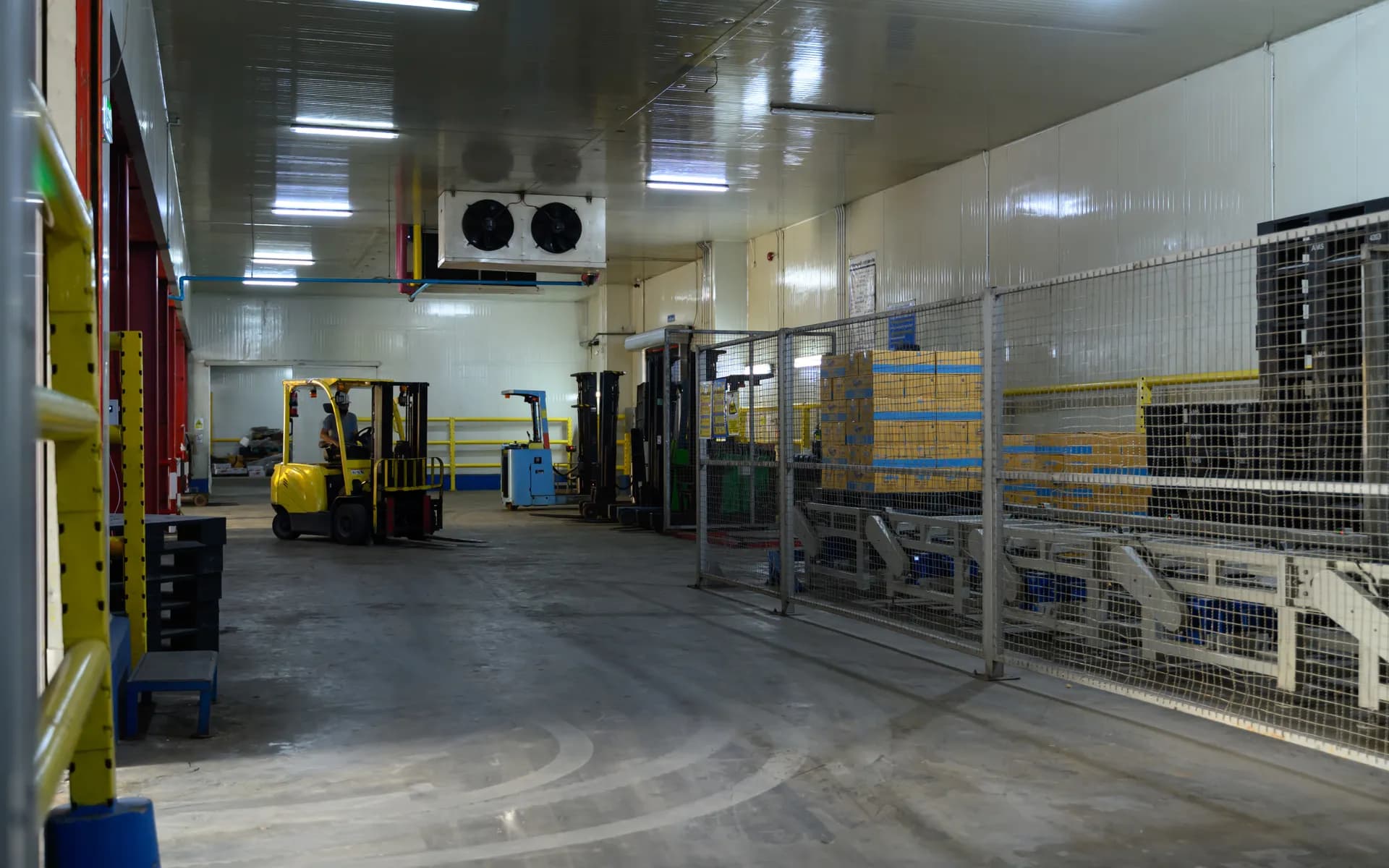
Cold storage with DG backup
Chamber temperatures monitored alongside the diesel generator, so the operator could see whether the backup power actually held the rooms during a mains failure.
AT A GLANCE
Refrigeration monitoring in brief
- What is read
- Room and evaporator temperatures, setpoints, defrost, compressor and fan status, alarms where the controller exposes them
- Hardware
- RS485 Modbus IoT gateway, Modbus RTU over RS485 and Modbus TCP over Ethernet, master or slave
- Connectivity
- Ethernet, Wi-Fi or 4G, chosen per site. MQTT over TLS 1.2
- Power
- 12 V adapter from the panel supply, in a plastic, metal or custom enclosure
- Where data goes
- RIOD Live, or your own server, with API access, PDF and Excel exports with audit trails, and AI access through MCP
- Alerts
- SMS, automated call, WhatsApp and email through RIOD Live rules
- Compliance records
- Kept by dedicated calibrated temperature loggers. Controller data adds the operating context
FAQ
Questions buyers ask us
Can refrigeration controllers be monitored remotely?
Many cold room and rack controllers offer Modbus RTU over RS485. A gateway reads temperatures, setpoints, defrost state and alarms from each one and sends them to the cloud with alerts.
Is controller data enough for food safety or pharma temperature records?
Controller data works best alongside calibrated temperature loggers, which remain the regulatory storage-temperature record. The controller data adds the engineering context, showing what the refrigeration system was doing during any excursion.
Can we see when someone changes a setpoint?
Yes. Setpoints are read alongside temperatures, so a change appears in the history with its time and can trigger an alert.
Can our refrigeration contractor receive the alarms?
Yes. Alerts can go to your own team and to the contractor by call, SMS, WhatsApp or email, and both can view the history in RIOD Live.
Want to know why a cold room is warm?
Tell us the controller models and how many rooms and plants you run. We will confirm the readings and the alarm setup.