
Rugged GPS trackers for
construction equipment
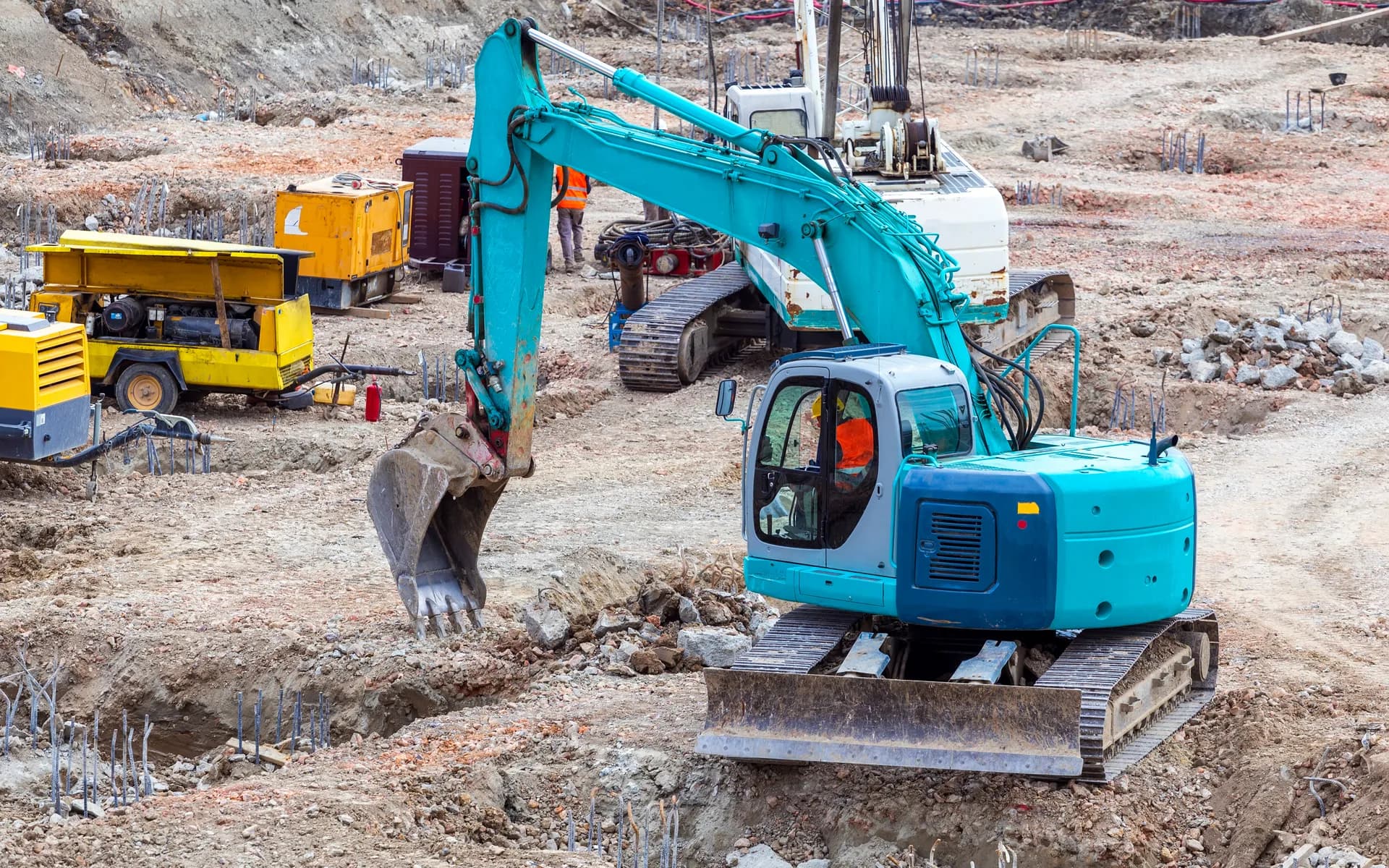
GPS trackers for excavators, loaders, rollers, generators and site equipment, built for vibration, dust and machines that sit unused for weeks. Location and operating events go to RIOD Live or your plant management system.

THE PROBLEM
Expensive machines, spread across sites, with few eyes on them
A contractor with machines spread over a dozen sites rarely knows, on any given morning, exactly where each one is and whether it worked yesterday. Plant managers rely on site supervisors to report hours, and those numbers drive hire billing, maintenance intervals and the decision to buy or rent the next machine.
Theft is the other worry. Compact excavators, skid steers and generators are easy to load onto a trailer at night. Without tracking, the loss is discovered on Monday morning.
Construction sites are also hard on electronics. Vibration, dust, washdowns and machines with no running engine for weeks all affect how a tracker should be built and powered.
HOW WE SET IT UP
Tracking engineered for each machine on site
Rugged build and mounting
We choose the enclosure, plastic, metal or custom, and the mounting position for each machine type during the site survey. Cable routing and connectors are planned for vibration and washdown.
Power for powered and unpowered assets
Machines with a battery system get a wired connection engineered to their supply. Towed or unpowered equipment such as light towers and compressors can use battery versions from about 2,000 to 5,000 mAh.
Operating events alongside location
With the vehicle interface customised to the machine, signals such as ignition or motion show when it actually worked. That gives plant managers hours they can use for billing and service planning.
Theft and misuse alerts
Rules in RIOD Live send SMS, call, WhatsApp, email or push alerts when a machine leaves its site boundary or moves outside working hours, so someone can act that night.
AT A GLANCE
Construction equipment tracking
- What is measured
- Location, movement and operating events such as ignition or motion
- Hardware
- RNDSquare GPS and telematics tracker in a rugged enclosure chosen per machine
- Connectivity
- GNSS positioning, cellular reporting, MQTT over TLS 1.2
- Power
- Wired to the machine supply, or battery from about 2,000 to 5,000 mAh for unpowered assets
- Where data goes
- RIOD Live cloud, your own server, or your existing platform through an API
- Alerts
- Site boundary exits and out-of-hours movement
- Engineering note
- Ruggedisation and the power supply are engineered for each machine type during the project
FAQ
Questions buyers ask us
How do you track construction equipment that has no engine or battery?
Battery-powered tracker versions from about 2,000 to 5,000 mAh suit towed and unpowered equipment such as light towers, compressors and site containers. Reporting intervals are set to balance update frequency against how long the battery should last on that asset.
Can a GPS tracker record engine hours on an excavator?
With the vehicle interface customised to the machine, the tracker can use signals such as ignition or motion to record when it was working. Those operating events give plant managers usage data for hire billing and maintenance planning.
How rugged does a construction equipment tracker need to be?
It has to survive vibration, dust, rain and pressure washing. We select the enclosure and the mounting point for each machine type, and certification is carried out to the standards your market requires as part of the project.
Can equipment tracking data go into our plant hire or ERP system?
Yes. Data can live in RIOD Live, on your own server, or flow into your plant hire or ERP system through an API.
Tracking a mixed plant fleet?
Tell us the machine types, how they are powered and what you need to see each morning. We will propose the hardware and mounting for each.