
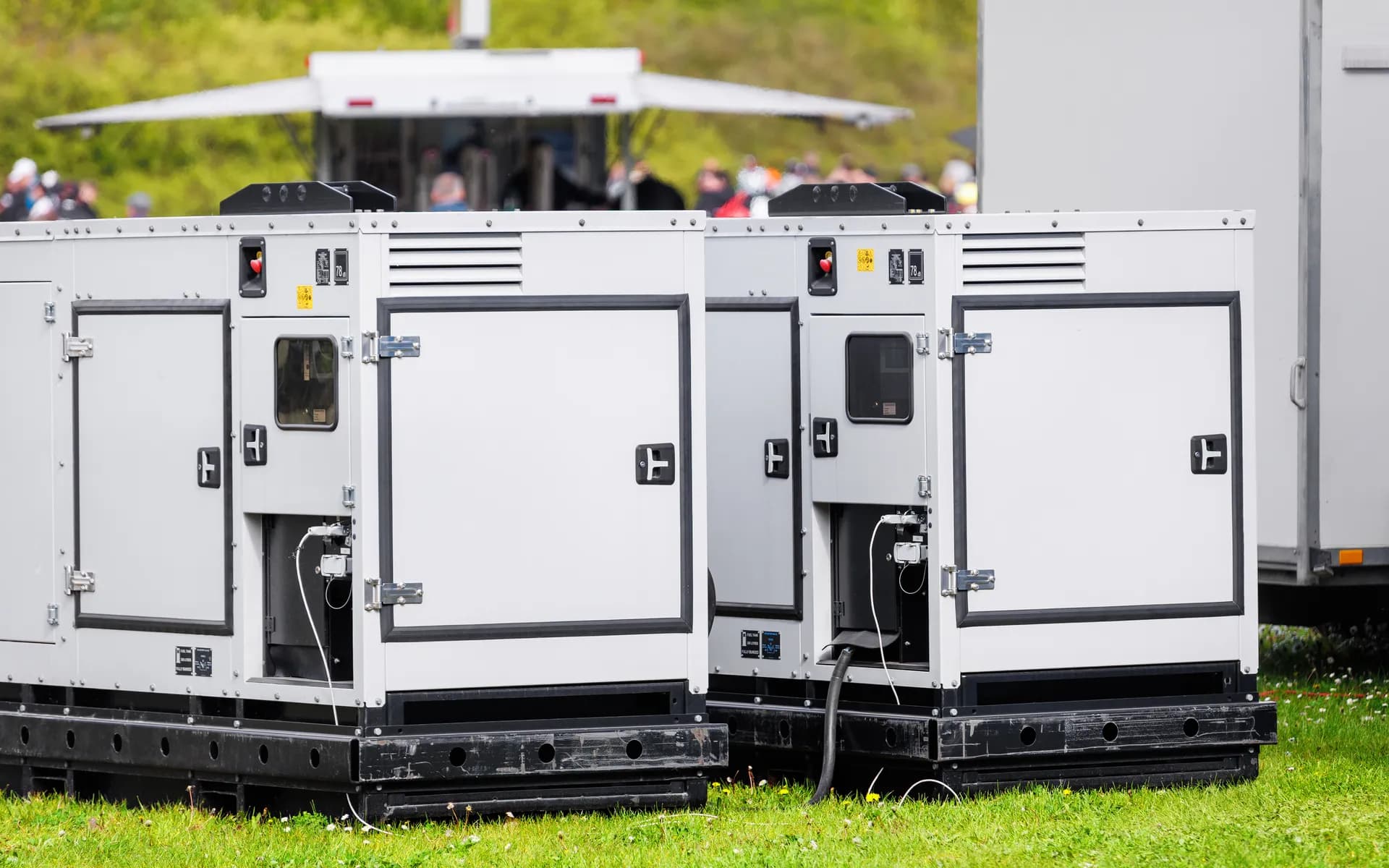
Generator electrical
monitoring
Voltage, current, frequency and energy from your generators, read from a meter on the output or straight from the controller. Every start, run and load is recorded, and the right people hear about it.

THE PROBLEM
You find out whether the generator worked after the outage
Standby generators protect cold stores, hospitals, hotels and telecom sites, yet most of them are checked by someone walking to the set. Did it start when the mains failed? Did it carry the load? How many hours has it run since the last service? The answers are often a logbook entry, if anything.
Prime-power sites have the opposite problem. The generator runs all day, and the cost per kWh depends on how well it is loaded. A set running at light load for hours wastes fuel and builds up carbon.
Most modern generator controllers already measure all of this. The data simply stays inside the control panel.
HOW WE SET IT UP
Meter the output or read the controller
Read the existing controller
Generator controllers typically expose voltage, current, frequency, kW, kWh, run hours and alarms over Modbus. Our gateway reads those registers, so the power path stays exactly as it is.
Or meter the output
Older sets without communication get a connected sub-meter on the generator output, which gives voltage, current, power and energy wherever the meter supports them.
Starts, runs and loading
RIOD Live records every start and stop, run duration and load. Reports show hours since service and how heavily each set was loaded, which helps with sizing and maintenance.
Alerts when it matters
A mains failure, a failed start or a generator alarm triggers an automated call, WhatsApp, SMS or email to the people on duty, with the event logged for later review.
FROM THE FIELD
Where we have done this
Cold storage and DG sets
Generator status recorded alongside chamber temperature, showing whether backup power held the rooms during mains failures.
AT A GLANCE
Generator monitoring at a glance
- Measured
- Voltage, current, frequency, power and energy where available; starts, stops and run hours
- Hardware
- RS485 Modbus IoT gateway on the controller, or smart energy sub-meters on the generator output
- Connectivity
- 4G for remote sets, Wi-Fi or Ethernet on site
- Alerts
- Mains failure, start failure and controller alarms by call, WhatsApp, SMS, email or push
- Data goes to
- RIOD Live cloud, or the platform deployed on your own server
- Reports
- Audit trails on every report, PDF and Excel export, AI access to the data through MCP
- Control note
- Safety shutdowns and synchronisation stay with the generator controller; monitoring reads alongside them
FAQ
Questions buyers ask us
How can I monitor a diesel generator remotely?
Connect a gateway to the generator controller over Modbus, or fit a connected meter on the generator output. Either way the readings go to a cloud platform, which records starts, run hours and load and sends alerts when the set starts, fails to start or alarms.
How do you know if a diesel generator is underloaded?
Compare its kW output with its rating over time. A set that spends long hours at light load burns fuel inefficiently and builds up carbon in the engine, so a load profile from metering shows whether the set is oversized or whether load can be consolidated onto fewer generators.
Can monitoring control or synchronise the generator?
Starting, stopping, safety shutdowns and synchronisation remain with the generator controller and its protection. Our monitoring reads data from it and reports, which keeps the control system exactly as the manufacturer designed it.
Can we see whether the generator held the load during an outage?
Yes. Generator output and load are recorded through the event, and they can be shown next to other site data, such as cold room temperature, to confirm that backup power did its job.
Want to know your generators are ready?
Tell us the generators, their controllers and where they are. We will propose controller integration or metering for each set.