

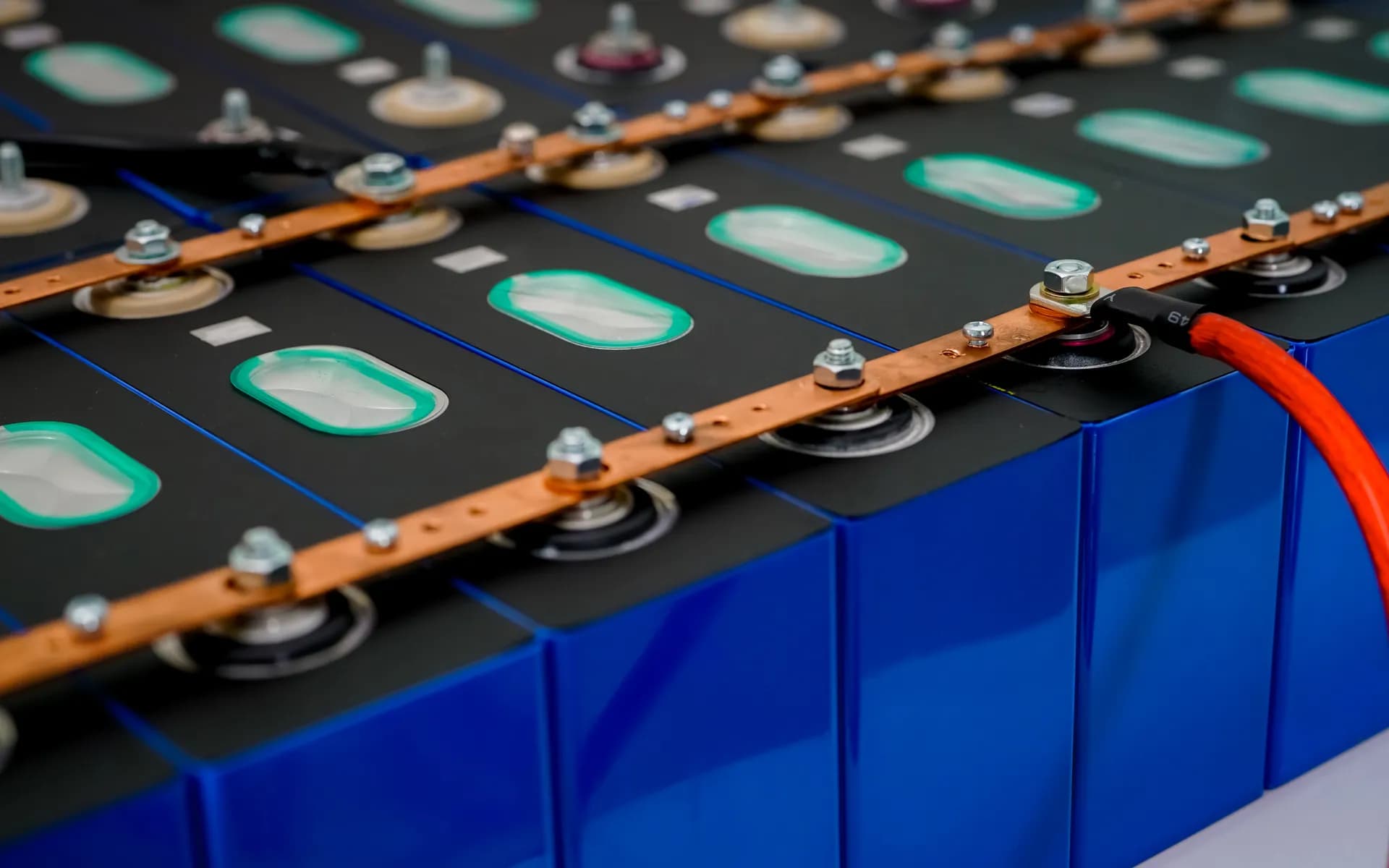
Battery and Power
Management for Trackers
A power architecture that lets a GPS tracker run for years on a single battery. From deep-sleep duty cycling to chemistry selection and solar harvesting, the energy budget is built to hit your field life target.
 THE CHALLENGE
Battery Life Decides Whether the Product Works
An asset tracker that needs a recharge every month is a product that gets thrown in a drawer. The hard part is that a GPS fix and a cellular uplink draw orders of magnitude more current than the device spends asleep, so a few extra fixes per day can cut years off the battery. Getting multi-year life means treating the energy budget as the primary design constraint: the right chemistry, ruthless deep-sleep, a power path with negligible quiescent current, and graceful behavior when the battery sags. Power is designed from the cell up so the field life number reflects real measured behavior rather than a datasheet best case.
One layer of the full GPS tracking device engineering platform, working closely with Asset Tracking Solutions.
WHEN YOU NEED THIS
When Power Is the Constraint
You need dedicated power engineering when the device has to survive in the field without easy access to charging, or when a wired tracker still has to ride through ignition-off and cranking. This is the work that turns a current budget into a guaranteed field life.
Battery-Only Asset Trackers
Containers, trailers, and equipment that report a few times a day and must last one to seven years on a non-rechargeable cell with no maintenance window.
Solar and Hybrid Trackers
Outdoor assets where a small solar panel tops up a rechargeable cell, so the device runs indefinitely as long as the energy harvest beats the daily draw.
Vehicle Trackers with Backup
Wired devices that run from the vehicle but need an internal backup cell to ride through ignition-off, tamper events, and the voltage dip during engine cranking.
SCOPE OF WORK
What's Included
Energy Budget and Chemistry Choice
A current budget accounts for every state: sleep, GNSS acquisition, cellular registration, and uplink. From that, the cell is sized and the chemistry chosen, weighing LiSOCl2 for very long life, Li-ion for rechargeable energy density, and LiPo for thin form factors.
Deep-Sleep Power Architecture
Firmware duty cycling and the hardware power tree are designed together so the device spends almost all of its time in microamp sleep. Peripherals are gated, the modem is fully powered down between sessions, and wake sources are limited to the RTC, motion, and tamper.
Power Path and Regulation
Buck converters and LDOs are selected for the actual load profile, favoring high-efficiency bucks for the modem burst and low-quiescent LDOs for the always-on rail. Quiescent current is treated as a first-class budget line because it runs every second of the device life.
Solar Harvesting and Charging
Where solar applies, the harvesting front end is designed with maximum power point tracking and a charge controller matched to the cell chemistry, so the panel keeps the battery topped up across seasons and partial shade.
TECHNICAL APPROACH
How Multi-Year Life Is Reached
Design starts from the field life target and works backwards. A two-year tracker on a 19 Ah LiSOCl2 cell has a fixed average current ceiling, and every design decision is checked against it on a bench with real current measurement that replaces estimates.
Duty Cycling
Report cadence, fix strategy, and modem session timing are tuned so the device wakes, does the minimum work, and returns to sleep. Assisted GNSS and a hot-start almanac cut the costly time-to-first-fix that dominates the wake energy.
Measure, Do Not Guess
Real current draw is profiled across every state with a high-dynamic-range meter, the energy model is built from those measurements, and cell self-discharge and the LiSOCl2 voltage delay at low temperature are accounted for.
Brownout and Battery Health
Brownout handling lets the device shut down cleanly and recover rather than corrupting state, fuel-gauging or coulomb counting is added where the chemistry allows, and battery voltage is reported so the fleet sees decline before failure.
INTEGRATION AND OUTPUTS
What You Get Back
The power work lands as a validated schematic block, a firmware power policy, and a documented energy budget you can stand behind when you quote a field life to your customer.
A Defensible Life Number
The energy model and bench data behind the field-life claim are delivered, so the number on your spec sheet is backed by measured current from real hardware rather than a marketing estimate.
Battery Telemetry in the Payload
Battery voltage and health flags are reported in the device-to-cloud message so the platform can warn before a tracker goes dark and schedule replacement on real data.
FAQ
Common Questions
How long can a battery-only tracker really last?
It depends entirely on report frequency and chemistry. A tracker on a large LiSOCl2 cell reporting once or twice a day can run three to seven years, while one fixing every fifteen minutes may last only months. The cell is sized to your reporting cadence and field-life target rather than promising a fixed number.
Which battery chemistry suits this kind of tracker?
Non-rechargeable long-life designs typically use LiSOCl2 for its high energy density and very low self-discharge. Rechargeable or solar designs use Li-ion for energy density or LiPo where the form factor is thin. The choice falls out of the energy budget, temperature range, and whether the device can be recharged.
Why does quiescent current matter so much?
On a device that sleeps almost all the time, the always-on quiescent draw of regulators and the sleeping MCU runs every second for years and can dominate total energy. A few extra microamps of quiescent current can cost more lifetime energy than the active radio bursts, so it is treated as a primary budget line.
Need Your Tracker to Last Years?
Share your reporting cadence, form factor, and field-life target to get a tailored energy budget, chemistry choice, and power architecture scoped to hit it.
Schedule a Free Consultation