
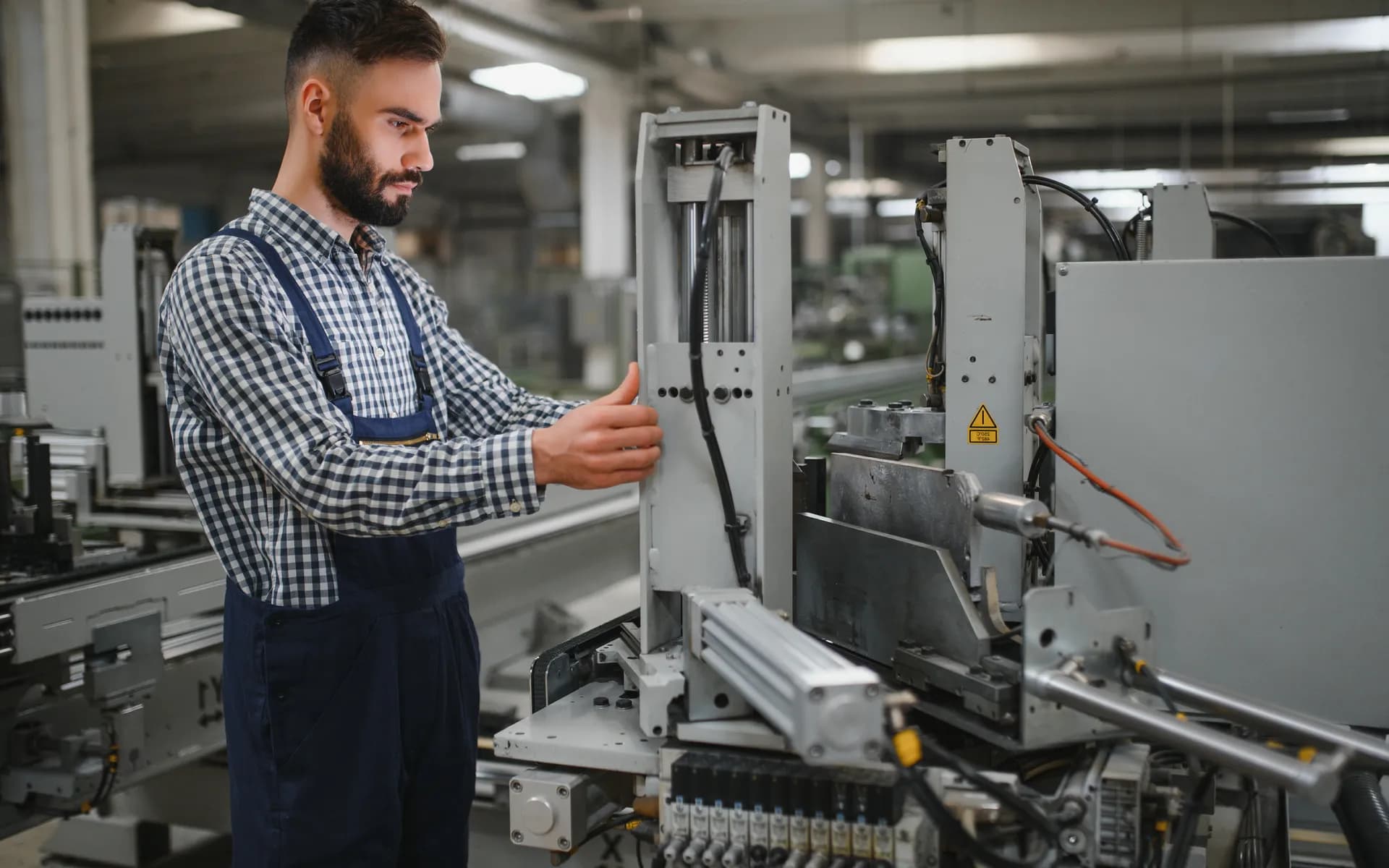
Industrial food dryer
controller
The RD150 drives the temperature and timer stages of an industrial food dryer as one stored programme, while recording temperature, humidity and cycle time for every batch. Dryer manufacturers fit it as the machine controller and offer cloud visibility to their customers.

THE PROBLEM
Drying is a sequence, but most dryers are run as a single setpoint
Good drying usually needs more than one temperature. A higher stage drives off surface moisture while the product is wet, then a lower, longer stage finishes it without case hardening or scorching. Many dryers only have a thermostat and a separate timer, so the operator changes the setting by hand, or leaves one temperature for the whole run.
The plant manager then sees variation between batches and between shifts with no data to explain it. When a batch comes out under-dried or browned, nobody can say whether the temperature held, how long each stage ran, or what humidity the chamber reached.
HOW WE SET IT UP
Staged drying from one controller
Temperature stages on a timer
Each drying stage is a temperature setpoint with a duration. The RD150 runs them in order and ends the cycle on time, so the process no longer depends on someone watching the clock.
A recipe for each product
A plant drying several products stores each one as a recipe. The operator selects the product and the controller loads the right stages, which keeps batches consistent across shifts.
Humidity as a process signal
Chamber humidity is measured and recorded alongside temperature. It shows how the drying is progressing and gives your process team the data to tune stage times over a season.
Batch records in the cloud
Connected units send temperature, humidity and cycle time to RIOD Live or your own server. Each batch can be exported as a PDF or Excel report with an audit trail.
AT A GLANCE
Food dryer control with the RD150
- What is measured
- Temperature, humidity and cycle time
- What is controlled
- Temperature and timer stages, stored as a recipe per product
- Hardware
- RD150 temperature, humidity and timer controller
- Connectivity
- Optional connected variant, MQTT over TLS 1.2
- Where data goes
- RIOD Live or your own server, with PDF and Excel exports and AI access to the data via MCP
- Safety
- Built-in temperature cut-out, sensor failure detected and reported
- Engineering note
- Airflow and product moisture sensing are designed as separate measurements where the process needs them
FAQ
Questions buyers ask us
How do you control a multi-stage food drying process?
Each stage is set as a temperature with a duration, and the stages are stored together as a recipe. The RD150 runs them in sequence on its timer and records temperature, humidity and time throughout, so every batch follows the same profile.
Does the controller measure airflow or product moisture?
Airflow and product moisture are separate measurements from the RD150 temperature and humidity loop. Where a dryer needs them, we design them in as additional sensors during the project.
Can we keep a record of each drying batch?
Yes. Connected RD150 units report to RIOD Live or your own server, and batch data can be exported as PDF or Excel with an audit trail. This is useful for customer complaints and food safety reviews.
We build dryers. Can the controller carry our brand?
Yes. The RD150 is built to your order with your logo or labels, in a standard plastic or metal enclosure or a custom one. Typical lead time is about 4 weeks for 100 units and about 6 weeks for 1,000.
Running or building industrial food dryers?
Tell us the dryer type, the products you dry and the stages you run today. We will configure the RD150 to your process.