
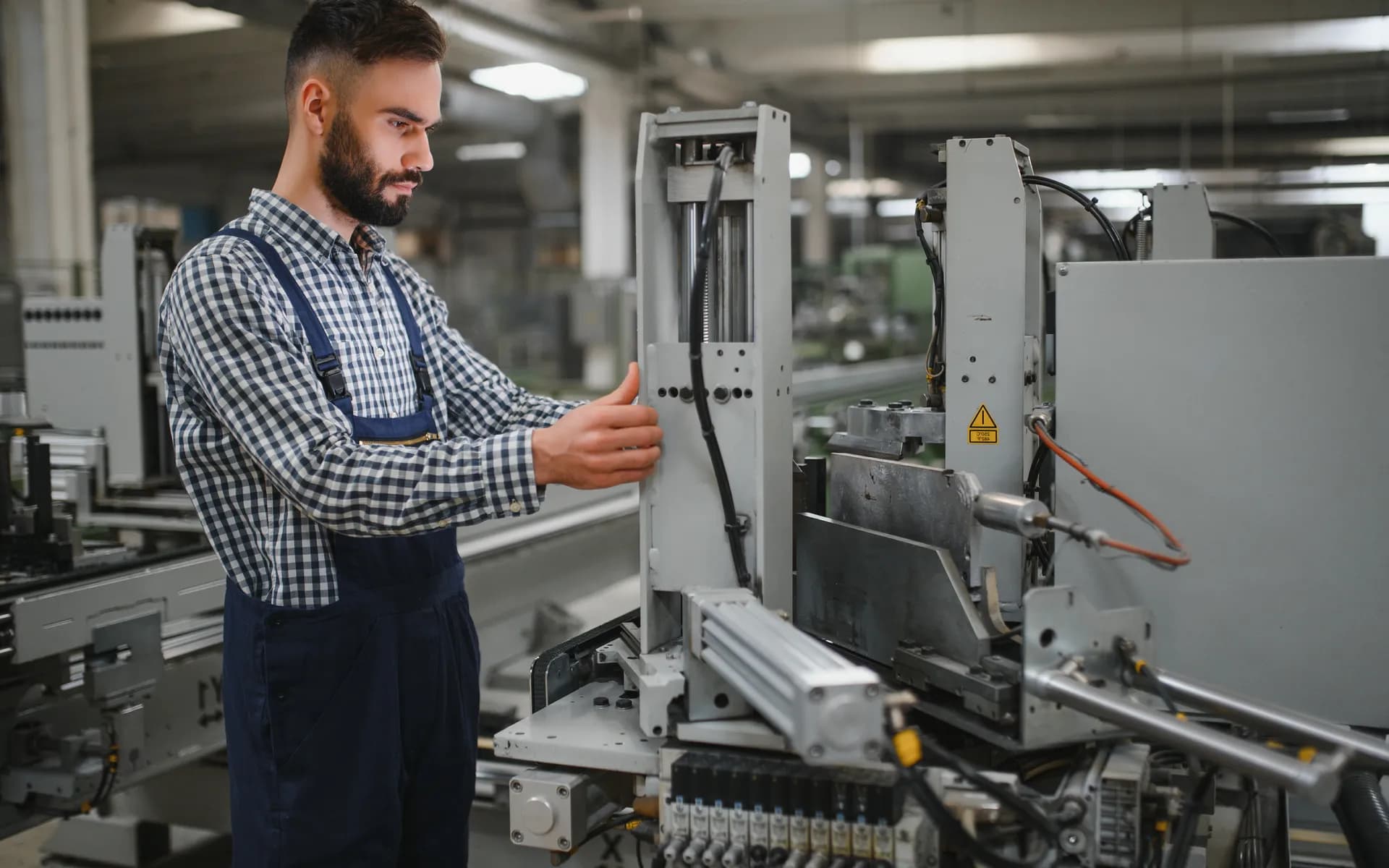
Factory machine
energy monitoring
Energy measured at each machine, so the site bill splits by what each one actually used. We fit connected single or three-phase sub-meters on the feeders you choose and report kWh, power and run state for each machine to one platform.

THE PROBLEM
The site bill is shared out by guesswork
Most plants know their monthly consumption to the kilowatt-hour and almost nothing about where it went. Cost accountants spread energy across machines by rated power or running hours, so the injection moulder that idles hot all night carries the same share as the one that was switched off at shift end.
The questions a plant engineer actually faces are specific. Is the old press worth replacing? Which machine draws power over the weekend? Does the new heater band setting save anything? Each one needs a meter on that machine and a record over weeks, not a spot reading with a clamp meter.
The practical difficulty is the panel. Machines are fed from different distribution boards, some feeders serve two machines, and the load current varies from a few amps to several hundred. The metering plan has to follow the wiring that is actually there.
HOW WE SET IT UP
A meter per machine, chosen to fit the feeder
Survey the panels first
We walk the distribution boards with your electrician and map which feeder serves which machine. Load current and the existing metering architecture decide whether a machine gets a direct-connected or CT-operated meter.
Single or three-phase, sized to the load
Small auxiliaries get single-phase sub-meters and production machines get three-phase. We size the CTs to the load current during the site survey so the meter reads well across the working range.
Reuse meters that already speak Modbus
Many panels already carry multifunction meters with an RS485 port. Our Modbus gateway reads them as they are, and integrators set the register map from the cloud application.
Run, idle and off from the power draw
Power draw tells you whether a machine is cutting, idling or switched off. RIOD Live turns that into runtime and idle-hours figures alongside kWh, so energy and utilisation sit on the same chart.
FROM THE FIELD
Where we have done this
Machinery energy metering
Energy measured per machine in a production environment, so consumption could be tied to equipment rather than spread across the site bill.
AT A GLANCE
Machine energy monitoring at a glance
- Measured
- kWh and power per machine, plus the voltage, current and power factor values the selected meter provides
- Hardware
- Smart energy sub-meters, Sense-i current and power nodes, or existing Modbus meters through our gateway
- Connectivity
- Wi-Fi or 4G from the meter; RS485 or Ethernet to the gateway
- Security
- MQTT over TLS 1.2 from every device
- Data goes to
- RIOD Live cloud, or the platform deployed on your own server
- Reports
- Audit trails on every report, PDF and Excel export, AI access to the data through MCP
- Engineering note
- Load current and the existing metering architecture are checked at each feeder before the meter is chosen
FAQ
Questions buyers ask us
How do you measure energy use per machine in a factory?
Put a connected sub-meter on the feeder that supplies the machine, or read an existing Modbus meter if the panel already has one. The meter reports kWh and power to a cloud platform at a fixed interval, so you build a consumption history for each machine instead of estimating from the site bill.
Can energy monitoring show when a machine is idle?
Yes. A machine draws distinct power levels when it is working, idling and switched off. Setting thresholds on the power reading turns the energy data into run, idle and off states, which shows idle consumption and runtime per shift.
Do we need to shut machines down to fit the meters?
CT-operated meters need the conductors to pass through the CTs, so installation is planned for a maintenance window or a shift change. We agree the sequence with your electrical team during the survey so each machine is off for the shortest time.
Which machines should we meter first?
Start with the large and long-running loads: moulding machines, furnaces, presses, compressors and chillers. Together they usually account for most of the bill, and their data gives the clearest decisions on scheduling, settings and replacement.
Want to see energy per machine?
Tell us the machines, the panels that feed them and any meters already installed. We will propose a metering plan and the hardware for each feeder.