

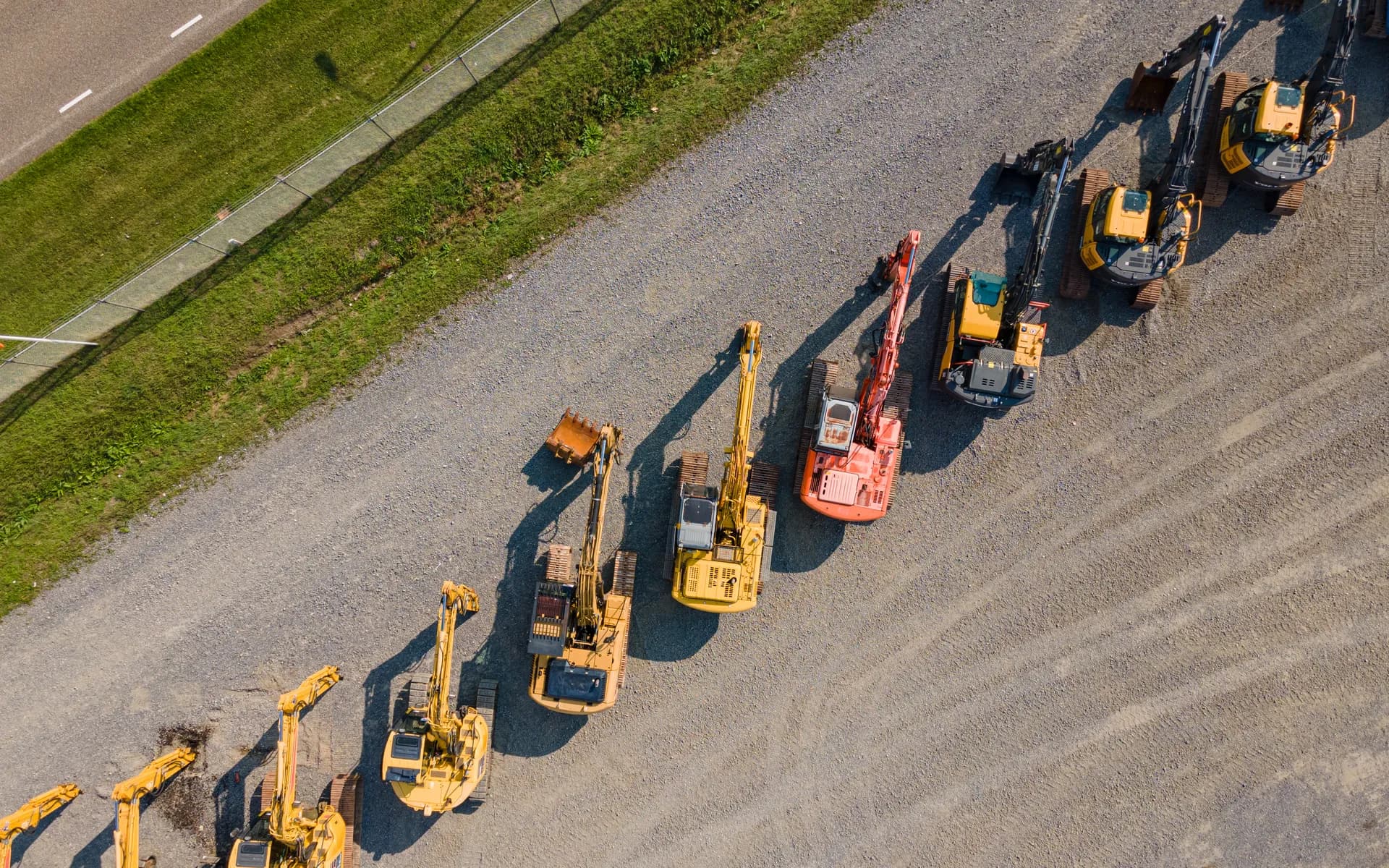
Rental Equipment
Utilisation Tracking
Telematics units for rental yards that meter true engine run-hours, watch geofences for theft and unauthorised movement, and feed your rental ERP so you can bill by usage instead of calendar days. STM32 control, Quectel cellular, CAN and J1939 decoding, and a standards-clean AEMP feed across a mixed OEM fleet.
 THE CHALLENGE
Calendar Billing Hides What Your Fleet Actually Earns
Most equipment rental companies invoice by the day and trust the customer to report how hard a machine worked. A skid steer that ran two hours and a skid steer that ran ten bill the same, idle time goes unrecorded, and a unit that walked off site is invisible until the driver fails to return it. Hour meters get tampered with, OEM portals do not talk to each other, and your dispatch board lives in a spreadsheet. A hardened telematics unit on every machine reads engine run-hours straight from CAN or ignition, draws a geofence around each yard and job site, and pushes clean data into your rental ERP. Usage billing, theft alerts, and accurate return condition come from the same box.
Built within the Telematics and GPS Tracking ecosystem, and frequently paired with Remote Equipment and Machine Monitoring.
WHAT'S INCLUDED
A Telematics Unit That Bills, Locates, and Protects
Run-Hour Metering Unit
An STM32 control board meters engine run-hours from ignition sense or directly off the CAN/J1939 bus where the ECU exposes it. The count is stored in non-volatile memory and signed, so a tampered dash hour meter can no longer dictate what you bill.
Cellular and GNSS Hardware
Each unit carries a Quectel EC200 or BG95 modem on Cat-M1 or LTE with a u-blox GNSS receiver for position and speed. The enclosure is sealed to IP67 so it survives wash-downs, mud, and vibration on a loader or a generator.
Geofence and Theft Engine
A geofence is defined per yard and per job site. The firmware fires an alert on yard exit outside rental dates, on movement while ignition is off, and on tow-away, so an unauthorised relocation reaches your duty manager within seconds, while the equipment can still be recovered.
Rental ERP Integration
Run-hours, location, and faults are pushed into your rental ERP or DMS over a REST API. Contracts close against metered usage, utilisation reports drive purchasing, and the yard team works from one board instead of reconciling paper tickets.
AEMP Feed Aggregation
For mixed fleets, OEM telematics is ingested through the AEMP / ISO 15143-3 feed and merged with the retrofit units. Caterpillar, Volvo, and JCB machines land in the same view as your retrofit-tracked equipment, with one hour and location standard.
Remote Disable and Starter Interrupt
On contracts that allow it, a starter-interrupt relay is wired so the firmware can trigger it over a TLS command channel. A unit that goes past its return date or into non-payment can be staged for disable on next key-off, which recovers more machines than a phone call ever does.
WHAT YOU GET
Bill on Usage, Recover Fast, Return Clean
You stop trusting the dash hour meter and the customer's word, and start invoicing against numbers your own hardware recorded. The same unit that proves usage also protects the asset and documents how it came back.
Utilisation-Based Billing
Metered run-hours feed the contract, so a machine that worked ten hours bills more than one that idled. Idle time is separated from working time, which turns under-recovery on busy units into invoiced revenue.
Theft and Movement Defence
Geofence breaches and ignition-off movement alert immediately, and last-known position with speed gives recovery teams a live trail instead of a stale yard record from last week.
Return Condition Evidence
Fault codes, run-hours at hand-back, and idle ratio are logged per contract. When a machine returns damaged or over-run, the data backs the charge instead of a dispute over the customer recollection.
HOW IT WORKS
From Ignition Sense to Rental Invoice
The Unit Meters On Site
On key-on the FreeRTOS firmware starts the run-hour counter from ignition or CAN/J1939, samples GNSS for position and speed, and checks the active geofence. Working time and idle time are accumulated separately on the device.
Events Reach the Cloud
The Quectel modem publishes run-hours, location, and any geofence or fault event over MQTT on a TLS link. Routine telemetry is batched to hold down cellular cost while theft and movement alerts go straight through with priority.
ERP Closes the Loop
The backend reconciles device telemetry with the AEMP / ISO 15143-3 feed from OEM portals, then writes metered usage and condition to your rental ERP through a REST API so the contract bills on what the machine actually did.
ENGINEERING DETAIL
Built for the Yard and the Bus
Reads the Machine It Sits On
Where a machine has a CAN/J1939 bus or an OBD-II port, engine hours, fuel rate, and fault codes are decoded at source. On older equipment with no bus, the unit falls back to ignition sense and a calibrated RPM input, so one product covers a mixed yard.
Survives Diesel and Vibration
The unit runs from a 9 to 36 V supply with load-dump and reverse protection, sleeps to microamps with the key off, and ships in an IP67 enclosure. It is qualified against the shock and vibration a loader and a tracked excavator actually produce.
Tamper and Disable Done Safely
Run-hour counts are signed and stored in non-volatile memory, and a wiring-disconnect event is logged and reported. Starter interrupt only ever arms on key-off and never cuts a running engine, so recovery never becomes a safety incident.
Standards-Clean Integration
A documented REST API is exposed and the AEMP / ISO 15143-3 standard is consumed, so your data is portable across OEMs and your ERP. Firmware updates over the air on a TLS channel keep the fleet current without pulling units off rent.
FAQ
Common Questions
How do you measure true engine run-hours?
Where the machine has a CAN or J1939 bus, engine hours are read straight from the ECU, and on an OBD-II equipped machine they are pulled over that port. On older equipment with no bus, calibrated ignition sense is used, so the count reflects what the engine actually did rather than what the dash hour meter shows.
Can billing run on run-hours instead of calendar days?
Yes, that is the point of the unit. Metered run-hours are pushed into your rental ERP over a REST API with working time separated from idle time, so a contract can close against usage. A machine that ran ten hours bills more than one that sat idle on the same day rate.
How fast do alerts arrive about theft or unauthorised movement?
Geofence breaches and movement while the ignition is off are sent as priority alerts over the cellular link in seconds, separate from routine telemetry. The unit reports last-known position and speed from its u-blox GNSS so a recovery team has a live trail.
Does this work across a mixed OEM fleet?
Yes. OEM telematics is ingested through the AEMP / ISO 15143-3 feed and merged with the retrofit units, so Caterpillar, Volvo, JCB, and untracked machines all appear under one hour and location standard in the same view.
Can a machine be remotely disabled for non-payment?
On contracts that allow it, a starter-interrupt relay is wired and triggered by the firmware over a TLS command channel. It only arms on key-off and never cuts a running engine, so a unit past its return date or in non-payment can be staged for disable safely on next key-off.
Will it integrate with your existing rental ERP or DMS?
Yes. Run-hours, location, fault codes, and return condition are exposed through a documented REST API and webhooks, designed to tie telematics into rental ERP and DMS platforms so contracts, utilisation reports, and billing all run from one source.
Ready to Bill on What Your Fleet Actually Runs?
Share your fleet mix, the OEMs you run, and the rental ERP you bill from to get a tailored approach for how run-hour metering, geofencing, and AEMP aggregation cut under-recovery and theft loss.
Schedule a Free Consultation