

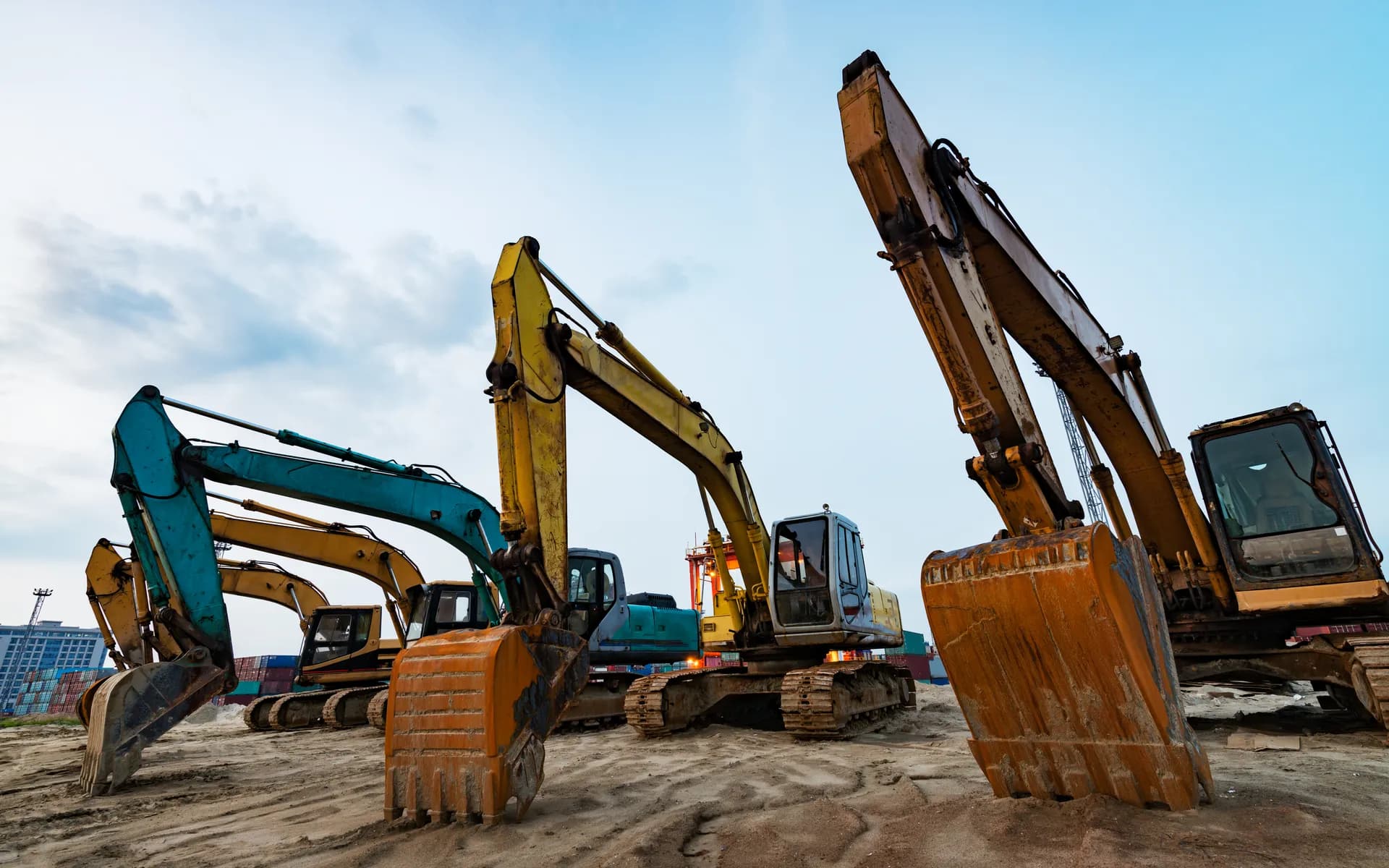
AEMP Equipment
Telematics (ISO 15143)
A telematics system that speaks the AEMP ISO 15143-3 standard, so mixed-fleet equipment data flows from Caterpillar, Komatsu, Volvo, John Deere, and your own trackers into one place. Scope covers the API server, the data normalisation, and the dashboards that read it.
 THE CHALLENGE
One Fleet, Five OEM Portals, Zero Common Language
A typical earthmoving or construction fleet mixes machines from four or five manufacturers, each with its own telematics portal and its own data format. Your reports live in CAT VisionLink, Komatsu Komtrax, Volvo CareTrack, and a spreadsheet for everything else. Hours, fuel burn, location, and fault codes never line up in one view. The ISO 15143-3 standard (the AEMP 2.0 API) exists to fix exactly this, but most teams have no system that actually consumes it. The system here is a server that pulls the standardised feed from every OEM endpoint, plus retrofit trackers for machines that have none, merging it all into a single utilisation picture.
One layer of the full Telematics and GPS Tracking platform, working closely with Remote Equipment and Machine Monitoring.
WHAT'S INCLUDED
An ISO 15143-3 Data Hub for Mixed Fleets
ISO 15143-3 API Client
A client authenticates against each OEM AEMP endpoint and pulls the standard fleet and equipment feeds. The Snapshot and TimeSeries schemas are parsed for cumulative hours, odometer, fuel used, DEF level, and location, with the rate limits and token refresh each provider enforces handled in the client.
Edge Trackers for Non-Connected Machines
Older or smaller machines have no OEM telematics at all. Retrofit trackers built on STM32 with a Quectel EC200 or BG95 modem read run hours from a vibration or oil-pressure sensor and J1939 data where a CAN bus exists, so they report into the same hub as the connected fleet.
Fault Code Decoding
Diagnostic trouble codes that arrive in the AEMP feed and from J1939 SPN and FMI pairs on the retrofit trackers are decoded. Raw codes map to plain descriptions and severity so a derate or a fluid alarm reaches the maintenance team before the machine stops.
Utilisation and Idle Analytics
Working hours against idle hours, fuel burn per engine hour, and machine availability are computed across the whole fleet. This is the number that drives rental billing, depreciation, and the decision to move a machine to a busier site.
Unified Map and Asset Register
Every machine sits on one map with its OEM, serial, hour meter, and last reported position, regardless of which portal it originally came from. Geofences around sites and yards flag machines that leave without authorisation.
Reports and ERP Integration
Normalised data is pushed into your ERP or maintenance system over REST and webhooks. Designed to feed hour readings into service scheduling tools and rental billing systems so invoices and PM intervals run off real machine data rather than manual entry.
THE STANDARD
What ISO 15143-3 Actually Gives You
ISO 15143-3, the standard behind the AEMP 2.0 telematics API, defines a common XML and JSON data dictionary and a REST interface so any OEM telematics provider exposes the same fields the same way. Built to the spec, adding a new manufacturer to your fleet stays a simple configuration change rather than a fresh integration project.
Standard Field Set
Cumulative operating hours, location, fuel used and remaining, distance, DEF and engine data arrive in a fixed schema. Each OEM response maps into one internal model so a CAT and a Komatsu hour reading mean the same thing in your reports.
Pull-Based REST
The API is a polling interface. Pulls are scheduled per OEM within their daily request quotas, every snapshot is stored in a time-series database, and history is reconstructed even when an endpoint is briefly unavailable.
Vendor Neutral by Design
Because the contract is the open standard rather than a vendor SDK, you stay free to switch telematics providers. Fleets can move between mixed OEM sets without rebuilding the dashboard or the reports.
HOW IT WORKS
From OEM Endpoint to Single Dashboard
Ingest
The ISO 15143-3 client polls each OEM endpoint on a schedule and the retrofit trackers push J1939 and GNSS data over MQTT. Both land in the same ingestion layer.
Normalise and Store
Every source maps into one equipment model, deduplicated by serial number, and written to a time-series store. Hour meters, fuel, and fault codes are now comparable across the fleet.
Surface
Dashboards, geofence alerts, maintenance triggers, and ERP feeds all read from the normalised model. The team works from one view instead of five portals.
FAQ
Common Questions
What is the difference between AEMP 2.0 and ISO 15143-3?
They are the same thing. The AEMP standard was contributed to ISO and published as ISO 15143-3. When an OEM says it supports the AEMP 2.0 API, it is exposing the ISO 15143-3 REST interface and data dictionary. The build targets the ISO spec so all compliant OEMs work the same way.
Which OEM telematics systems can it pull from?
Any provider that exposes an ISO 15143-3 endpoint, which includes the major brands such as Caterpillar, Komatsu, Volvo, John Deere, and others through their respective telematics platforms. Each provider authentication and request quota is handled, and the responses map into one internal model.
What about machines with no OEM telematics?
Retrofit trackers are fitted. For machines with a CAN bus, J1939 SPNs are read directly, and for older machines run hours are inferred from a vibration or oil-pressure sensor. These trackers report into the same hub over MQTT, so the whole fleet sits in one view.
Do existing OEM portals have to be given up?
No. The OEM portals keep working. The hub sits on top of them as an aggregation layer, pulling the standardised feed so you get one combined picture without losing access to any manufacturer tool you already use.
How current is the data?
ISO 15143-3 is a pull-based API and most OEMs update roughly daily, so cumulative hours and fuel are typically day-fresh. For machines on retrofit trackers, position and J1939 data can be reported in near real time over the cellular link, so live location is available where you need it.
Can the hour data drive maintenance and billing automatically?
Yes. Normalised hour meters are pushed into your maintenance scheduling and rental billing systems over REST and webhooks, so PM intervals and invoices run off actual machine hours rather than manual readings.
Ready to Unify Your Mixed Equipment Fleet?
Share which OEMs you run and which machines have no telematics yet to get a tailored approach for how an ISO 15143-3 hub brings the whole fleet into one utilisation view.
Schedule a Free Consultation