

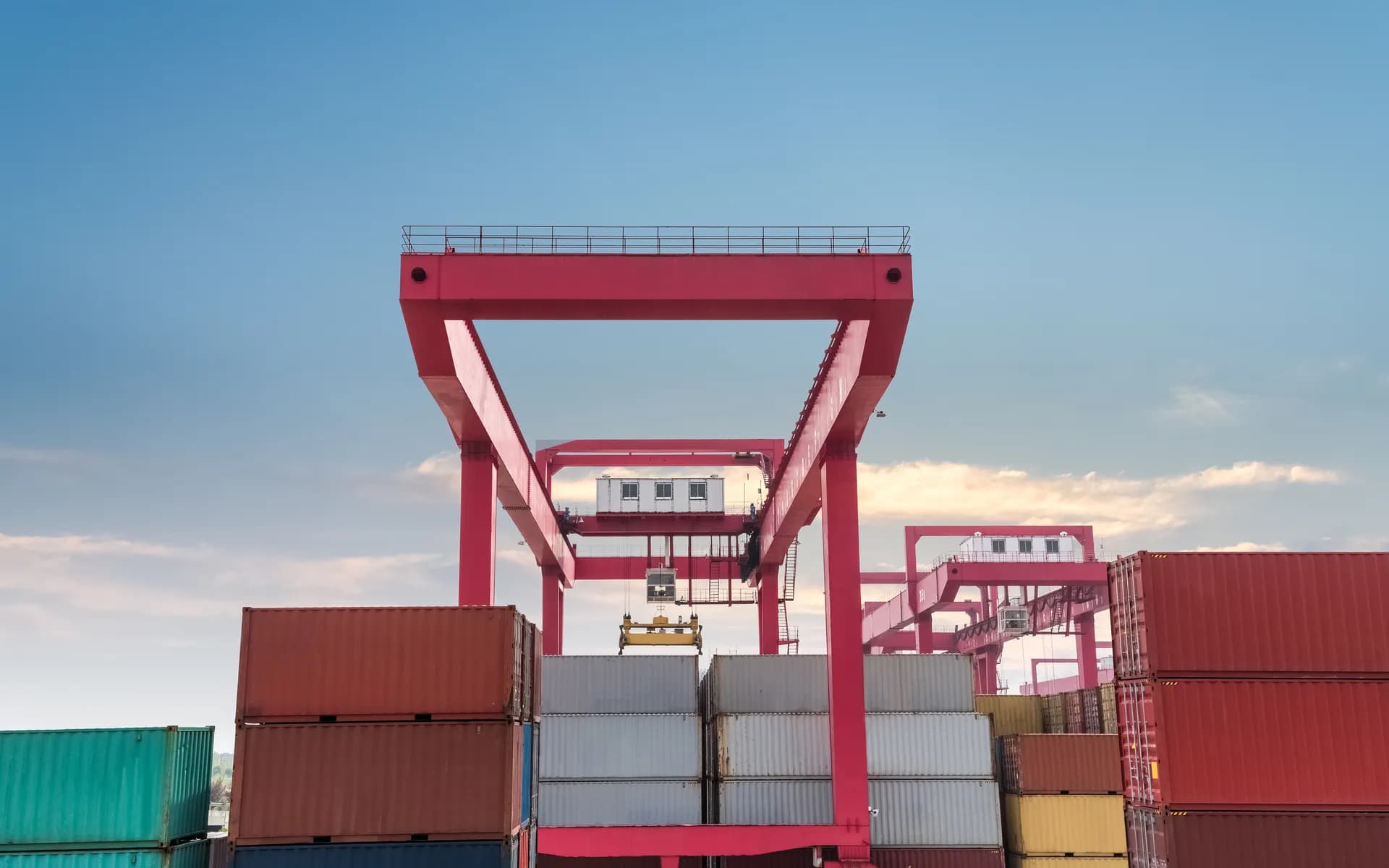
Port and Terminal
Equipment Tracking
Rugged telematics units for container terminals and ports. The hardware reads CAN/J1939 and Modbus off the equipment ECU, fixes position to slot accuracy with RTK and DGPS corrections, and survives salt fog, vibration, and washdowns. Track RTGs, ship-to-shore cranes, reach stackers, terminal tractors, and empty handlers in one platform that knows where each unit is and how hard it is working.
 THE CHALLENGE
The Yard Is Harsh and Your Equipment Data Is Trapped
A container terminal runs millions of dollars of mobile equipment across blocks, quay lanes, and gates, and most of it reports nothing useful to operations. Off-the-shelf vehicle trackers die in the salt fog and constant vibration of a yard, consumer GPS drifts by several metres so you cannot tell which container slot a reach stacker is parked in, and the rich data already on the equipment CAN bus never reaches your terminal operating system. The result is idle RTGs nobody noticed, fuel burned at standstill, and crews searching blocks for the right machine. The answer is telematics hardware that takes the heat, vibration, and washdowns, reads the equipment ECU directly over CAN/J1939 and Modbus, and positions each unit accurately enough to place it in a specific block, row, and slot.
A component of the broader Telematics and GPS Tracking capability, often deployed with Asset Tracking Solutions.
WHAT'S INCLUDED
Rugged Telematics Built for the Container Yard
Harsh-Environment Telematics Unit
The on-equipment unit is built around an STM32 host with a sealed enclosure rated IP69K, qualified for salt fog per ASTM B117 and random vibration to the SAE J1455 profile. A wide-temperature build runs from minus 40 to plus 85 degrees C so the box keeps reporting through a winter quay shift or a tropical yard at noon.
ECU Integration Over CAN and Modbus
Equipment data is tapped directly. A CAN/J1939 interface decodes engine load, RPM, fuel rate, hydraulic pressure, and fault codes from diesel and hybrid drivetrains, and an RS-485 Modbus channel pulls PLC registers from RTG and crane control systems. You read the machine exactly as the OEM ECU sees it, with real measured values in place of an accelerometer guess.
Slot-Accurate Positioning
A u-blox multi-band GNSS receiver with RTK and DGPS corrections fixes position to centimetre-class accuracy under open sky, which is enough to resolve which block, row, and slot a reach stacker or terminal tractor is sitting in. A dead-reckoning fallback holds the fix through the GNSS shadows cast by stacked container rows.
Multi-RAT Cellular Backhaul
A Quectel BG95 handles NB-IoT and Cat-M1 where the yard has thin coverage and an EC200 handles LTE where bandwidth matters, both publishing over MQTT with TLS. The firmware buffers telemetry to flash through the dead zones between cranes and flushes the queue when the link returns, so no movement event is lost.
Equipment Utilisation Platform
The software turns raw telemetry into a fleet view. You see each RTG, crane, stacker, tractor, and empty handler by location, engine state, moves per hour, and fault status, with utilisation and idle time rolled up by equipment class, block, and shift so planners act on numbers instead of radio chatter.
Idle and Fuel Monitoring
Productive runtime is separated from idle by fusing CAN engine load with GNSS speed and crane spreader state. The platform reports litres burned at standstill, idle percentage per unit, and the worst offenders by shift, which is the data that justifies auto-stop policies and driver coaching.
WHAT YOU GET
From Machine Bus to Terminal Operations
You stop running the yard on radios and guesswork and start managing equipment with live position, engine state, and utilisation. The system answers the questions that drive berth productivity and maintenance spend.
Which Slot Is It In
RTK and DGPS-corrected position places each reach stacker, tractor, or empty handler at a block, row, and slot, so dispatch sends the nearest free machine and crews stop walking the yard to find equipment.
How Hard Is It Working
Engine load, RPM, fuel rate, and crane moves come straight off CAN and Modbus, so utilisation and idle time per unit are measured directly from the ECU. Underused RTGs and overworked stackers show up immediately.
What Is About to Fail
J1939 diagnostic trouble codes, hydraulic pressure trends, and runtime hours stream into the platform, so maintenance schedules on real engine hours and catches fault codes before a machine drops out of the quay rotation.
HOW IT WORKS
From ECU Frame to Yard Position
Read the Equipment
The STM32 unit, running FreeRTOS, decodes J1939 frames off the CAN bus and Modbus registers off RS-485 at the same time it samples the u-blox GNSS receiver, building a timestamped record of where the machine is and what its engine and hydraulics are doing.
Fix and Backhaul
RTK and DGPS corrections sharpen the GNSS fix to slot accuracy, dead reckoning fills the gaps between container stacks, and the Quectel modem publishes the record over MQTT with TLS on NB-IoT, Cat-M1, or LTE, buffering to flash through yard dead zones.
Build the Fleet View
The backend ingests the MQTT stream, runs it through a state machine that classifies each unit as moving, working, or idle, and updates the live map, utilisation dashboards, fuel reports, and maintenance alerts in near real time.
ENGINEERING DETAIL
Built to Survive the Quay
Sealed Against Salt and Water
Marine air corrodes connectors and washdowns drown weak seals. The board is potted, the enclosure is a metal or glass-filled build to IP69K, qualified under ASTM B117 salt fog, with sealed M12 connectors so the unit shrugs off the quay spray and the high-pressure wash bay.
Rides Out the Vibration
A working RTG or reach stacker shakes hard and long. The harness is strain-relieved, the board is conformal-coated against humidity, and the assembly is tested to the SAE J1455 random vibration profile so solder joints and the GNSS antenna feed survive years of yard duty.
Speaks the Equipment Protocols
Every OEM wires its machines differently. J1939 PGNs and SPNs are mapped per drivetrain, Modbus register maps from RTG and crane PLCs are decoded over RS-485, and the bus interface is isolated so connecting the unit never disturbs the equipment control system.
Open Integration With Your TOS
Position, engine, and utilisation data are exposed through REST APIs, webhooks, and an MQTT feed so equipment events flow into your terminal operating system and maintenance platform. Designed to tie telemetry into TOS dispatch and into CMMS work-order triggers on engine hours.
FAQ
Common Questions
How accurate is positioning inside a container yard?
Under open sky the u-blox multi-band receiver with RTK and DGPS corrections reaches centimetre-class accuracy, which resolves the specific block, row, and slot a machine is in. Stacked container rows block the sky and degrade the fix, so inertial dead reckoning holds position through those shadows until the GNSS signal returns.
Will the hardware survive the salt and washdowns at a port?
Yes. The board is potted, the enclosure is sealed to IP69K, the unit is qualified under ASTM B117 salt fog, and sealed M12 connectors are used, so it handles marine air and high-pressure wash bays. The assembly is also tested to the SAE J1455 vibration profile so it rides out years on an RTG or reach stacker.
How do you read data from cranes and RTGs?
The equipment ECU is read directly. A CAN/J1939 interface decodes engine load, RPM, fuel rate, and fault codes from the drivetrain, and an RS-485 Modbus channel pulls control registers from RTG and crane PLCs. Each OEM PGN and register set is mapped per machine, and the bus interface is isolated so it never disturbs the control system.
Can you measure idle time and fuel burned at standstill?
Yes. CAN engine load and fuel rate are fused with GNSS speed and spreader state to separate productive runtime from idle. The platform reports idle percentage per unit, litres burned at standstill, and the worst offenders by shift, which is the data that supports auto-stop policies and driver coaching.
How does the unit report from yard dead zones?
The Quectel modem runs NB-IoT or Cat-M1 where coverage is thin and LTE where bandwidth matters, publishing over MQTT with TLS. The firmware buffers telemetry to flash through the dead zones between cranes and stacks and flushes the queue once the link returns, so no movement or fault event is lost.
Can this feed your terminal operating system and maintenance tools?
Yes. Position, engine, and utilisation data are exposed through REST APIs, webhooks, and an MQTT feed, and the platform is designed to integrate telemetry into TOS dispatch and into CMMS work-order triggers based on real engine hours and J1939 fault codes.
Ready to See Your Whole Yard in One View?
Share your equipment mix, the OEM control systems on your RTGs and cranes, and the coverage in your yard to get a clear view of how a rugged telematics build puts every machine on the map with engine and utilisation data.
Schedule a Free Consultation