

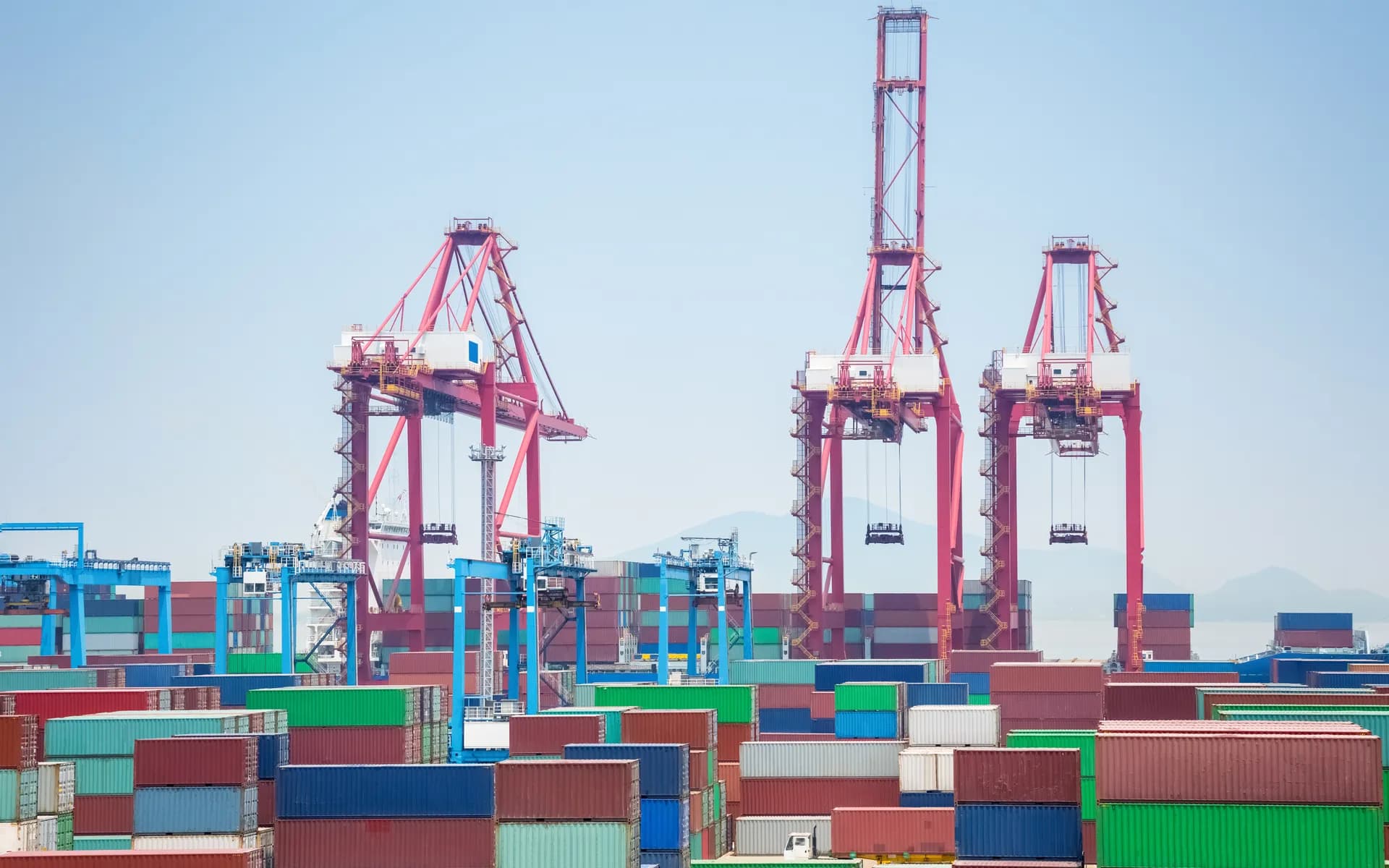
Container and Cargo
Tracking Systems
Long-life trackers follow a container across ship, rail, and road with cellular plus satellite fallback, door-open and tamper sensing, and a feed straight into your TMS.
 THE CHALLENGE
Containers Go Dark Between Legs
A container is well tracked at the port gate and invisible everywhere in between. It crosses cellular dead zones at sea, changes custody at rail hubs, and sits in yards with no door-open visibility, so a theft or a tamper is discovered at the destination instead of the moment it happens. Booking systems show where a shipment should be, while its actual position stays hidden. A tracker that stays connected across every leg watches the door and the cargo and reports the truth back into the systems your operations team already runs.
Part of the Telematics and GPS Tracking stack, and commonly built alongside Asset Tracking Solutions.
WHAT'S INCLUDED
Hardware and Software for Intermodal Cargo
Multi-Year Battery Tracker
A sealed tracker on a non-rechargeable lithium pack runs three to five years between port and recovery. NB-IoT reporting, deep sleep, and motion-gated wake keep the power budget low so the unit outlasts the shipping cycle.
Cellular Plus Satellite Fallback
Cellular is primary. When the container crosses an ocean or a remote rail corridor with no network, the unit switches to a satellite modem and sends a compact position and status message, then resumes full reporting on cellular return.
Door, Shock, and Light Sensing
On-board door-open, shock, and ambient-light sensors catch tampering. Light inside a closed container means an off-schedule door open, and that raises an immediate alert alongside shock events from forced entry or rough handling.
BLE Sensor Mesh Inside
For high-value cargo, a BLE sensor mesh sits inside the container. Tags on pallets report temperature, shock, and presence to the door gateway, which backhauls a rolled-up status over one cellular or satellite link.
Geofenced Ports and Hubs
Geofenced ports, yards, and rail terminals log arrivals and departures automatically. The intermodal handoff timeline builds itself as the container moves between ship, rail, and truck, with no manual scanning.
TMS and ERP Integration
A REST API and webhooks push position, geofence events, and tamper alerts into your transport management or ERP system. Shipments reconcile against bookings and exceptions surface where your team already works.
ARCHITECTURE
One Gateway, Many Sensors, Never Dark
The door tracker is the gateway. It collects from the internal sensor mesh, picks the right radio for where the container is, and keeps a buffer so nothing is lost during the long gaps between coverage.
Gateway Tracker
An ultra-low-power MCU runs the door, shock, and light sensors, aggregates BLE tag data, and manages the radio. Store-and-forward holds events through dead zones and flushes them when a link returns.
Dual-Radio Backhaul
NB-IoT carries normal traffic where cellular exists. A satellite modem handles the open-water and remote legs. The platform stitches both streams into one continuous shipment track.
Cloud and Integration
Telemetry lands over MQTT into a time-series backend that runs geofence and tamper logic, then pushes events to your TMS or ERP through the REST API and webhooks.
FAQ
Common Questions
How do you track a container when it leaves cellular coverage?
The tracker uses cellular as primary and falls back to a satellite modem when no network is present. On open ocean and remote rail corridors it sends a reduced position and status message over satellite, then resumes full reporting once cellular returns. The dashboard never goes fully dark on a shipment.
How long does the battery last?
Multi-year service on a non-rechargeable lithium pack comes from NB-IoT low-power reporting, deep sleep between fixes, and motion-gated wake. A container that sits still for days reports on a slow heartbeat, while one in transit reports more often. Typical builds run three to five years depending on the duty cycle.
Can you detect tampering and theft?
Yes. The unit carries door-open, shock, and ambient-light sensors. A light reading inside a closed container means the door opened off-schedule, which raises an immediate tamper alert. Shock detection flags rough handling or forced entry attempts, and any movement outside an approved geofence escalates the same way.
Do you monitor the cargo inside as well as the container?
Yes. A BLE sensor mesh sits inside the container with the gateway tracker on the door. Tags on pallets or sensitive items report temperature, shock, and presence to the gateway, which forwards a rolled-up status. One cellular or satellite link backhauls many internal sensors.
How does this connect to your TMS or ERP?
A REST API and webhooks push position, geofence events, and tamper alerts into your transport management or ERP system. Shipments reconcile against bookings automatically, and exceptions surface in the system your operations team already uses.
Are the trackers reusable across shipments?
Yes. The trackers are designed for a recovery-and-reuse cycle. A check-in workflow at hubs lets a returned unit be inspected, battery-checked, and reassigned to a new shipment, with the platform tracking unit lifetime and battery budget.
How do you handle ports and intermodal handoffs?
Geofenced ports, yards, and rail hubs let the platform log each arrival and departure automatically. As a container moves from ship to rail to truck, the handoff timeline is captured without manual scanning, which is where most intermodal visibility is lost today.
Stop Losing Sight of Your Cargo
Share your lanes, container types, and the tamper risks you care about to get a tailored approach and a realistic timeline for keeping a shipment visible from port gate to final delivery.
Schedule a Free Consultation