

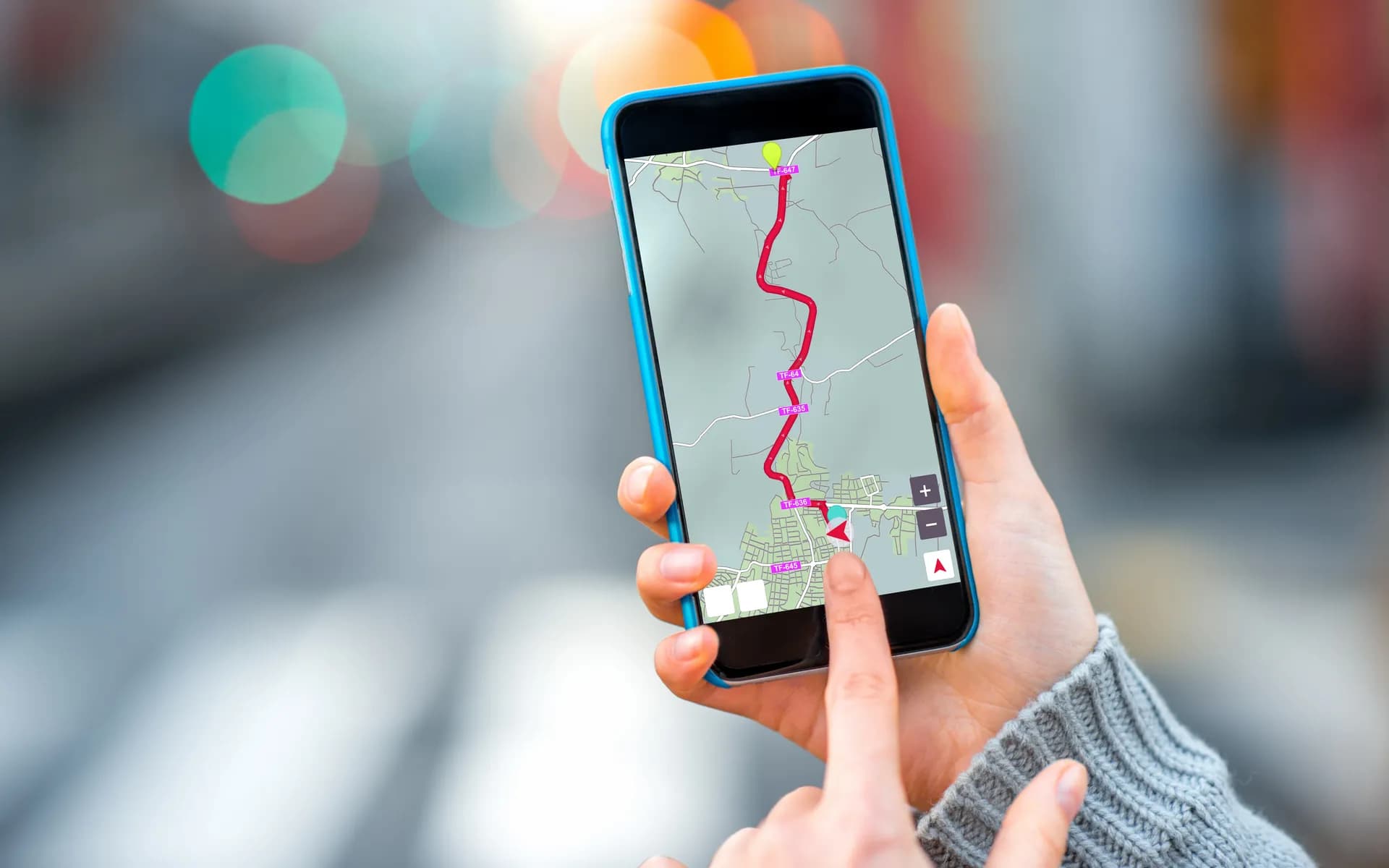
Map, Routing and
Geocoding Integration
Map tiles, reverse geocoding, and routing engines wired into your telematics platform. Mapbox, Google, OpenStreetMap, OSRM, and Valhalla, integrated with snap-to-road and real cost control.
 THE CHALLENGE
The Map Layer Is Where Telematics Projects Stall
A tracking platform is only as good as the map under it. Teams underestimate how much sits between a stream of latitude and longitude and a screen a dispatcher can act on. Coordinates have to become readable addresses, jagged GPS tracks have to snap to actual roads, distance and ETA have to come from a real road graph, and the provider bill has to stay sane at fleet scale. This layer is owned end to end so positions become routes, addresses, and accurate ETAs without surprise costs.
Sits inside the telematics software platform stack and shares hardware and platform building blocks with Real-Time Tracking Dashboard.
SCOPE OF WORK
What's Included in the Map Layer
Map Provider Integration
Mapbox GL, Google Maps, or self-hosted OpenStreetMap rendered with MapLibre GL. Vector tiles, custom styles in your brand, marker clustering for dense fleets, and a tile proxy so client keys never leak and requests stay cacheable.
Reverse Geocoding
Raw coordinates turned into street, locality, and landmark text using Google, Mapbox, or self-hosted Nominatim. Results are cached against rounded coordinates so the same stop is never billed twice, and the sparse-address reality of rural India is handled gracefully.
Routing and ETA Engine
OSRM or Valhalla for self-hosted routing, or Google Directions where live traffic matters. This drives turn-by-turn paths, distance and duration, multi-stop sequencing, and ETAs that feed dispatch and customer-facing links.
Snap-to-Road and Map Matching
Raw fixes map-matched to the road graph so trip paths are clean, odometer-grade distance is accurate, and speed is compared against the correct road segment. This removes the GPS jitter that otherwise makes playback and reports untrustworthy.
Geofence and Isochrone Tooling
Polygon and corridor geofences drawn on the map, plus isochrone (drive-time) layers so planners can see what is reachable within a time budget. These integrate directly with the alerts engine for entry, exit, and dwell events.
Cost Control and Caching
The whole layer is designed around caching and batching: CDN-fronted tiles, persisted geocode results, throttled live-traffic calls, and a hybrid that pushes everyday rendering to self-hosted infrastructure. You get the accuracy of paid APIs only where it counts.
TECHNICAL APPROACH
The Approach
The map stack sits as a service layer behind your dashboard, rather than a pile of client-side API keys. That keeps provider costs measurable, lets engines swap out without rewriting the front end, and means caching sits where it actually saves money.
Self-Hosted Routing
OSRM or Valhalla deployed on your infrastructure with regularly refreshed OpenStreetMap extracts. Both handle map matching and multi-stop routing, so the same engine powers ETAs, playback snapping, and distance totals at near-zero marginal cost.
Geocode Cache Strategy
Coordinates are rounded to a sensible precision and a persistent cache is keyed on the result, with a separate forward-geocode cache for address search. A scheduled job warms the cache for frequent stops, so live screens almost never wait on a provider call.
Hybrid Provider Routing
Base tiles render from self-hosted MapLibre, reserving Google or Mapbox for what they do best: rich address coverage and live-traffic ETAs. A thin abstraction picks the provider per call type, so the dashboard code never hardcodes a vendor.
INTEGRATION POINTS
Where the Map Layer Plugs In
Real-Time Dashboard
Live positions, snapped tracks, and active-trip ETAs render on the operator map. The same routing service feeds both the live view and the historical playback so distances reconcile.
Alerts and Geofencing
Polygon and corridor geofences drawn on the map become entry, exit, dwell, and route-deviation events that the notification engine acts on. Reverse-geocoded place names make every alert human-readable.
Reporting and Analytics
Map-matched distance, idle locations, and trip stops flow into utilisation and route-efficiency reports. Accurate snapping is what makes those numbers defensible.
Customer Tracking Links
The routing engine and ETA service power the live link a consignee opens to watch a delivery approach, including a clean snapped path rather than raw GPS noise.
FAQ
Common Questions
Which map provider fits a fleet platform?
It depends on coverage, traffic data, and budget. Google Maps has the strongest India address coverage and live traffic, but its per-request pricing climbs fast at fleet scale. Mapbox gives more styling control and predictable pricing. For full cost control, OpenStreetMap tiles can be self-hosted with MapLibre GL on the client. A common setup is a hybrid: self-hosted base tiles for everyday rendering and Google or Mapbox only for the geocoding and traffic-aware routing calls that genuinely need them.
How are map and geocoding costs kept under control?
Caching is applied aggressively. Reverse geocoding results are stored against rounded coordinates so repeat lookups never hit the paid API, and tile requests are served through a CDN-backed proxy. Geocoding for trip reconstruction is batched rather than called per ping, and live-traffic routing is throttled to the vehicles that need an active ETA. These steps typically cut provider bills by a large margin versus a naive per-request integration.
What is snap-to-road and why does it matter?
Raw GPS fixes drift off the road by tens of metres, so a plotted track looks jagged and crosses buildings. Snap-to-road, also called map matching, aligns each fix to the most probable road segment using the road graph. OSRM or Valhalla map matching, or the Google Roads API where licensing allows, produces clean trip paths, accurate distance totals, and reliable speed-limit comparisons.
Can the platform compute accurate ETAs?
Yes. ETAs come from a routing engine that accounts for road class and, where available, live traffic. For predictable corridors, historical travel times by time of day are blended in so the ETA reflects real conditions rather than free-flow speed. The result feeds the customer tracking link, dispatch screens, and alert thresholds.
Need a Map Layer That Does Not Break the Budget?
Share your fleet size, provider preferences, and accuracy needs to get a tailored approach and a realistic timeline, combining self-hosted routing with paid APIs for clean maps and ETAs at a cost that scales.
Schedule a Free Consultation