

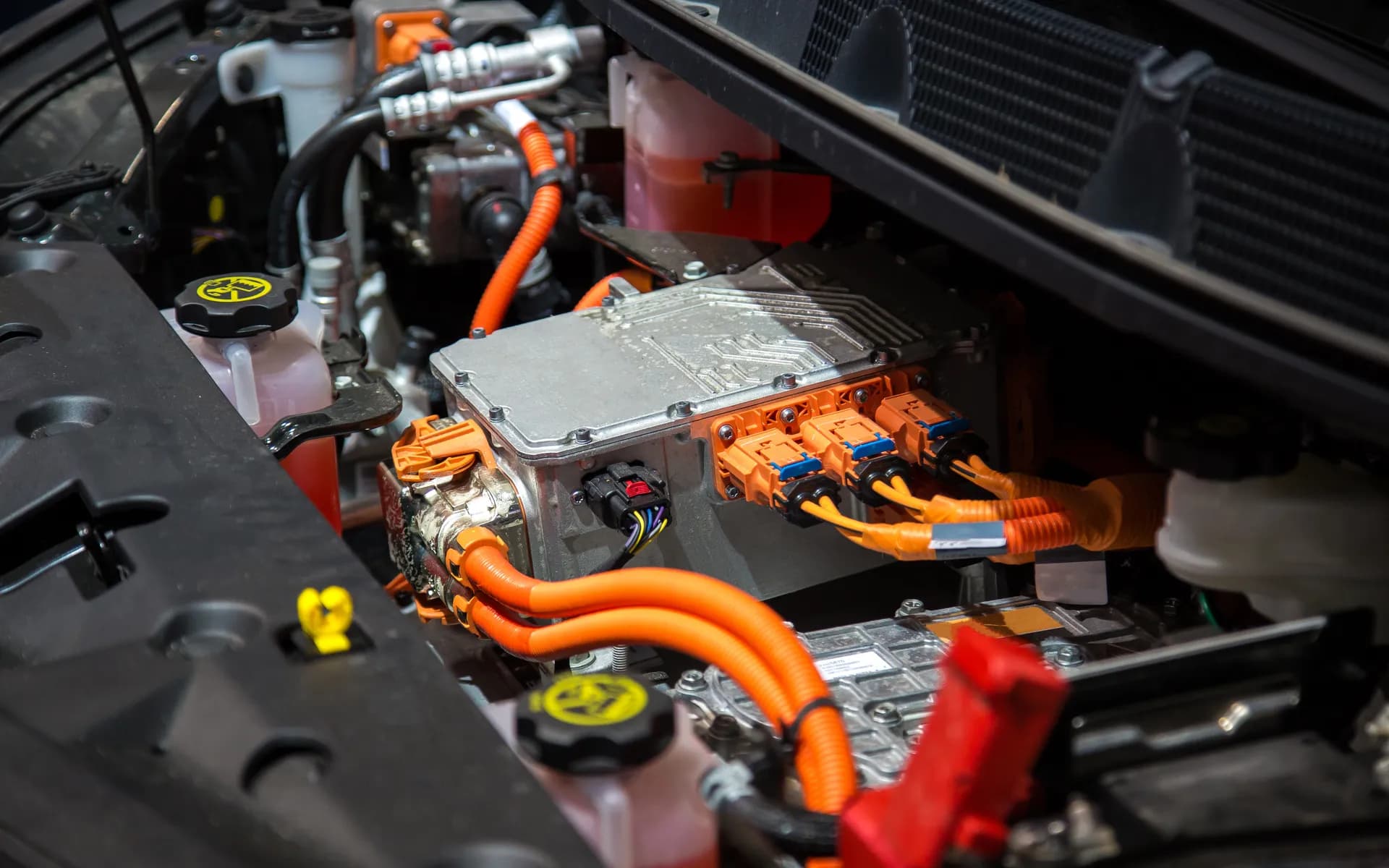
EV Battery and
BMS Monitoring
Telematics that read an EV battery management system over CAN and turn raw cell data into state of health, range, and thermal insight. From the in-vehicle gateway to the cloud analytics, the system tells you what every pack in your fleet is really doing.
 THE CHALLENGE
The Pack Is the Most Expensive Part and the Least Visible
The battery is the costliest component in any EV and the one operators understand least. The battery management system inside the pack knows the cell voltages, the temperatures, the state of charge, and the degradation, but that data usually stays trapped on the internal CAN bus. Without it you cannot predict range, catch a thermal problem before it spreads, plan a warranty claim, or value a pack for second life. Scope covers the gateway that reads the BMS over CAN, the firmware that decodes manufacturer-specific frames, and the cloud analytics that turn cell data into the health, range, and safety signals your operation actually needs.
Built within the Telematics and GPS Tracking ecosystem, and frequently paired with EV Fleet Tracking.
WHAT'S INCLUDED
From CAN Frame to Battery Insight
BMS Data Gateway over CAN
The in-vehicle gateway is built around an STM32 with a CAN transceiver that reads the battery management system directly. Where the pack speaks J1939 or a manufacturer-specific protocol, the frames are decoded to extract cell voltages, pack current, temperatures, and state of charge at the rate the application needs.
Cell Health and State of Health
State of health is computed from capacity fade, internal resistance growth, and cell voltage spread, tracked over thousands of cycles. You see which packs are aging fast, which cells are weak, and when a pack will fall below its usable threshold.
Thermal Monitoring
Per-module temperatures and gradients across the pack are watched to catch hot cells, failing cooling, and the early signature of thermal runaway. Threshold and rate-of-change alerts give your team time to pull a vehicle before a small fault becomes a fire.
Range and SoC Analytics
State of charge, consumption history, and route conditions become a realistic range estimate rather than a nameplate figure. Drivers and dispatchers see usable range for the actual load, terrain, and weather, grounded in real-world conditions rather than a lab number.
Second-Life Analytics
When a pack retires from vehicle duty, its history determines its second-life value for stationary storage. The full cycle, thermal, and degradation record is retained so a pack can be graded and re-deployed instead of scrapped early.
Battery Analytics Dashboard
The dashboard shows the fleet of packs at a glance: state of health distribution, thermal flags, charge behavior, and warranty-relevant events. Drill into any pack for its cell-level history and export reports for the manufacturer or warranty team.
WHAT THE DATA UNLOCKS
From Mystery Pack to Managed Asset
Once the BMS data is flowing, the pack becomes an open, transparent asset with full visibility. The same cell-level record drives safety, planning, warranty, and resale, which is why reading the BMS properly pays for itself many times over the life of the fleet.
Catch Failures Early
Rising cell imbalance, a creeping internal resistance, or a warm module shows up in the trend long before a breakdown. You schedule the intervention instead of recovering a stranded vehicle.
Plan Charging and Range
Real state of charge and real usable range let dispatchers assign the right vehicle to the right route and stage charging so no shift starts on an empty pack.
Defend Warranty and Resale
A complete, tamper-evident history of cycles, temperatures, and faults backs every warranty claim and grades a pack honestly for second-life sale.
HOW IT WORKS
Gateway, Link, Analytics
In-Vehicle Firmware
FreeRTOS on the STM32 gateway samples the BMS over CAN, applies the right DBC or J1939 decoding, and buffers high-rate cell data locally. It uploads a compressed summary continuously and the full trace on a fault, so you keep detail where it matters without flooding the link.
Connectivity
A Quectel EC200 or BG95 module carries data over MQTT and TLS, with Cat-M1 and NB-IoT options for low-power telematics use. Over-the-air updates refine decoding and thresholds as packs and chemistries change across the fleet.
Cloud Analytics
A time-series store holds cell-level history, and the analytics layer computes state of health, thermal flags, and range models per pack. Alerts, dashboards, and warranty exports all read the same cell-level record.
PROTOCOLS AND SAFETY
Read the Pack Without Disturbing It
CAN and J1939 Decoding
Decoding works from DBC files and J1939 definitions, and reverse-engineers manufacturer-specific frames where needed, to read the BMS accurately. The pack is read passively wherever possible so monitoring never interferes with the pack control loop.
Functional Safety Awareness
The boundary between monitoring and control is respected. The gateway observes and reports; it does not override the BMS safety functions, and the design accounts for the functional-safety expectations around high-voltage systems.
Data Integrity
Cell history is stored tamper-evident so warranty and second-life grading stand up to scrutiny, with telemetry secured over TLS end to end from the gateway to the cloud.
FAQ
Common Questions
How is the battery management system read?
An in-vehicle gateway built around an STM32 with a CAN transceiver reads the BMS directly. Frames are decoded using DBC or J1939 definitions, and manufacturer-specific protocols are reverse-engineered where needed, to extract cell voltages, current, temperatures, and state of charge.
What is the difference between state of charge and state of health?
State of charge is how full the pack is right now. State of health is how much of the original capacity remains after aging. State of health is computed from capacity fade, internal resistance growth, and cell voltage spread tracked over thousands of cycles.
Can thermal problems be detected before they become dangerous?
Yes. Per-module temperatures and gradients are monitored, with alerts on both absolute thresholds and rapid rate of change, which is the early signature of a developing thermal event. That gives your team time to pull a vehicle before a small fault spreads.
Does monitoring interfere with the battery control system?
No. The BMS is read passively wherever possible. The gateway observes and reports; it does not override the BMS safety functions or the pack control loop, so monitoring is safe to add to a vehicle in service.
How does this support second-life battery use?
The full cycle, thermal, and degradation history of each pack is retained. When a pack retires from vehicle duty, that record grades it honestly for stationary storage, so packs are re-deployed at fair value instead of being scrapped early.
Are different battery chemistries and makes supported?
Yes. Decoding and the state-of-health models are tuned per chemistry and per manufacturer, with updates pushed over the air, so a mixed fleet of packs is read correctly from one platform.
Ready to See Inside Your Battery Packs?
Share your packs, your BMS, and what you need to know: range, health, thermal safety, or second life, to get a tailored walkthrough of the gateway, the decoding, and the analytics involved.
Schedule a Free Consultation