

Why Does a Prototype Work in the Lab but Fail in Production?
Discover why hardware prototypes that work in the lab can fail in production and how design validation, manufacturing checks, and real-world testing help ensure consistent performance and reliability at scale.
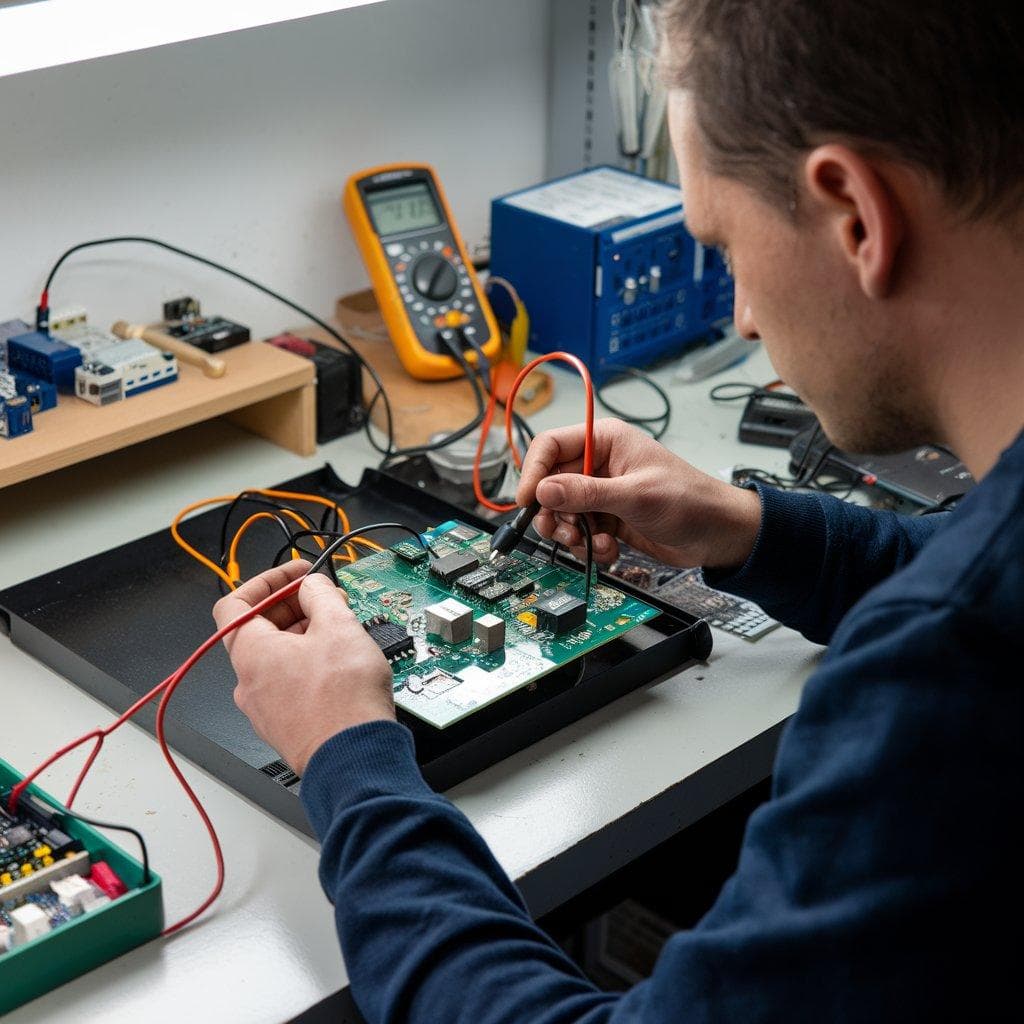
A hardware prototype can perform perfectly in a controlled laboratory environment and still fail when manufacturing begins. The reason is simple: proving that a product works once is not the same as proving that it can be manufactured consistently, operate reliably under real-world conditions, and perform as expected at scale.
Laboratory testing often takes place under controlled conditions, with carefully assembled components, experienced engineers, stable power supplies, and direct access to debugging equipment. Production introduces a different set of variables, including component tolerances, assembly variations, environmental stress, supplier differences, and manufacturing process limitations.
The gap between prototype success and production reliability is where hardware teams can lose time, money, and confidence in their designs.
What a Working Prototype Actually Proves
A successful prototype demonstrates that the product can perform its intended function under the conditions in which it was tested. However, it does not automatically prove that the design is ready for mass production.
During prototyping, engineers can manually adjust components, modify firmware parameters, correct assembly issues, or work around unexpected behavior. These interventions may help produce a working unit, but they can hide weaknesses that become more visible when the product moves into manufacturing.
Before approving a design for production, teams need to establish whether the product can be built repeatedly, tested consistently, and operated reliably without depending on undocumented adjustments or individual engineering expertise.
Why Prototypes Fail in Production
1. Laboratory Conditions Do Not Reflect Real-World Environments
A prototype may work well at room temperature with a stable power supply and minimal electrical interference. In actual deployment, the same product may encounter temperature fluctuations, vibration, humidity, electrical noise, unstable power, or continuous operation.
These conditions can expose weaknesses in component selection, PCB layout, thermal management, enclosure design, and firmware behavior.
For example, an IoT device that operates reliably on an engineering workbench may experience communication failures or overheating when installed inside an industrial enclosure.
What teams should do: Validate the product against its intended operating environment, including temperature, power variation, vibration, electrical interference, and other relevant conditions.
2. Manufacturing Variations Introduce New Failure Points
A prototype is often assembled in small quantities, with experienced technicians paying close attention to individual units. Production involves repeatable processes, different operators, assembly equipment, and variations in component tolerances.
A design that depends on precise manual adjustments may not be sufficiently robust for volume manufacturing.
Common issues include:
- Component placement and soldering variations.
- Mechanical fit and tolerance mismatches.
- Differences between component batches or suppliers.
- Assembly steps that are difficult to repeat consistently.
- Manufacturing processes that cannot reliably maintain the specified tolerances.
What teams should do: Conduct Design for Manufacturing (DFM) and Design for Assembly (DFA) reviews, assess critical tolerances, and validate the assembly process before committing to larger production volumes.
3. Component Substitutions Change Product Behavior
During prototyping, engineers may use readily available components to keep development moving. When production begins, supply shortages, cost targets, or component lifecycle changes may require alternative parts.
Two components with similar specifications are not necessarily interchangeable in every application. Differences in electrical characteristics, thermal performance, tolerances, or firmware compatibility can affect the final product.
A replacement component may work during basic functional testing but fail under specific loads, temperatures, or operating conditions.
What teams should do: Validate critical components against the actual system requirements, document approved alternatives, and retest the product whenever a substitution could affect performance or reliability.
4. Hardware and Firmware Integration Issues Appear at Scale
Hardware and firmware are often developed and debugged together during prototyping. Engineers may adjust timing, communication parameters, or configuration settings until the system behaves as expected.
However, the production version may use different component revisions, firmware builds, boot configurations, or communication settings. These differences can introduce failures that were not present in the original prototype.
For connected devices, the impact may extend to connectivity, device provisioning, sensor readings, security, and firmware updates.
What teams should do: Validate the complete hardware-firmware combination, maintain version-controlled configurations, and test startup, communication, recovery, and update behavior under realistic operating conditions.
5. Prototype Testing Does Not Cover Production-Level Reliability
A product may pass a functional test without having demonstrated long-term reliability. Basic testing confirms that expected features work, but it may not reveal intermittent failures, thermal degradation, component fatigue, or performance changes after extended operation.
Similarly, testing a single prototype cannot establish how consistently a manufacturing process will produce acceptable units.
What teams should do: Build a validation plan that covers functional performance, environmental conditions, reliability, and production testing. Where appropriate, use pilot builds to evaluate manufacturing consistency and identify recurring failure patterns.
How to Bridge the Gap Between Prototype and Production
Moving from a successful prototype to a production-ready product requires evidence at each stage, rather than relying on a single successful demonstration.
A structured approach should include:
1. Validate against documented requirements. Define the expected operating conditions, performance limits, interfaces, and acceptance criteria before testing begins.
2. Perform design and manufacturing reviews. Evaluate electrical, mechanical, thermal, assembly, and component-related risks before production release.
3. Test under realistic conditions. Move beyond the laboratory setup and evaluate the product under the environmental, electrical, and operational stresses it is expected to encounter.
4. Run a production-representative pilot build. Use the intended components, assembly processes, fixtures, and test procedures to identify problems that a manually assembled prototype may conceal.
5. Establish repeatable production tests. Define the checks required to verify each unit, record test results, and identify failures before products leave manufacturing.
6. Maintain revision and configuration control. Keep approved hardware revisions, BOMs, firmware versions, and test procedures aligned so that production units match the validated design.
These practices help teams distinguish between a product that can be made to work and a product that is ready to be manufactured consistently.
The Data That Matters Before Production Release
A working prototype is only one part of the evidence required for production readiness. Engineering teams should also understand what happened during the build and validation process.
Important information includes:
- Test coverage: Which functional, environmental, and reliability tests were completed?
- Failure records: What failed during testing, and how was each issue resolved?
- Build consistency: Were the units assembled using the intended production process?
- Component traceability: Which components, suppliers, and revisions were used?
- Manufacturing yield: How many units passed the defined acceptance criteria on the first attempt?
- Revision history: Were the tested hardware and firmware versions the same ones approved for production?
Without these records, teams may approve a product based on a successful unit without understanding whether the design and manufacturing process can consistently reproduce that result.
The goal is not simply to eliminate every possible failure before production. It is to identify significant risks, understand their causes, and establish sufficient evidence that the product is ready for the next stage.
How RNDSquare Helps Prepare Hardware for Production
RNDSquare supports hardware product development across electronics, embedded firmware, mechanical integration, validation, and manufacturing readiness. The objective is to help teams identify issues before they become expensive production problems.
Our engineering approach can include:
- Hardware design review and component verification.
- PCB and mechanical design validation.
- Embedded firmware and hardware integration testing.
- Functional, environmental, and reliability testing.
- Design for Manufacturing and production-readiness reviews.
- Pilot production support and manufacturing test planning.
By connecting these activities throughout development, engineering teams can make better-informed release decisions and reduce the risk of discovering critical design weaknesses after production has started.
A Successful Prototype Is the Starting Point, Not the Finish Line
A prototype proves that a product can work under specific conditions. Production readiness requires confidence that it can be built consistently, tested repeatably, and perform reliably in its intended environment.
The difference lies in how thoroughly the design, components, manufacturing process, and validation evidence have been evaluated before scaling up.
The important question is not just whether your prototype works. It is whether your production process can reproduce that performance, unit after unit.
If your hardware product is approaching production and you want to identify potential design, integration, or manufacturing risks before scaling, RNDSquare can help you plan the engineering and validation work needed to move forward with greater confidence.