

 Industries
Why Was the First Production Batch Different From the Prototype?
A hardware product company successfully developed and validated its prototype. The device performed as expected during engineering tests, and the team was confident about moving into production.
However, when the first production batch arrived, the results were different.
Some units behaved inconsistently. A few failed during testing, firmware behaviour varied across units, and certain components performed differently from those used in the prototype.
The challenge was not necessarily a design flaw. It was the gap between prototype development and production execution.
Some of the key challenges included:
- Component Variations: Production components or suppliers differed from those used during prototype development.
- BOM Mismatches: Manufacturing teams sometimes worked with outdated or incorrect BOM revisions.
- Firmware Inconsistency: The firmware build used for production was not always clearly linked to the hardware revision.
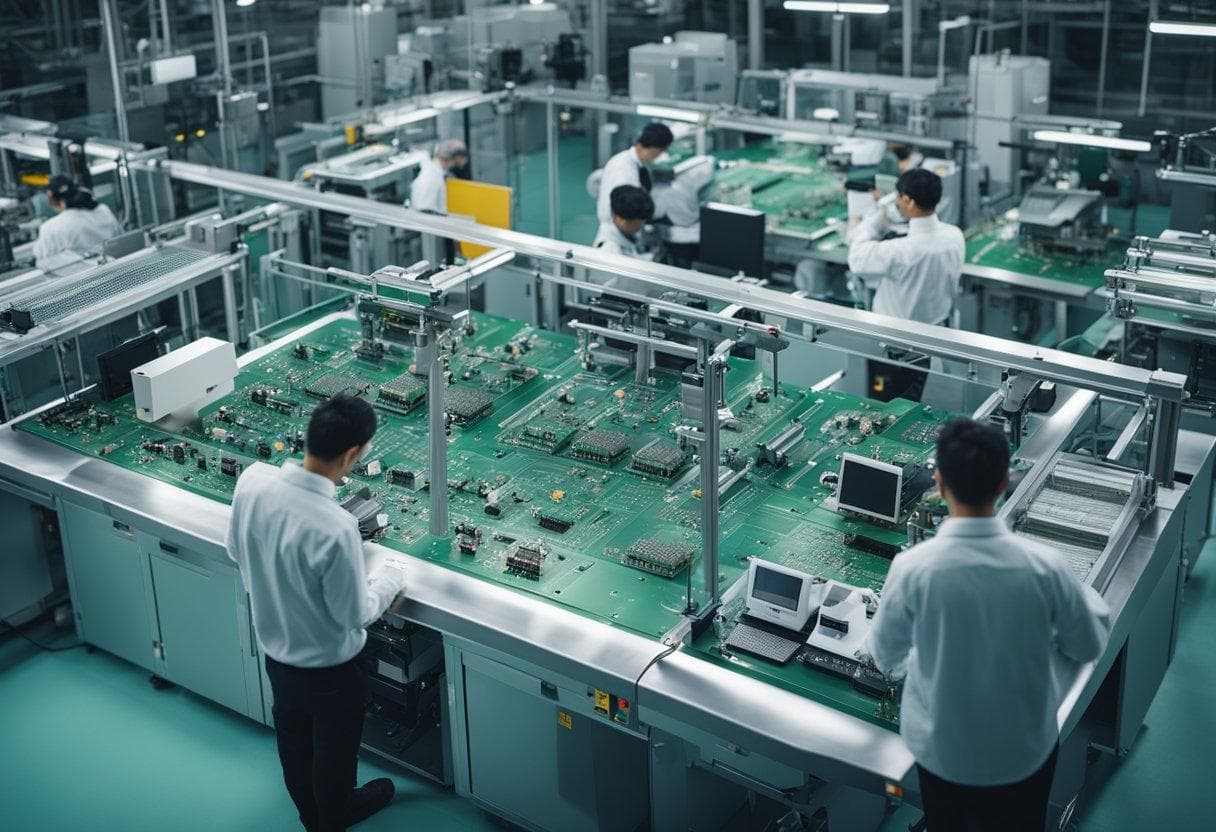
- Manufacturing Differences: Assembly processes, soldering quality, and component placement introduced variations.
- Limited Traceability: Identifying which design, component, or firmware version was used in a failing unit was difficult.
The company needed a more structured way to maintain consistency between engineering-approved prototypes and production-ready units.
RND Square approached the challenge by focusing on engineering-to-manufacturing continuity and product traceability.
Using S3Suite, we helped establish a connected view of engineering revisions, component information, firmware versions, and manufacturing records.
The objective was to ensure that every production unit could be associated with the correct engineering information.
Key capabilities included:
- Engineering Revision Management: Maintain visibility into PCB, BOM, and mechanical design revisions.
- BOM Management: Connect component details with the correct product and engineering revision.
- Firmware Version Tracking: Maintain firmware build information alongside hardware configurations.
- Manufacturing Records: Link production units with relevant engineering and manufacturing information.
- Production Test Records: Maintain test results against individual manufactured units.
- Unit-Level Traceability: Connect serial numbers with hardware revisions, component details, firmware versions, and production records.
This approach helps engineering and manufacturing teams work with consistent product information throughout the transition from prototype to production.
The project highlighted an important lesson in hardware product development: a prototype working successfully does not automatically guarantee consistent production results.
Production readiness requires more than validating the design. It requires ensuring that the same approved engineering decisions are carried through procurement, manufacturing, firmware deployment, and testing.
A connected engineering and manufacturing workflow provides the foundation for:
- Better Revision Control: Reduce confusion between prototype and production design versions.
- Consistent Manufacturing: Help production teams work with approved BOMs and engineering files.
- Firmware Traceability: Identify the firmware version associated with each manufactured unit.
- Faster Failure Investigation: Trace production issues back to relevant components, revisions, and test records.
- Improved Production Visibility: Understand what went into each manufactured unit.
- Stronger Engineering Handoffs: Keep engineering, procurement, and manufacturing teams aligned.
The key takeaway was simple: the first production batch should not become a separate interpretation of the prototype.
It should be a controlled reproduction of the approved product design.
With RND Square's engineering capabilities and S3Suite, hardware manufacturers can strengthen the transition from prototype to production, improve unit-level traceability, and maintain better control over product revisions.
Related RND Square services
Product work like this depends on clear handoffs across engineering teams.
When a project similar to Why Was the First Production Batch Different From the Prototype? needs delivery support, RND Square can help connect the hardware, firmware, cloud, AI, and manufacturing work around one product roadmap.
Service fit
Vision AI Services
Useful when inspection, detection, or visual decision support becomes part of the product.
PCB, enclosure, sensors
RTOS, Linux, device logic
Dashboards, APIs, data flow
Vision, inspection, analytics
100%
Engineering Revisions Tracked
5+
Prototype Validation Stages
4x
Improved Engineering Traceability
Let's build the future, together.
Fullstack engineering partner: from hardware to cloud to Vision AI.
Trusted by


