


 Industries
How Can You Prevent Costly PCB Design Mistakes Before Manufacturing?
A hardware product company approached RNDSquare for support in identifying potential PCB design issues before moving into manufacturing. The company wanted to ensure that its PCB designs met electrical, functional, and manufacturing requirements while avoiding costly redesigns and production delays.
The engineering team was concerned that issues such as incorrect component footprints, signal routing problems, power distribution errors, and manufacturing constraints could go unnoticed until fabrication or prototype testing.
The company needed a structured approach to validate its PCB design and identify potential risks before committing to production.
Common challenges included:
- Design errors: Identifying incorrect footprints, pin assignments, and schematic connectivity issues.
- Manufacturing readiness: Ensuring the PCB layout met fabrication and assembly requirements.
- Performance risks: Addressing potential signal integrity, power, and thermal issues.
- Costly revisions: Avoiding repeated PCB fabrication and redesign cycles.
- Documentation gaps: Maintaining consistency between approved design files, BOMs, and manufacturing documentation.
The company approached RNDSquare to help establish a more reliable validation process before manufacturing.
After understanding the company's requirements, RNDSquare proposed a structured PCB design validation approach to identify potential issues before manufacturing. The focus was on reviewing the design, verifying critical components, and ensuring that the board met electrical and manufacturing requirements before production release.
Our team focused on the following activities:
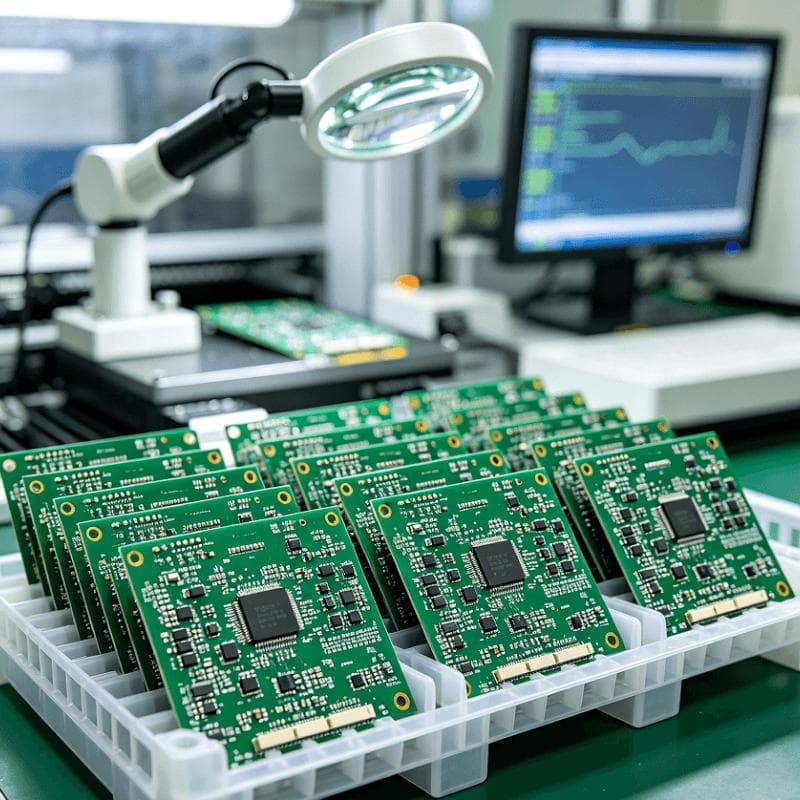
- PCB Design Review: Reviewed schematics, component footprints, pin assignments, power distribution, and signal routing to identify potential design issues.
- Design for Manufacturing (DFM): Evaluated PCB layout constraints, trace widths, clearances, component spacing, and assembly requirements to improve manufacturing readiness.
- Component and BOM Verification: Reviewed component specifications, footprints, compatibility, and BOM accuracy to reduce the risk of procurement and assembly issues.
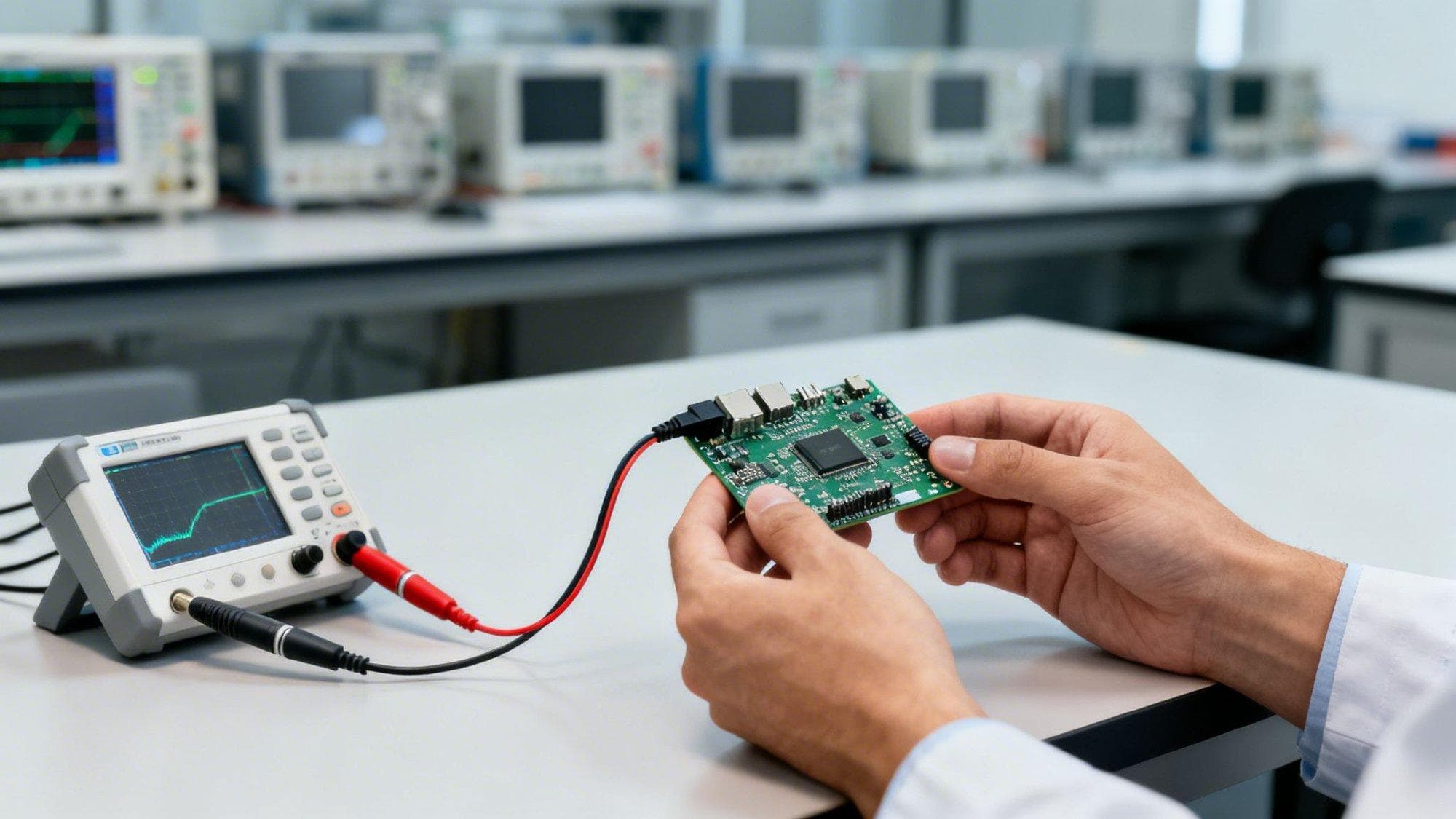
- Hardware Validation: Identified the appropriate prototype tests to verify power performance, interfaces, and core functionality before production.
- Hardware-Firmware Integration: Reviewed the interaction between hardware components and embedded firmware to identify potential integration issues.
- Design Revision Control: Recommended maintaining consistent design revisions, BOMs, validation records, and approved manufacturing files to avoid confusion during production.
By addressing these areas before manufacturing, RNDSquare aimed to help the company identify design risks earlier, reduce avoidable revision cycles, and establish a more controlled transition from PCB development to production.
The engagement highlighted the importance of validating a PCB design beyond basic schematic and layout completion. A design that passes automated electrical rule checks may still encounter component compatibility, thermal, assembly, or functional issues during later stages of development.
By adopting a structured validation process, the company could better prepare its design for manufacturing and make more informed engineering decisions before committing to production.
The key benefits of this approach include:
- Earlier identification of design risks: Reviewing potential electrical and layout issues before fabrication helps reduce the likelihood of expensive late-stage corrections.
- Improved manufacturing readiness: DFM reviews help identify constraints that could affect PCB fabrication and assembly.
- Reduced rework risk: Component verification and prototype testing help uncover potential problems before scaling production.
- Better engineering coordination: Consistent BOMs, design revisions, and validation records help engineering and manufacturing teams work with the correct information.
- More reliable product development: Combining design reviews with functional testing provides greater confidence in the board's intended operation.
The main takeaway is that PCB validation should be an integral part of product development, not a final step performed immediately before manufacturing. Identifying design risks early gives engineering teams more opportunities to address them before they lead to additional costs or delays.
By combining PCB design review, manufacturing checks, and hardware validation, RNDSquare helps hardware companies make better-informed decisions and prepare their electronic products for manufacturing with greater confidence.
Related RND Square services
Product work like this depends on clear handoffs across engineering teams.
When a project similar to How Can You Prevent Costly PCB Design Mistakes Before Manufacturing? needs delivery support, RND Square can help connect the hardware, firmware, cloud, AI, and manufacturing work around one product roadmap.
Service fit
IoT Application Services
Useful when device data, cloud workflows, and operational visibility need to work together.
PCB, enclosure, sensors
RTOS, Linux, device logic
Dashboards, APIs, data flow
Vision, inspection, analytics
100%
PCB Design Review
95%
Manufacturing Readiness
98%
Design Accuracy
Let's build the future, together.
Fullstack engineering partner: from hardware to cloud to Vision AI.
Trusted by


