

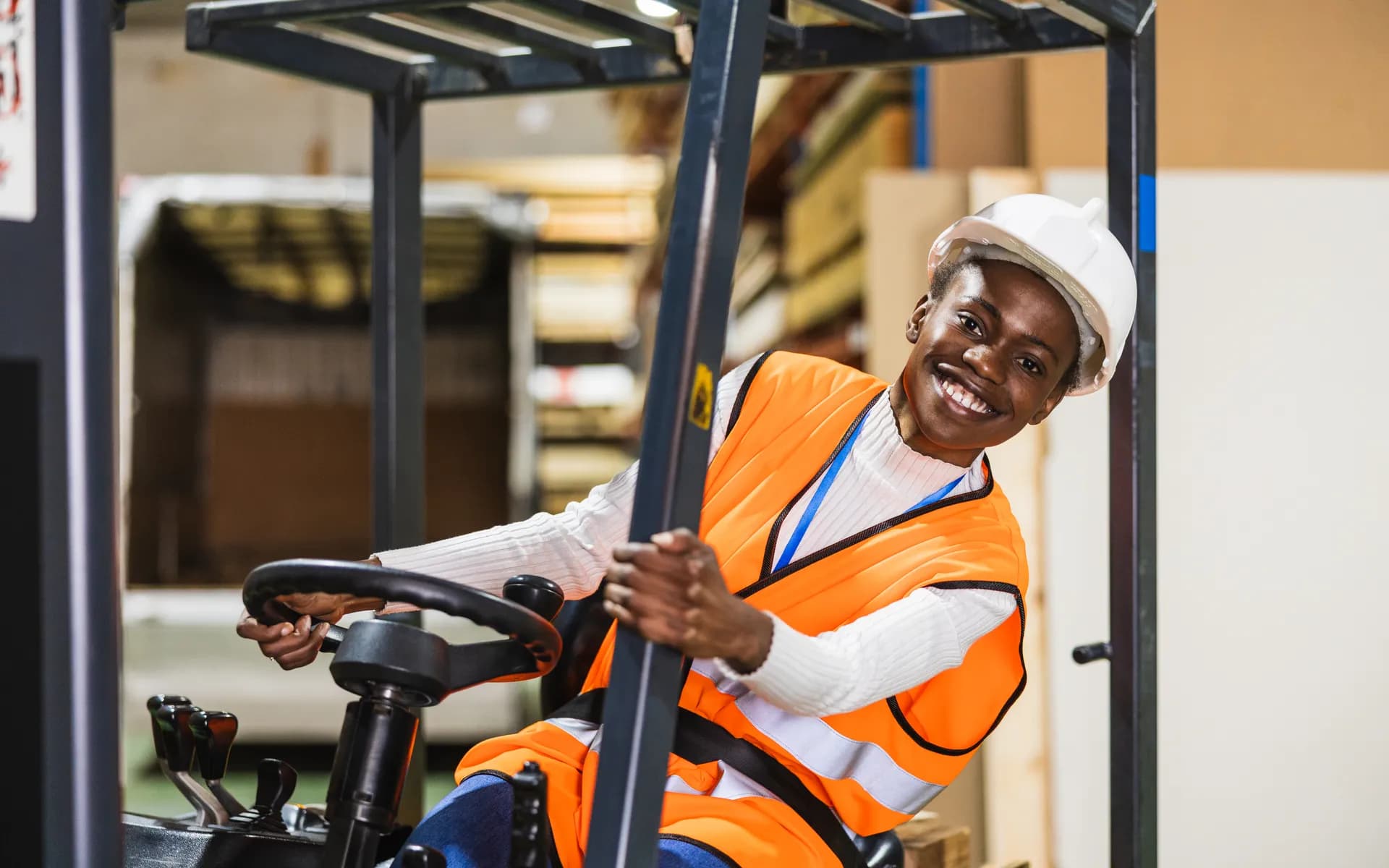
Forklift and Warehouse
Asset Tracking
An indoor real-time location system that tracks forklifts, assets, and people under a warehouse roof where GPS cannot reach. UWB and BLE positioning, forklift telematics, and pedestrian proximity safety in one platform that talks to your WMS.
 THE CHALLENGE
Indoor Assets Have No GPS and No Visibility
The moment an asset moves under a warehouse roof, GPS stops working and your tracking goes dark. Forklifts hit racking and pedestrians with no record of who or when, trucks sit idle in one aisle while another shift is short of equipment, and the WMS knows what stock you have but not where it physically sits. An indoor location system closes that blind spot, giving every truck, asset, and person a live position, tying it to forklift safety and utilisation data, and feeding it straight into your WMS.
Built within the Telematics and GPS Tracking ecosystem, and frequently paired with Asset Tracking Solutions.
WHAT'S INCLUDED
Hardware and Software for Indoor Tracking
Indoor RTLS Infrastructure
Overhead UWB and BLE angle-of-arrival anchors give assets a position relative to the building. UWB delivers 10 to 30 centimetre accuracy in high-value zones, with BLE covering open floor at lower cost per square metre.
Asset and Pallet Tags
Battery UWB and BLE tags suit pallets, cages, tools, and high-value stock. Tags report position to the anchor mesh and run for years on a coin or AA cell, so you tag thousands of items without a service burden.
Forklift Telematics Unit
A telematics unit fits each truck to log impact and shock from an accelerometer, capture operator ID by RFID or PIN, enforce a pre-use checklist before the truck moves, and track run hours and utilisation.
Pedestrian Proximity Safety
Pedestrians carry a UWB tag and forklifts carry a reader. When a person enters the danger zone around a moving truck, both are warned and the truck can slow automatically. UWB ranging works around blind corners and racking, beyond fixed zones.
WMS Integration
Live position, zone occupancy, and forklift status map to your warehouse management system over REST and an event stream. Pallet locations update without a manual scan, and directed putaway and pick tasks run off real position.
Utilisation Analytics
Reporting covers run hours, idle time, distance, impacts per shift, and operator activity, with heatmaps of where assets and people spend time. That reveals underused trucks, congestion points, and operators who need refresher training.
POSITIONING TECHNOLOGY
Accuracy Matched to Each Zone
Blanketing a whole warehouse in centimetre-grade tracking is rarely worth the cost. UWB and BLE are mixed so accuracy lands where it pays off, and the backend fuses both into one position per asset.
UWB for Pick Zones
UWB two-way ranging delivers 10 to 30 centimetre accuracy, enough to tell adjacent racking bays apart. It suits pick faces, staging, and high-value storage where bay-level position drives the work.
BLE AoA for Open Floor
BLE angle-of-arrival anchors give roughly 0.5 to 1 metre accuracy at lower cost per square metre. It fits open floor, bulk storage, and circulation areas where zone-level position is enough.
Sensor Fusion
The backend fuses UWB, BLE, and forklift wheel and heading data into one smooth track per asset, snapping it to your warehouse layout so every position reads as an aisle and bay rather than a raw coordinate.
ARCHITECTURE
From Anchor Mesh to WMS
Anchors and Tags
Overhead anchors run over Power-over-Ethernet or battery and stream ranging data to a local engine. Tags and the forklift unit run firmware on a low-power STM32 with a UWB radio and a BLE stack, with the truck unit adding an accelerometer and RFID reader.
Location Engine
A local positioning engine resolves tag positions in real time and publishes them over MQTT. A fusion service smooths tracks, runs the geofence and proximity logic, and writes positions and events into a time-series database.
Applications and APIs
The dashboard renders live floor maps, safety alerts, and utilisation reports. REST APIs and webhooks expose position, zone, and forklift events to your WMS so putaway, pick, and asset-search tasks run off real location.
STANDARDS AND DEPLOYMENT
Safe, Compliant, and Non-Disruptive
Safety Compliance
Forklift impact logging, operator authorisation, and pre-use checklists support your site safety and forklift operating procedures. Proximity warnings and speed control align with pedestrian segregation rules common to warehouse safety policy.
Phased Rollout
Deployment surveys the site, plans anchor density per zone, and installs in phases so live operations keep running. A typical zone moves from survey to live tracking within a few weeks, starting with your highest-risk or highest-value area.
Open Integration
Position, zone, and telematics events publish over REST, MQTT, and webhooks. Designed to integrate with your WMS, ERP, and BI tools rather than locking data inside a closed platform, so your team builds on top of it.
FAQ
Common Questions
Why does GPS fall short for tracking forklifts and assets indoors?
GPS needs a clear sky view and does not work under a warehouse roof. Indoors, a real-time location system based on UWB or BLE angle-of-arrival anchors mounted overhead takes over. These give a position relative to the building, so a forklift or pallet reads as a specific aisle and bay rather than dropping out entirely.
What accuracy is achievable indoors?
UWB anchors deliver position accuracy of 10 to 30 centimetres, which is enough to tell adjacent racking bays apart. BLE angle-of-arrival is coarser at roughly 0.5 to 1 metre but costs less per square metre, so the two are often mixed: UWB in high-value pick zones and BLE across open floor and storage.
What does forklift telematics actually capture?
A telematics unit on each truck logs impact and shock events from an accelerometer, captures operator ID from an RFID or PIN login, enforces a pre-use safety checklist before the truck moves, and records run hours and utilisation. Impacts above a threshold raise an alert and can slow or immobilise the truck per your policy.
How does pedestrian proximity safety work?
Pedestrians carry a UWB tag in a badge or vest, and forklifts carry a reader. When a person enters a configured danger zone around a moving truck, the system warns the operator and the pedestrian and can trigger a speed reduction. Because it uses UWB ranging rather than fixed zones, it works around blind corners and racking.
Can this feed a warehouse management system?
Yes. The RTLS backend exposes REST APIs and an event stream for asset position, zone occupancy, and forklift status. These map to your WMS so a pallet location or a truck assignment updates without a manual scan, and directed-putaway and pick tasks can run off live location.
How disruptive is the anchor installation?
Anchors mount to the existing roof structure or racking and are powered over Ethernet or by battery where cabling is hard. Deployment surveys the site, plans anchor density per zone, and installs in phases so live operations keep running. A typical zone goes from survey to live tracking within a few weeks.
What utilisation insights are available?
Reporting covers truck run hours, idle time, distance travelled, impacts per shift, and operator activity, plus heatmaps of where assets and people spend time. That shows underused trucks to redeploy, congestion points to re-lay out, and operators who need refresher training.
Ready to Light Up Your Warehouse Floor?
Share your warehouse size, forklift count, and the zones that matter most to get a positioning plan, the forklift safety stack, and how it ties into your WMS.
Schedule a Free Consultation