

Smart Parking and
Enforcement
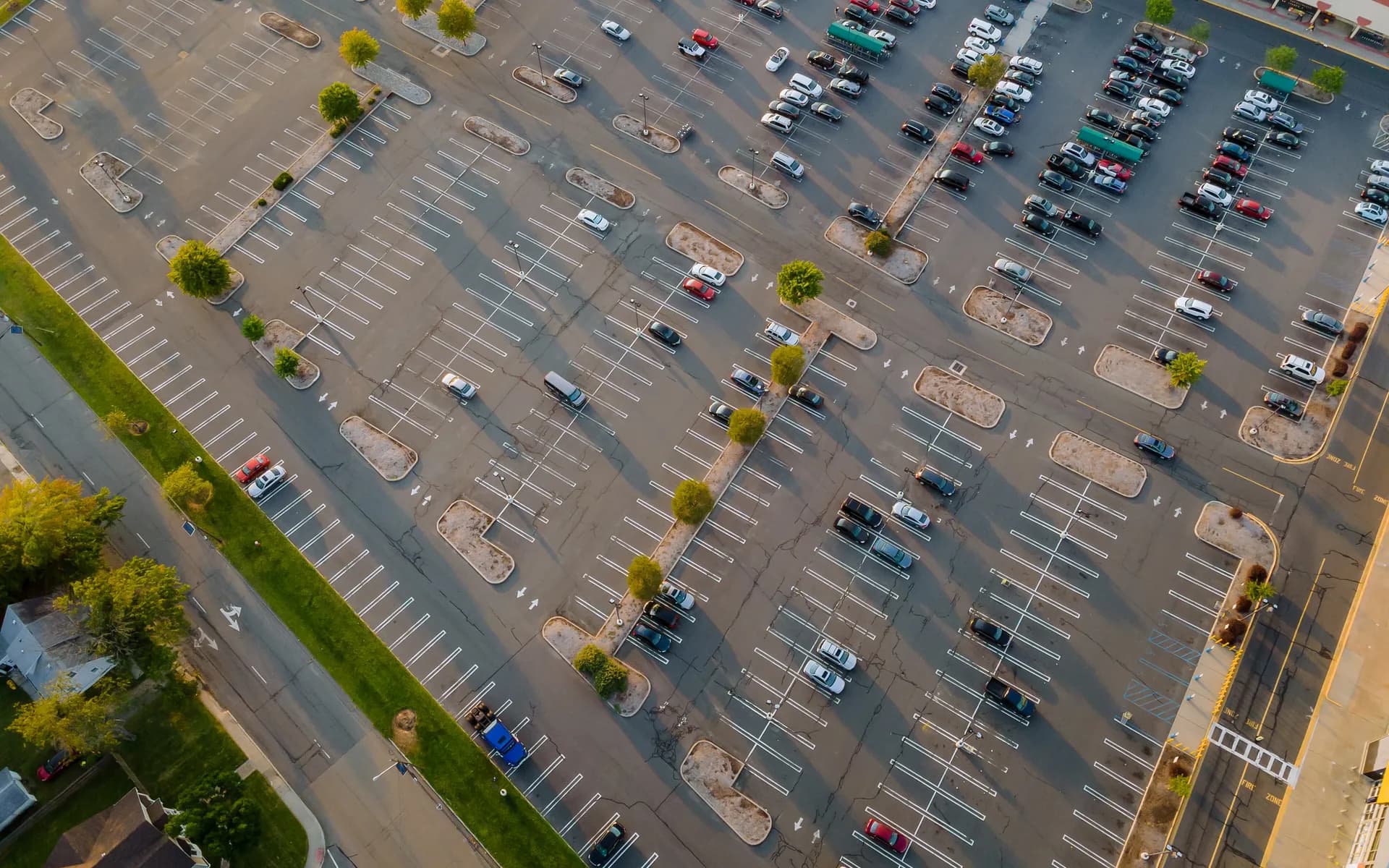
A smart parking system that senses bay occupancy, accepts digital payment, guides drivers to free space, and feeds a live enforcement and revenue dashboard for city and operator teams. From the in-ground sensor to the cloud, the whole stack is covered.
 THE CHALLENGE
Parking Data Is Stuck in the Physical World
A driver circling for a bay, a meter that only takes coins, an enforcement officer with no idea which streets are full, and a city that cannot tell you its real occupancy or revenue. Most parking estates run on disconnected hardware: a sensor vendor here, a payment app there, a handheld for tickets, and spreadsheets behind it all. One occupancy-to-revenue system closes that gap, where every bay reports its state, every payment is reconciled against it, and enforcement acts on live truth rather than a patrol guess.
A component of the broader Telematics and GPS Tracking capability, often deployed with Geofencing and Location Intelligence.
WHAT'S INCLUDED
The Full Smart Parking Stack, Sensor to Dashboard
Occupancy Sensing Hardware
In-ground and surface bay sensors are built around a three-axis magnetometer plus a low-power MCU such as the STM32L0 or Nuvoton M0, with optional radar for vehicles that mask the magnetic signature. Each node runs years on a primary lithium cell, is potted to IP68 for road embedding, and reports occupied or vacant over NB-IoT or LoRa.
Camera Occupancy and ANPR
For surface lots and multi-bay streets, camera based occupancy runs on an edge box, counting free bays per row and reading plates for entry, exit, and enforcement context. The vision model is tuned for night, rain, and partial occlusion so a single camera replaces a cluster of sensors.
Payment Integration
Bay state is wired to payment so a session starts on entry or on a tap in the app, and stops when the vehicle leaves. UPI, cards, wallets, and FASTag style RFID integrate, with pay-by-plate reconciliation so a paid plate and an occupied bay match before any fine is raised.
Driver Guidance and App
The driver app and the on-street guidance signs show free bays by zone and route the driver to the nearest open space. Live availability comes straight from the sensor and camera layer, so the count on the sign is the count on the ground.
Enforcement Workflow
The warden mobile app and ticketing workflow cover a flagged bay where occupancy has no matching paid session, plate capture, photo evidence, and ticket issue with offline queueing for areas with weak coverage. Every action is timestamped and audit logged.
City and Operator Dashboard
The control dashboard shows live occupancy by street and zone, turnover, revenue against forecast, enforcement yield, and sensor health. Operators see heat maps and trends; finance teams export reconciled revenue reports.
WHAT YOU EXPERIENCE
From Guessing Occupancy to Knowing It
The point of a smart parking system is not the sensor count. It is that a driver finds a bay faster, a payment matches a real session, and an enforcement officer is sent only where there is genuinely a violation. Here is how that shows up day to day.
Drivers Stop Circling
Live bay availability in the app and on zone signs cuts the search time that creates most downtown congestion. Drivers head to a free row instead of crawling the kerb.
Payment Matches Reality
Pay-by-plate sessions are tied to the occupied bay, so a paid car is never ticketed and an unpaid one is flagged automatically. Revenue leakage from missed sessions drops sharply.
Enforcement Goes Where It Counts
Wardens get a live list of bays with occupancy but no paid session, with photo and plate evidence already attached. Patrols stop being random and start being targeted.
HOW IT WORKS
From Bay State to City Dashboard
Sense at the Bay
Magnetometer and radar fusion on the sensor node decides occupied or vacant locally, so only state changes go over the air. Camera nodes count bays per frame at the edge. This keeps the NB-IoT or LoRa payload tiny and battery life long.
Ingest and Reconcile
State events arrive at the backend over MQTT or CoAP, are written to a time-series store, and are matched against active payment sessions in near real time. A bay state plus a payment record produces a clean enforcement decision.
Act and Report
The reconciliation result drives three outputs at once: availability to the driver app and signs, a flag to the warden app, and an entry in the revenue and occupancy dashboard. Sensor health telemetry rides the same pipeline.
STANDARDS AND INTEGRATION
Built to Fit City and Operator Systems
Connectivity and Power
NB-IoT and Cat-M1 via Quectel BC660 or BG95 for street nodes, LoRa for dense private estates, and PoE or mains for camera boxes. Battery nodes are engineered for a multi-year service life so you are not digging up bays to swap cells.
Open Data and Protocols
Occupancy and pricing are exposed over REST and MQTT and can publish to city open-data and SmartCity platforms. Payment runs through PCI compliant gateways, and enforcement records are exportable for the municipal back office.
Security and Audit
Device traffic is secured with TLS and per-device credentials. Enforcement events carry tamper-evident timestamps and image evidence, with full audit trails so a contested ticket can be reconstructed end to end.
FAQ
Common Questions
Do you use in-ground sensors or cameras for occupancy?
Both, chosen by site. On-street and scattered bays suit magnetometer and radar sensor nodes, one per bay, reporting over NB-IoT or LoRa. Surface lots and multi-bay rows are more economical with edge camera occupancy, where one camera covers a whole row and also reads plates. The two are often mixed in a single deployment.
How do you stop a paid driver from being wrongly fined?
Bay occupancy is reconciled against active payment sessions by plate or bay ID before any violation is raised. A bay only flags for enforcement when it is occupied and has no matching paid session. The warden app shows the evidence, so disputed tickets are rare and easy to resolve.
What is the battery life of a parking sensor?
Because the sensor decides occupied or vacant locally and transmits only on state change over a low-power radio, a single primary lithium cell typically lasts several years. The cell and report interval are sized to your turnover so you avoid frequent bay excavation.
Which payment methods can you integrate?
UPI, cards, wallets, and RFID or FASTag style tags integrate through PCI compliant gateways, plus pay-by-plate and pay-by-app flows. Sessions start and stop against the live bay state so billing matches actual dwell time.
Can this connect to your existing city or operator platform?
Yes. Occupancy, pricing, and enforcement data are exposed over REST and MQTT and can publish to open-data and SmartCity platforms, ERP, and finance systems. The dashboard can run standalone or feed your existing control centre.
How does the driver guidance stay accurate?
The availability shown on zone signs and in the app comes directly from the same sensor and camera layer that drives enforcement, with no separate count to drift out of sync. When a bay changes state, the guidance count updates within seconds.
Ready to Build Your Smart Parking System?
Share your estate: on-street bays, surface lots, payment methods, and enforcement model, to get a walkthrough of sensor versus camera choices and how the occupancy-to-revenue pipeline comes together.
Schedule a Free Consultation