

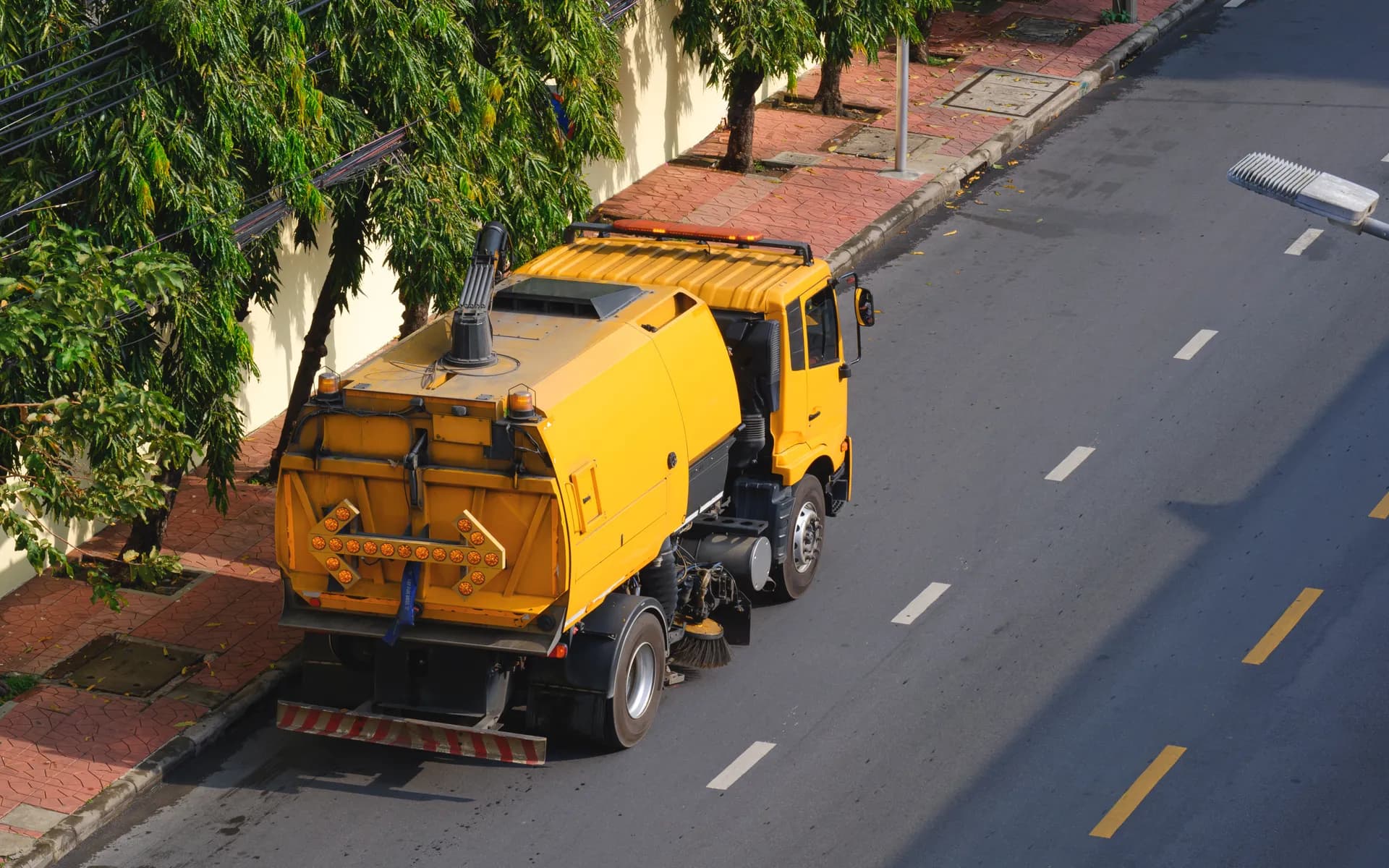
Municipal and Public
Works Fleet
Municipal fleet management telematics with service zone coverage, citizen complaint integration, utilisation and fuel reporting, and public works scheduling. From the tracker on the sweeper to the commissioner dashboard, the full stack is covered.
 THE CHALLENGE
Proving the City Got the Service It Paid For
A municipal fleet is judged by whether the ward was swept, the bins were lifted, and the water tanker reached the colony. Most corporations run on paper logs and contractor self reporting, so when a citizen complaint comes in there is no quick way to say whether the vehicle was ever there. This is municipal fleet management built as a coverage and accountability system, where every zone is geofenced, every complaint can be tied to a vehicle, and utilisation and fuel are measured rather than assumed.
Sits inside the Telematics and GPS Tracking stack and shares hardware and platform building blocks with Waste Management Vehicle Tracking.
WHAT'S INCLUDED
The Hardware and Software for Public Works Fleets
Public Works Tracker
Trackers are built on an STM32 host with NavIC capable GNSS and a Quectel EC200 or BG95 modem. Digital inputs sense tipper, sweeper, or jetting engagement over CAN or OBD-II, and the IP67 enclosure handles the dust and water of municipal duty.
Service Zone Coverage
Wards and service zones are geofenced, and the platform reports which streets each vehicle actually covered against the plan. A ward officer sees the route that was driven rather than the route that was scheduled, and can confirm a sweep or spray round happened.
Citizen Complaint Integration
The platform connects to your grievance system so a complaint carries a location. It shows which vehicle covers that zone, when it was last there, and lets you dispatch and then close the complaint against a timestamped vehicle position.
Utilisation Reporting
Engine hours, distance, idling, and time on task are reported per vehicle and per class across sweepers, tippers, tankers, and light vehicles, so you can see which assets are working, which are idle, and which to redeploy before you hire more.
Fuel Monitoring
Fuel level is read over CAN or a fitted level sensor, drops that look like pilferage are flagged, refuelling is reconciled against depot records, and consumption is reported per vehicle and per route. Fuel is the cost you can attack once you can see it.
Works Scheduling
Recurring rounds can be planned against zones and shifts, then tracked live. The console shows tasks done, in progress, or missed and flags rounds running late, replacing paper logs with one live view of the day.
WHO USES IT
What Each Role Gets From the Platform
A corporation has very different users for the same data. The ward officer wants coverage, the department head wants utilisation and fuel, and the commissioner wants the city wide picture. All three views come from one pipeline.
The Ward Officer
Sees which streets in the ward were covered today, which scheduled rounds are pending, and which complaint can be answered with a real vehicle track. Coverage stops being a matter of trust.
The Department Head
Sees utilisation and fuel per vehicle and per class, spots idle assets to redeploy, and catches fuel drops early. Procurement and hiring decisions get backed by measured demand.
The Commissioner Office
Sees every department in one multi tenant view, with sanitation, water, roads, and parks rolled up. Citizen service levels become a number that can be tracked and improved across the city.
HOW IT WORKS
From Sweeper to City Dashboard
Capture on the Vehicle
The tracker fixes position from GNSS including NavIC, reads fuel and engine data over CAN or OBD-II, and senses tipper or sweeper engagement on digital inputs. It buffers data when coverage drops and forwards when it returns.
Ingest and Match to Zones
Data flows over MQTT into an event driven pipeline on a time series store. The platform matches each track to its ward geofence and to scheduled rounds, so coverage and execution are computed continuously, not at end of day.
Report and Close the Loop
Dashboards roll up coverage, utilisation, and fuel per zone and per department, while the complaint integration ties a grievance to a vehicle and a timestamped closure. The same data answers a citizen and informs a budget.
STANDARDS AND FIT
Built to Sit Inside Government Systems
AIS 140 Where Required
Where a tender mandates an AIS 140 VLTD with emergency button and NavIC, a compliant, certification-ready device and the backend interface are supplied, so the same fleet platform also meets the compliance line item.
Open Integration
REST APIs and webhooks expose the fleet data so it flows into your existing grievance portal, GIS, and financial systems. The platform integrates with your stack rather than asking the corporation to move to a new one.
Audit Ready Reporting
Coverage, fuel, and utilisation reports are timestamped and exportable to PDF and CSV, so contractor payments and service claims can be checked against measured data during audit.
FAQ
Common Questions
What does service zone coverage actually measure?
The city is split into wards or service zones, and each one is geofenced. The platform then shows which vehicles entered a zone, how long they spent there, and which streets they actually covered against the plan. For a sweeping or spraying round it tells you the difference between a route that was scheduled and a route that was driven, so a ward officer can confirm coverage instead of taking it on trust.
How does a citizen complaint get tied to a vehicle?
The platform integrates with your complaint or grievance system so a logged complaint, for example a missed sweep or a streetlight, carries a location. It then shows which vehicle was assigned to that zone and when it was last there, and it lets you dispatch the nearest suitable vehicle. When the work is done the closure is timestamped against the vehicle position, so the complaint is answered with evidence rather than a phone call.
How does utilisation reporting help a municipal fleet?
A municipal fleet mixes sweepers, tippers, water tankers, jetting machines, and light vehicles, and many sit idle for long stretches. Engine hours, distance, idling, and time on task are reported per vehicle and per class. That shows you which assets are genuinely working, which are underused and could be redeployed before you buy or hire more, and which are running engines parked. It turns the fleet from a fixed cost into something you can right size.
Can fuel be monitored on municipal vehicles?
Yes. Fuel level is read from the vehicle over OBD-II or CAN where it is exposed, or a capacitive or resistive fuel level sensor is fitted where it is not. The platform flags sudden drops that look like pilferage, reconciles refuelling events against fuel card or depot records, and reports consumption per vehicle and per route. Fuel is one of the largest controllable costs in a public works fleet, and you cannot control what you cannot see.
How does public works scheduling work in the platform?
Recurring rounds such as sweeping, garbage lifting, water supply, and drain cleaning can be planned against zones and shifts, then tracked live. The console shows which scheduled tasks are done, in progress, or missed, and raises a flag when a round is running late. Supervisors stop chasing paper logs and work from a single live view of what the city actually got done today.
What hardware goes in municipal vehicles?
The tracker is built on an STM32 host with a multi constellation GNSS front end including NavIC and a Quectel EC200 or BG95 modem. It reads OBD-II or CAN data, supports digital inputs for power take off and tipper or sweeper engagement, and connects to fuel level and bin sensors. The enclosure is rated to IP67 for the dust and water of public works duty. The device can be certified to AIS 140 where the contract requires it.
Can this run across many departments under one corporation?
Yes. It is built multi tenant so sanitation, water, roads, and parks each see their own vehicles and rounds while the commissioner office sees the whole corporation. Role based access keeps departments separated, and a single ingestion pipeline on a time series store handles the full fleet. You get departmental ownership without losing the city wide picture.
Ready to Make Your Municipal Fleet Accountable?
Share your departments, your vehicle classes, and your grievance system to walk through service zone coverage, complaint integration, and the utilisation and fuel reporting that pays for itself.
Schedule a Free Consultation