

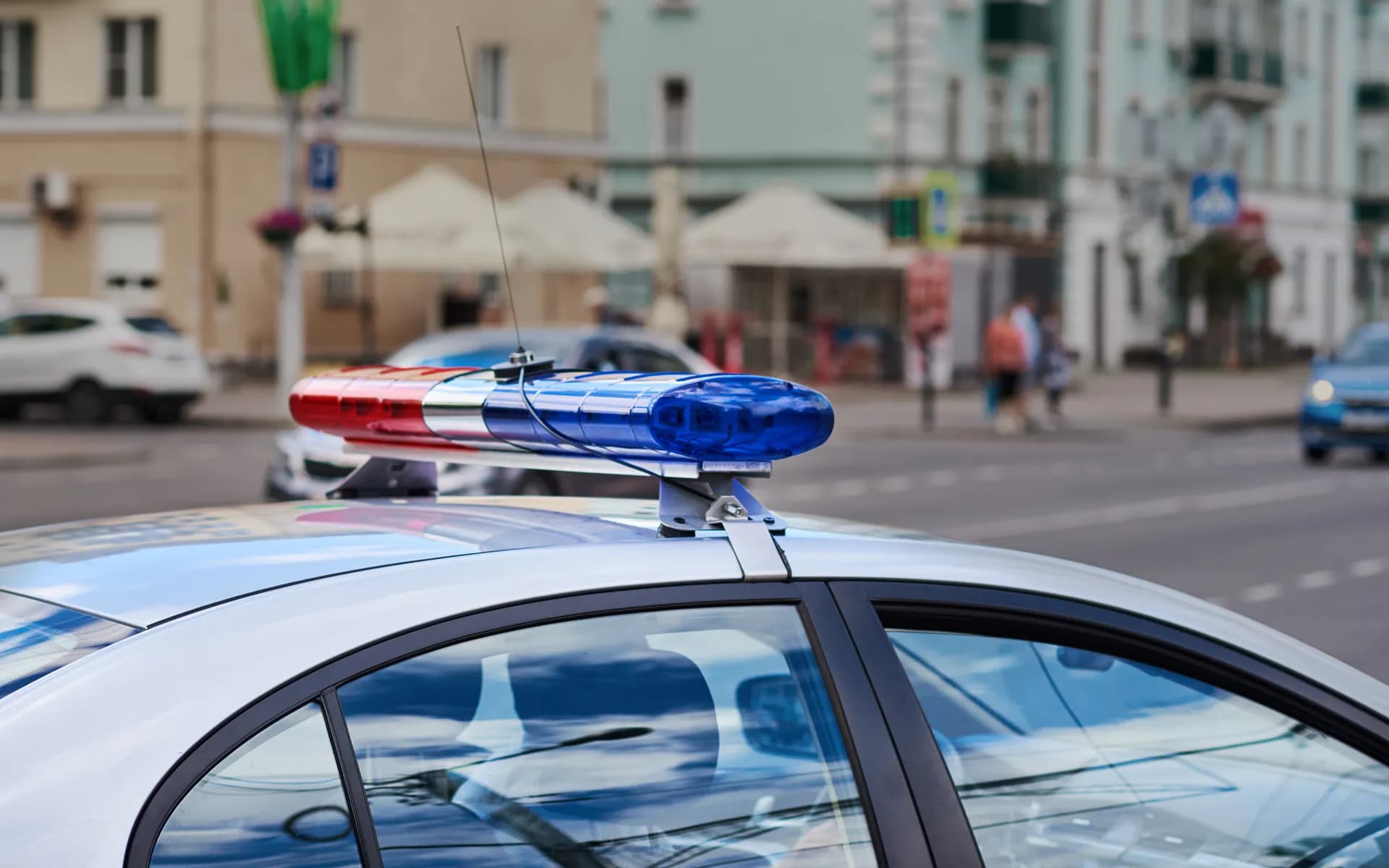
Police and Law
Enforcement Fleet
Police vehicle tracking on a secure, encrypted backend with priority dispatch, beat geofencing, body and dash camera context, and response analytics. A full stack that runs from the ruggedized tracker in the patrol car to the control room console.
 THE CHALLENGE
Patrol Visibility That Holds Up Under Scrutiny
A police fleet has different demands from a logistics fleet. The data is sensitive, the dispatch decisions are time critical, and every position history may end up in an inquiry or a court. Most forces run a generic tracking portal that was never built for chain of custody, has no concept of a beat, and cannot rank units by real response time. This is police vehicle tracking designed as a secure system from the ground up, where the backend is encrypted, dispatch is driven by real ETA, and every event is logged so it stands up later.
A component of the broader Telematics and GPS Tracking capability, often deployed with Fleet Management Systems.
WHAT'S INCLUDED
The Hardware and Software for Law Enforcement Fleets
Ruggedized Patrol Vehicle Tracker
Trackers are built around an STM32 host with a multi constellation GNSS front end including NavIC and a Quectel EC200 or BG95 modem. The device reads OBD-II and CAN data, runs FreeRTOS, sits in an IP67 enclosure, and raises an alert the moment it is tampered with or disconnected.
Encrypted Backend and Ingestion
The tracker opens a mutually authenticated TLS session to the gateway over MQTT. Position data is encrypted in transit and at rest, hosted inside your network or a sovereign cloud region, with role based access and full audit logging on every query against a vehicle history.
Priority Dispatch Console
The console ranks available units by real driving ETA to an incident rather than straight-line distance. It shows which patrol cars are free, on a job, or returning, recommends the right unit, and pushes the route to the crew while recomputing the ETA live.
Beat and Sector Geofencing
Geofences are defined around beats, sectors, and sensitive sites. The platform tracks which unit is inside which beat, alerts when a car leaves its assigned area or enters a flagged zone, and timestamps actual coverage across the shift.
Camera Context Linkage
Vehicle position and events link to your body worn and dash camera metadata so a stop, an activation, or a speed event lines up in time and place with the footage. Retrieval stays access controlled and logged so the chain of custody stays intact.
Response Analytics
Every dispatch is timestamped from call to arrival, and real response times are reported by zone, shift, and unit. Supervisors see where response is slow, where coverage thins out, and which beats are over or under patrolled.
IN THE CONTROL ROOM
What the Operator and the Officer Actually See
The platform proves itself on a busy shift, where it counts most. The operator needs to send the right car in seconds, the officer needs the route without typing it, and the supervisor needs to know coverage is real. The design serves those three views.
The Dispatcher
Sees a live map with every unit and its status, plots an incident, and gets a ranked list of cars by real ETA. One click assigns the unit and pushes the route. No mental math about who is closest.
The Patrol Officer
Gets the job with the route loaded and a live ETA to the scene. Beat boundaries and flagged zones show on the in-vehicle view, and a panic event sends an immediate location to the control room.
The Supervisor
Sees beat coverage as it happened, real response times by zone and shift, and the units that left their area. Planning a deployment becomes a decision backed by data rather than a guess.
HOW IT WORKS
From Patrol Car to Encrypted Console
Capture and Authenticate
The tracker fixes position from GNSS including NavIC, reads vehicle state over OBD-II or CAN, and opens a mutually authenticated TLS session. The device proves its identity before a single packet of location data is accepted.
Ingest and Store
Position and event data land on an MQTT gateway and flow into an event driven pipeline backed by a time series store. Data is encrypted at rest, hosted in your network or a sovereign region, and every access is logged.
Dispatch and Analyze
The console ranks units by ETA, drives geofence and panic alerts, links camera context, and timestamps every dispatch. The same data feeds live operations and the after-the-fact response analytics.
SECURITY AND COMPLIANCE
Built So the Data Holds Up
Encryption End to End
Mutually authenticated TLS 1.2 or 1.3 from the device, encryption at rest, and signed firmware updates over OTA so a tracker in the field cannot be loaded with anything you did not authorize.
Data Sovereignty
Deployment runs inside your own network or a sovereign cloud region so sensitive location data stays in the jurisdiction you control. NavIC support keeps positioning on an Indian constellation where that matters.
Audit and Chain of Custody
Role based access, full logging of every history query, and timestamped events give you a defensible record. When a vehicle track or a camera link is questioned later, the audit trail is already there.
FAQ
Common Questions
How do you secure the backend for a police fleet?
The whole path is treated as sensitive. The tracker opens a mutually authenticated TLS 1.2 or 1.3 session to the ingestion gateway, so a device and the server each prove who they are before any position moves. Location data is encrypted in transit and at rest, access to the control room is role based, and every query against a vehicle history is logged. For deployments that require it, the platform is hosted inside your own network or a sovereign cloud region so the data never leaves the jurisdiction you control.
What is priority dispatch and how is it different from normal tracking?
Priority dispatch ranks available units by real driving ETA to an incident rather than straight-line distance. When a call is raised the console plots the location, sees which patrol vehicles are free, on a job, or returning, and recommends the unit that can actually arrive fastest. The crew receives the assignment with the route already loaded, and the console keeps recomputing the ETA live as traffic and the vehicle position change.
Can the system pull in body camera and dash camera context?
Yes. Vehicle position and the event stream link to your body worn and dash camera metadata so an officer activation, a vehicle stop, or a speed event carries a timestamp and a location that line up with the footage. The design does not replace your evidence management system. It gives the control room the context to find the right clip fast and keeps the chain of custody intact through logged, access controlled retrieval.
How does beat geofencing work?
Geofences are defined around beats, sectors, and sensitive sites. The platform shows which patrol unit is inside which beat in real time, raises an alert when a vehicle leaves its assigned area or enters a flagged zone, and timestamps coverage so a supervisor can see how a beat was actually patrolled across a shift rather than how it was planned on paper.
What does response analytics give a senior officer?
Every dispatch is timestamped from call to arrival, so real response times can be reported by zone, by shift, and by unit. A senior officer sees where response is slow, where coverage thins out at certain hours, and which beats are over or under patrolled. Those numbers turn a gut feeling about deployment into evidence you can act on and defend.
What hardware do you use for police vehicles?
Patrol vehicles use ruggedized trackers built around an STM32 host with a u-blox or quad constellation GNSS front end including NavIC, and a Quectel EC200 or BG95 modem for cellular backhaul. The device reads vehicle data over OBD-II or CAN where it is available, runs on FreeRTOS, and is housed in an enclosure rated to IP67 for the duty cycle of a patrol vehicle. The install is tamper protected so removal or disconnection raises an immediate alert.
Can it scale from a single city force to a state police deployment?
Yes. The ingestion pipeline is event driven and built on a time series store, so it handles millions of position updates a day. Role based access lets each control room see its own units while a state command sees the whole force, and multi tenant separation keeps districts isolated. The same platform runs a single city fleet or a state wide deployment without re-architecting.
Ready to Build Your Law Enforcement Fleet Platform?
Share your force size, your dispatch workflow, and your data residency requirements to get a tailored approach and a clear view of how the secure backend and priority dispatch fit your operation.
Schedule a Free Consultation