

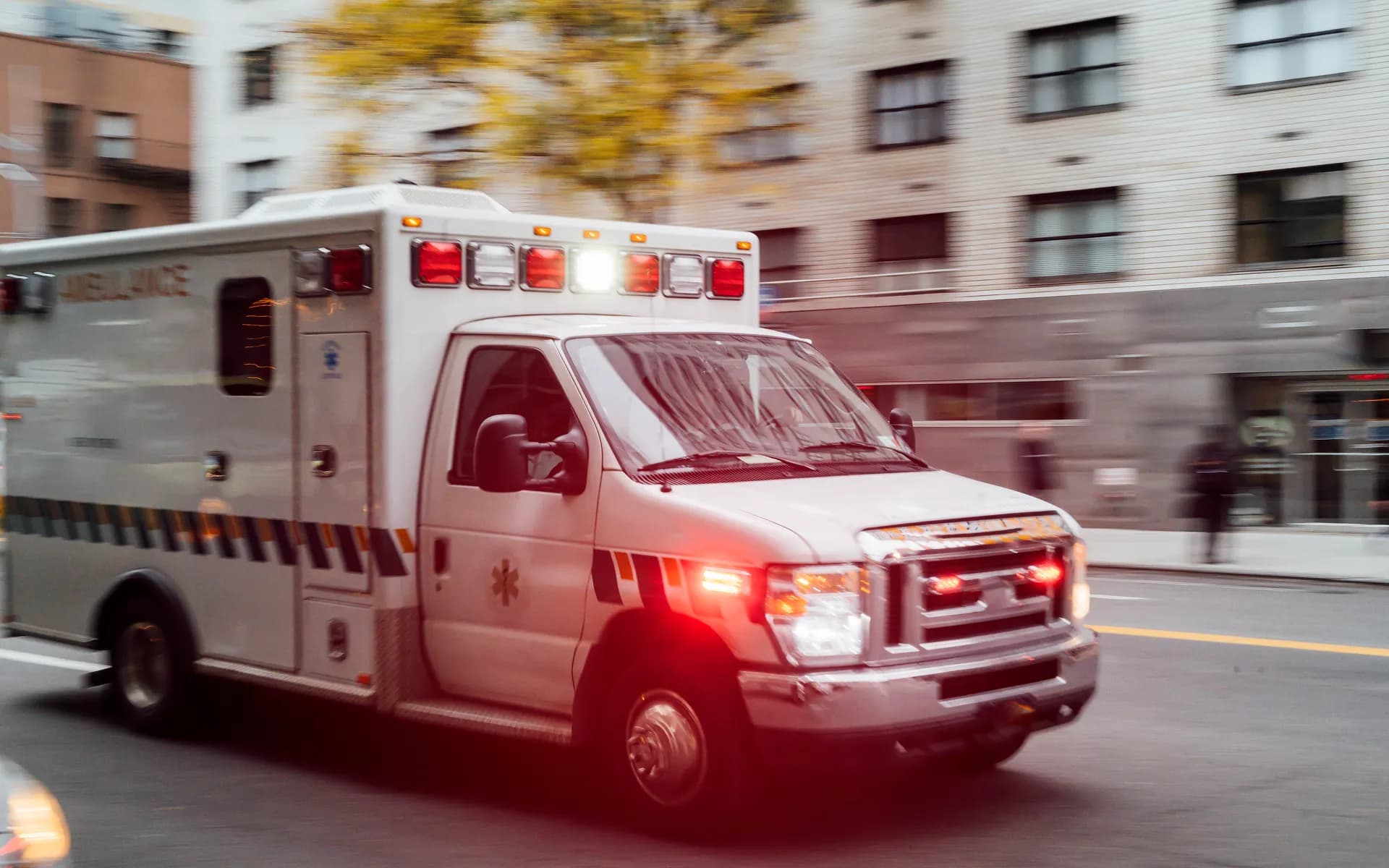
Ambulance and Emergency
Vehicle Tracking
An emergency vehicle tracking platform built to cut response times. Nearest-vehicle dispatch, live priority routing, hospital pre-arrival alerts, and ERSS 112 integration, all on one console.
 THE CHALLENGE
Minutes Decide Outcomes, and the System Loses Them
In an emergency, time is the whole game, yet most ambulance operations lose minutes to avoidable gaps. Dispatch sends a vehicle that looks close on a map but is stuck the wrong side of traffic. The receiving hospital has no warning, so the patient arrives to a queue instead of a ready team. And there is rarely clean data on where the time actually went. Nearest-vehicle dispatch, live priority routing, and hospital pre-arrival alerts close these gaps, turning the chain from dispatch to handover into one coordinated, measured flow.
One layer of the full Telematics and GPS Tracking platform, working closely with Fleet Management Solutions.
WHAT'S INCLUDED
Tracking Hardware and a Dispatch Platform Built for Speed
In-Vehicle GPS Tracker
Each ambulance carries a GPS tracker that reports position, speed, and status at a high cadence with NavIC and GPS positioning. The crew gets the assigned job and route in the cab, and the device carries a hardware panic button wired into the emergency path.
Nearest-Vehicle Dispatch Console
When a call lands, the console ranks available vehicles by real driving ETA to the incident, not straight-line distance, and accounts for which units are free, on a job, or returning. The dispatcher assigns the unit that can truly arrive first and pushes the route to the crew.
Priority Routing and Live ETA
The fastest emergency route is computed and recomputed as traffic and position change. Dispatch, the crew, and the receiving hospital all see a live ETA to the scene and onward to the hospital that updates continuously.
Hospital Pre-Arrival Dashboard
The receiving hospital sees inbound ambulances with live ETA and case category on a dashboard. As the vehicle crosses a geofenced hospital zone the alert escalates, so the emergency department prepares a bay and a team before the doors open.
ERSS 112 Integration
The panic and emergency path connects to ERSS 112 so an in-vehicle panic event or an incoming 112 dispatch flows into the same console, with location and status attached, keeping the response coordinated.
Response-Time Analytics
Geofenced zones timestamp dispatch, scene arrival, hospital arrival, and handover. Those become scene-to-door and door-to-handover metrics per vehicle, zone, and shift so you can find and fix the slow points.
HOW IT WORKS
From Call to Handover, Coordinated End to End
The moment a call is logged, the console plots the incident, ranks units by live ETA, and assigns the nearest free vehicle. Priority routing guides the crew while the receiving hospital watches the inbound vehicle approach. Geofenced zones mark each milestone so nothing relies on a radio call to know where the ambulance is.
Dispatch
The incident is plotted, available units are ranked by real driving ETA, and the nearest free ambulance is assigned with the route pushed to the cab.
En Route
Priority routing recomputes the fastest path live. Dispatch and the hospital see a continuously updated ETA to the scene and onward to the hospital.
Pre-Arrival and Handover
Crossing the hospital geofence escalates the pre-arrival alert so a bay and team are ready. Arrival and handover timestamps feed the response-time analytics.
INTEGRATION AND COMPLIANCE
Wired Into the Wider Emergency System
ERSS 112 and Panic
The in-vehicle panic button and the 112 dispatch path both feed the console. Emergency events carry location and vehicle status so the control room acts on full context.
NavIC and AIS 140 Alignment
The tracker uses NavIC and GPS and is built to align with AIS 140 device expectations for public emergency fleets, so the same hardware satisfies compliance and operations.
Hospital and HMIS Hooks
REST APIs and webhooks let pre-arrival alerts and case data reach hospital dashboards and, where available, hospital information systems, rather than living in a separate silo.
FAQ
Common Questions
How does nearest-vehicle dispatch work?
When a call comes in, the dispatch console plots the incident location and ranks available ambulances by real driving distance and current ETA, not straight-line distance. It accounts for which vehicles are free, on a job, or returning, so the dispatcher assigns the unit that can actually reach the patient fastest. The crew gets the job with the route already loaded.
What is priority routing and how is it different from a normal map route?
Priority routing computes the fastest path for an emergency vehicle and keeps recomputing it live as traffic and the vehicle position change. The console and the in-vehicle view show the route and a continuously updated ETA to the scene and onward to the hospital, so dispatch and the receiving hospital both see a number they can plan around rather than a guess.
How does the hospital get advance warning?
When an ambulance is dispatched to a hospital, that hospital dashboard receives a pre-arrival alert with the live ETA and, where your workflow allows, the case category. As the ambulance crosses a geofenced zone near the hospital, the alert escalates so the emergency department can prepare a bay and a team before the vehicle reaches the door. This is the difference between a patient arriving to a ready team and a patient arriving to a queue.
Does the system integrate with ERSS 112?
Yes. The panic and emergency path integrates with ERSS 112, the national emergency response system, so an in-vehicle panic event or an incoming 112 dispatch flows into the same console the operator already uses. Location and vehicle status move with the event so the response stays coordinated.
What are geofenced hospital zones used for?
Geofences are defined around hospitals and key sites. Crossing into a hospital zone triggers the pre-arrival escalation to that hospital, and it timestamps real arrival and handover so you can measure scene-to-door and door-to-handover times. Those timestamps become the response-time data that lets you find and fix the slow points in the chain.
Can this run across multiple operators and a mixed fleet?
Yes. The dispatch console and tracking are designed to handle a mixed fleet of ambulances and other emergency vehicles, across multiple operators or zones, with role-based access so each control room sees its own units while a central authority sees the whole picture. The platform scales from a single city to a state-wide service.
Ready to Cut Your Response Times?
Share your fleet size, your control rooms, and the hospitals you serve to see how nearest-vehicle dispatch, priority routing, and pre-arrival alerts fit your operation.
Schedule a Free Consultation