

Offender and
Parole Monitoring
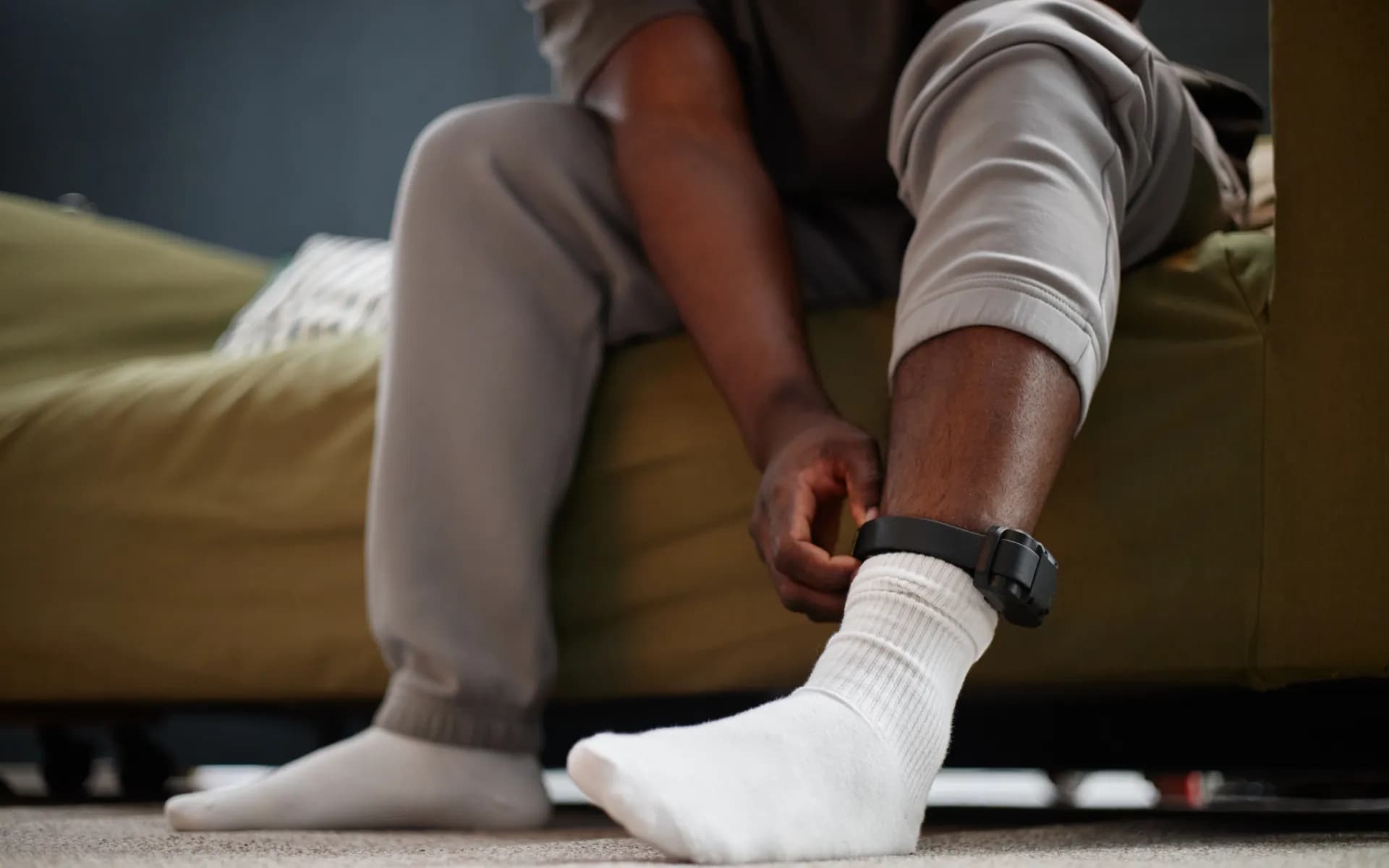
Electronic monitoring ankle trackers and the secure backend behind them. Tamper-proof hardware with fiber-optic strap detection, inclusion and exclusion zones, and a chain-of-custody system designed to hold up in a justice setting.
 THE CHALLENGE
The Device Has to Assume Someone Is Trying to Defeat It
Consumer trackers are designed for cooperative users. An electronic monitoring ankle device is the opposite. It is worn by someone who may want it off, out of contact, or fooled. That changes every design decision. The strap has to detect tampering, the firmware has to resist interference, the location data has to be trustworthy enough for a court, and the whole chain from device to evidence has to be auditable. The hardware, firmware, and backend are architected around that adversarial assumption.
Sits inside the Telematics and GPS Tracking stack and shares hardware and platform building blocks with People Tracking Solutions.
WHAT'S INCLUDED
Tamper-Proof Hardware and a Defensible Backend
Tamper-Proof Hardware
A rugged, sealed ankle device that resists prying, cutting, and environmental attack. The enclosure, fasteners, and internal layout are built so any attempt to open or remove the device leaves detectable evidence.
Fiber-Optic Strap Tamper Detection
A fiber-optic loop runs through the strap and is monitored continuously. Cutting or stretching the strap breaks the optical path, which fires an immediate tamper alarm that is far harder to defeat than a simple electrical contact.
Inclusion and Exclusion Zones
Inclusion zones the wearer must stay within, such as home during curfew, and exclusion zones they must avoid, such as a victim address or school. Entry or exit from either triggers an alert to the monitoring centre.
Secure Backend
A hardened backend ingests location and tamper events over a mutually authenticated TLS channel, with role-based access, encryption at rest, and tight controls over who can view or change monitoring data.
Chain of Custody
Every device assignment, location fix, tamper event, alert, and operator action is logged with timestamps and identity, producing the auditable record needed to use the data as evidence in legal proceedings.
Monitoring Console
An operator console shows wearer status, zone compliance, tamper state, and battery, drives the alert workflow, and gives supervisors and case officers controlled, audited access.
WHAT THE MONITORING CENTRE SEES
Compliance at a Glance, Evidence on Demand
The operator experience is designed around two needs. Day to day, staff need to see who is compliant and who is not. When a case goes to review, they need a clean, complete record that stands up to challenge. Both come from the same logged data.
Compliance Dashboard
Operators see each wearer status, current zone compliance, tamper state, and battery on one view, so attention goes to violations rather than scanning the whole caseload.
Immediate Violation Alerts
Zone breaches, strap tampers, and loss of contact raise immediate alerts through a defined escalation path, so a violation is acted on rather than discovered after the fact.
Evidence Export
For any wearer and period, the system produces a complete, timestamped record of locations, events, and operator actions, formatted for case review and legal use.
HOW IT WORKS
Device to Evidence
On the Device
A secured MCU monitors the fiber-optic strap loop and tamper sensors continuously and runs GNSS for position. The firmware signs reports, resists interference, and raises a tamper alarm the instant the optical path or seal is disturbed.
Over the Network
Location and tamper events travel over a mutually authenticated TLS channel to the backend, with store-and-forward so events are never lost during signal gaps and are delivered with their original timestamps.
In the Backend
The hardened backend evaluates inclusion and exclusion zones, drives alerts, and writes every fix, event, and action to an append-only audit log that forms the chain of custody for evidentiary use.
SECURITY AND DURABILITY
Built for an Adversarial Environment
Every layer assumes someone is trying to defeat the system. The hardware, the firmware, and the data path are hardened so the monitoring holds and the evidence is trustworthy.
Rugged Sealed Enclosure
Built to IP67 sealing and a tamper-evident, impact-resistant standard so the device survives daily wear and shows clear evidence of any attack on the housing or strap.
Secure Firmware and Comms
Signed firmware, mutually authenticated TLS, and a design hardened against jamming and spoofing so reported location and tamper state can be relied on.
Auditable Data Handling
Data is encrypted in transit and at rest, role-based access is enforced, and an append-only audit log keeps the chain of custody intact and reviewable.
FAQ
Common Questions
How does the fiber-optic strap detection work?
A fiber-optic loop runs through the strap and the optical path is monitored continuously. Cutting, stretching, or otherwise interfering with the strap breaks the path and fires an immediate tamper alarm. An optical loop is much harder to defeat than a simple electrical contact, which is why it is used for this class of device.
What is the difference between inclusion and exclusion zones?
An inclusion zone is an area the wearer must stay within, such as home during curfew hours. An exclusion zone is an area they must avoid, such as a victim address or a school. Leaving an inclusion zone or entering an exclusion zone triggers an immediate alert to the monitoring centre.
Can the location data be used as evidence?
That is a core design goal. Every location fix, tamper event, alert, and operator action is written to an append-only audit log with timestamps and identity, forming a chain of custody. The system can export a complete, formatted record for a given wearer and period for case review and legal use.
What stops someone from jamming or spoofing the device?
The firmware and communications are designed to resist interference. Reports are signed, the device uses mutually authenticated TLS, and the design hardens against jamming and GNSS spoofing. Loss of contact and anomalous signals are themselves flagged as events, so an attempt to silence the device is visible rather than hidden.
What happens during a network outage?
The device uses store-and-forward. Location and tamper events are recorded locally with their original timestamps and delivered when connectivity returns, so a coverage gap does not create a hole in the record. Extended loss of contact is itself raised as an alert.
Are the device and the backend built together?
Yes. The ankle hardware, the tamper detection and firmware, and the secure monitoring backend are designed as one system. Building both together is what keeps the data trustworthy from the strap sensor through to the evidence export.
Ready to Build Your Offender Monitoring System?
Share your program, your zone and tamper requirements, and your evidentiary standards to get a tailored approach across the device, the tamper detection, and the secure backend.
Schedule a Free Consultation