

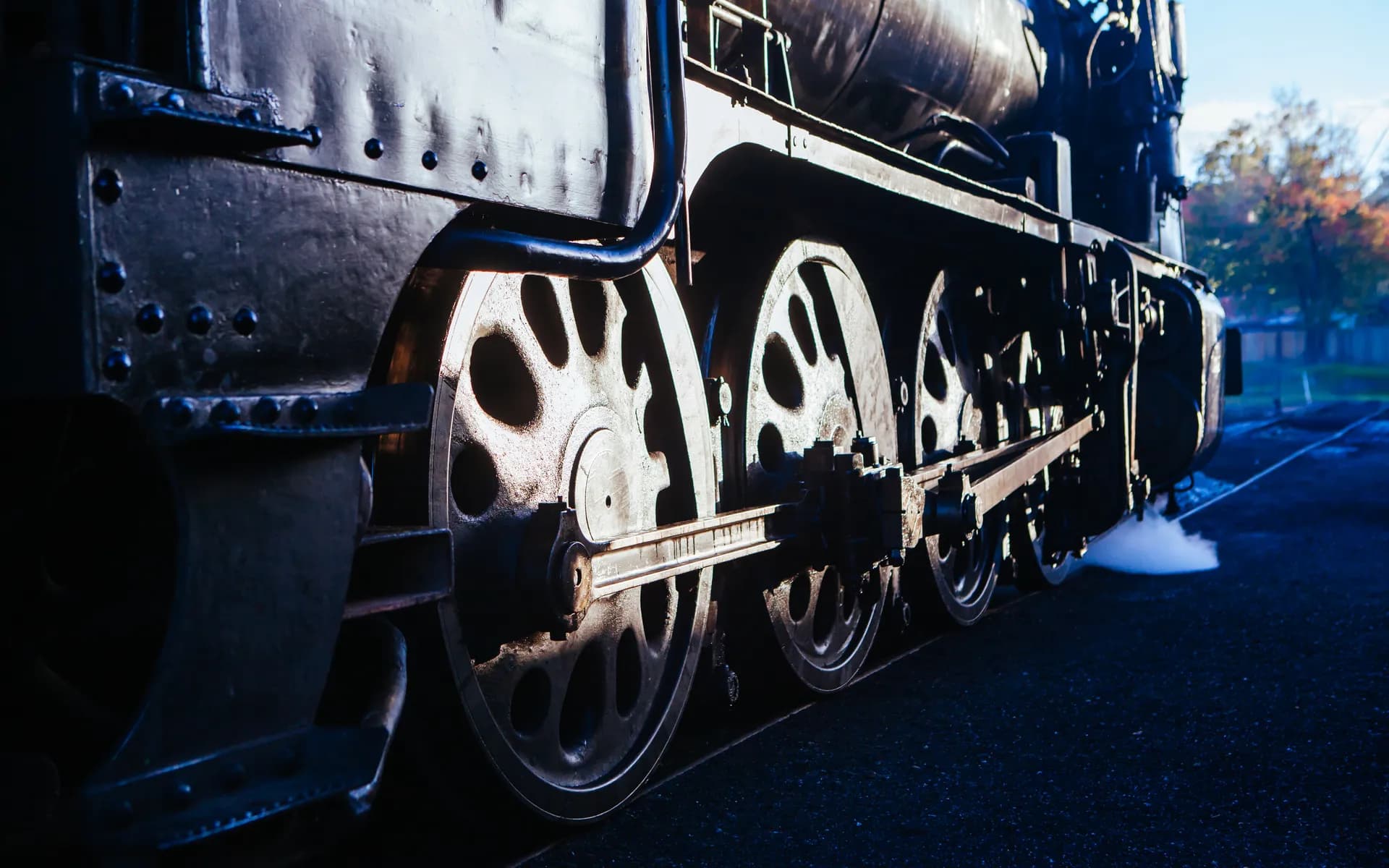
Locomotive and Rolling
Stock Tracking
A rugged locomotive tracking unit built to survive the EMI, vibration, and shock of a working loco, fix position with NavIC for Indian railways, monitor diesel fuel and idle burn, and report crew and cab health over cellular with store-and-forward across coverage gaps. Designed end to end, from the conformal-coated PCB to the cloud.
 THE CHALLENGE
A Locomotive Is a Hostile Place for Electronics
A consumer-grade GPS box does not last a week on a diesel locomotive. The traction power system throws EMI that swamps a poorly shielded receiver, the chassis transmits vibration and shock that cracks solder joints, and the battery bus swings far outside what a bare regulator can handle. On top of that, road-style tracking logic plots a loco onto open ground instead of the rail line, and cellular coverage drops out across long block sections. The tracking unit is engineered for the railway environment: a conformal-coated PCB in an IP67 or IP69K enclosure, wide-temperature parts, isolated power off the loco battery, NavIC positioning matched to Indian rail corridors, and store-and-forward so nothing is lost between cell towers.
One layer of the full Telematics and GPS Tracking platform, working closely with Railway Fog Safety System.
WHAT'S INCLUDED
Rugged Locomotive Tracking Hardware and Firmware
Rugged Enclosure and Conformal-Coated PCB
The unit is designed around the loco environment: a conformal-coated PCB to resist condensation and dust, an IP67 or IP69K enclosure rated for washdown and ingress, wide-temperature parts, and a board layout that holds up under the heavy vibration and shock profile of a working locomotive.
EMI and EMC Hardening
Traction systems are electrically noisy. A shielded RF front end, a filtered supply, and a careful ground-plane layout keep the STM32 and the GNSS receiver stable next to high-current traction equipment, validated against railway EMI and EMC expectations before the unit ships.
Isolated Power From the Loco Battery
The loco battery bus swings hard during cranking and load changes. An isolated, wide-input power stage survives those transients, protects against reverse polarity and surges, and keeps the tracker alive when the engine shuts down so you still see a parked unit.
NavIC and GPS Rail Positioning
Position is fixed with a u-blox NavIC and GPS receiver tuned for the railway use case. Rail positioning is line-based, so fixes snap to the track geometry and report chainage and section rather than scattering a loco across open ground the way road logic does.
Fuel Level and Idle Burn Monitoring
A diesel loco fuel level sensor is integrated, and engine state is read over CAN and J1939 or RS-485 and Modbus where available. The firmware separates running burn from idle burn, flags long idling, and reports tank level so you can act on fuel loss and wasted idle hours.
Crew Presence and Cab Telemetry
Crew presence detection and cab and equipment health telemetry are included: cab temperature, door and panel state, RFID or card-based crew identification, and subsystem status pulled from the loco bus. This gives operations a live picture of who is on board and how the cab is behaving.
HOW IT WORKS
From Loco Bus to Control Room
The data path starts at the engine and ends at a trusted position and fuel reading in your control room. Every stage is designed so that a loco in a tunnel or a dead cell zone reports the same complete record once it reconnects as one running under full coverage.
Sense and Acquire
The STM32 reads NavIC and GPS position, the diesel fuel level sensor, and engine and subsystem data over CAN and J1939 or RS-485 and Modbus, while monitoring cab and crew telemetry, all under FreeRTOS.
Filter and Buffer
Firmware snaps the fix to the rail line, separates running burn from idle burn, time-stamps every record, and buffers it in non-volatile memory so a coverage gap across a block section never drops data.
Report and Sync
A Quectel EC200 or BG95 cellular link publishes records over MQTT with TLS, using store-and-forward to flush the buffer the moment signal returns, so the control room sees a continuous track.
STANDARDS AND COMPLIANCE
Built for the Indian Railway Environment
RDSO Context and Approval
Designed with RDSO telematics expectations in mind, from the rugged enclosure and EMI and EMC behavior to the loco interface, with the documentation and test evidence needed when a unit goes through RDSO approval and field trials.
NavIC and IRNSS Positioning
NavIC and IRNSS positioning is used alongside GPS, which gives Indian railways a regional constellation for resilient fixes along rail corridors and reduces reliance on a single GNSS source for train tracking.
Railway EMI and EMC and Ingress
Validated against the EMI and EMC, vibration, shock, and temperature conditions of locomotive service, the unit is sealed to IP67 or IP69K so it survives washdown, dust, and the moisture of an exposed loco mounting.
FAQ
Common Questions
Why not use a standard fleet GPS tracker on a locomotive?
A road tracker is not built for the loco environment. Traction EMI, heavy vibration and shock, and a battery bus that swings during cranking will kill a consumer unit fast. The design uses a conformal-coated PCB in an IP67 or IP69K enclosure with isolated wide-input power and EMI hardening so it survives years of loco service.
How is rail positioning different from road tracking?
A loco moves on a fixed line, so the NavIC and GPS fix snaps to the track geometry and reports section and chainage instead of plotting onto open ground. This gives operations a position that matches how the railway actually thinks about a train.
Is NavIC supported for Indian railways?
Yes. A u-blox NavIC and GPS receiver lets the unit fix on the IRNSS regional constellation alongside GPS. That gives more resilient positioning along Indian rail corridors than relying on a single GNSS source.
How does the unit handle long stretches with no cellular coverage?
The firmware time-stamps every record and buffers it in non-volatile memory. When the loco runs through a dead block section or a tunnel, nothing is lost. A Quectel EC200 or BG95 link with store-and-forward flushes the buffer over MQTT with TLS the moment signal returns.
Can diesel fuel and idle burn be monitored?
Yes. A diesel loco fuel level sensor is integrated, and engine state is read over CAN and J1939 or RS-485 and Modbus where the loco exposes it. The firmware separates running burn from idle burn, flags long idling, and reports tank level so you can act on fuel loss and wasted idle hours.
What about crew presence and cab health?
Crew identification through RFID or card readers, cab temperature and door and panel state, and subsystem status from the loco bus are all included. This gives the control room a live view of who is on board and how the cab and equipment are behaving.
Does the design account for RDSO approval?
Yes. The design targets RDSO telematics expectations for ruggedness, EMI and EMC, and the loco interface, with the test evidence and documentation that support RDSO approval and field trials so the unit can move toward deployment.
Ready to Build Your Locomotive Tracking System?
Share your locomotives, your fuel and crew monitoring needs, and your RDSO timeline to get a tailored approach covering the rugged hardware, the rail positioning logic, and a realistic delivery timeline.
Schedule a Free Consultation