

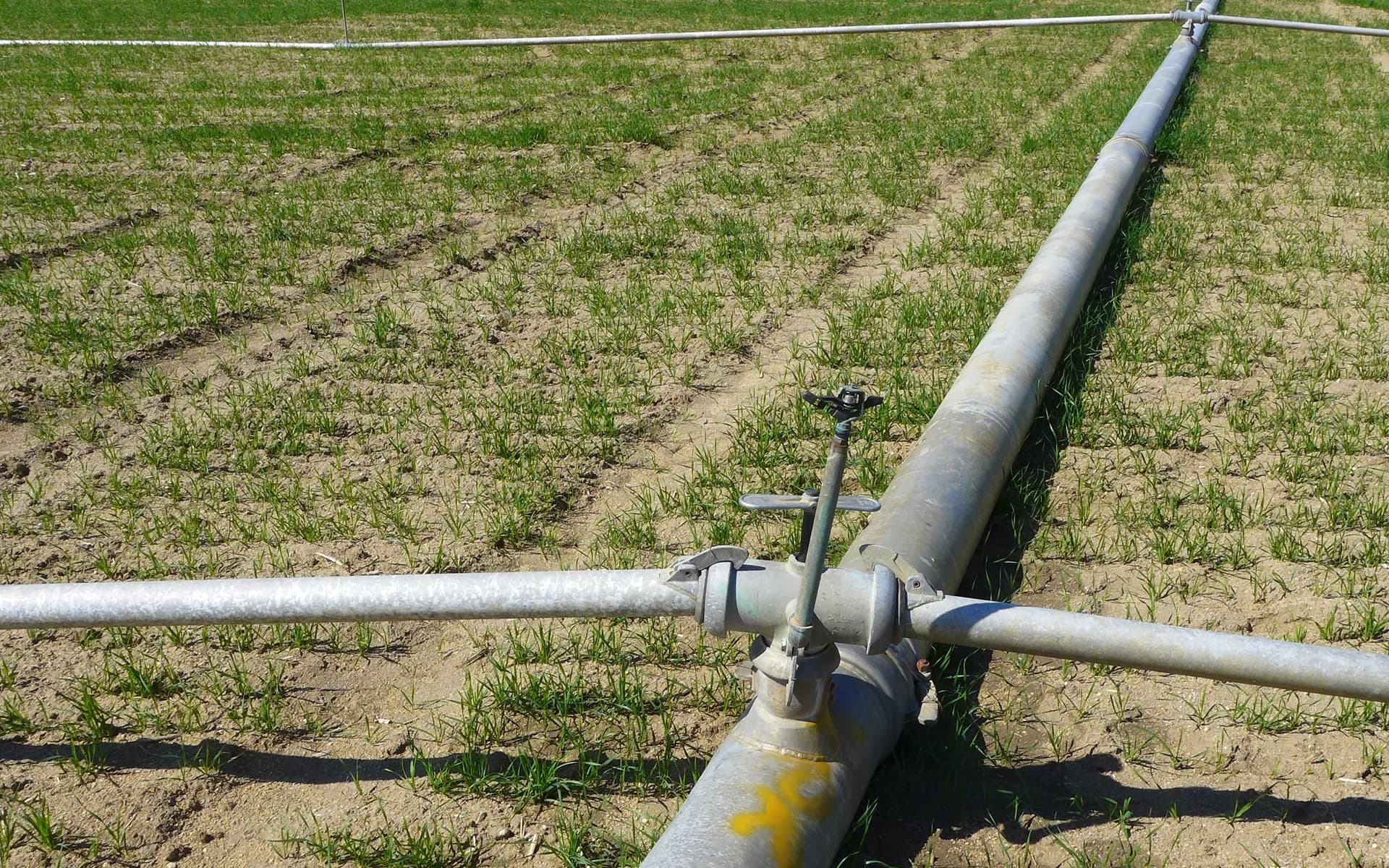
Irrigation and
Pump Monitoring
Remote pump monitoring systems for irrigation and water assets: flow, level, and pressure sensing, remote start and stop control, dry-run protection, and energy tracking, all over the rural connectivity that actually reaches the borewell.
 THE CHALLENGE
The Pump Is an Hour Away and You Have No Idea If It Is Running
Irrigation pumps and borewell motors sit in fields and pump houses far from anyone, often on a weak grid and a marginal cellular signal. The operator drives out to switch them on and drives back to switch them off, burns the motor when the water runs out and it runs dry, and has no idea how much energy was spent until the bill arrives. A failed pump is discovered when a crop starts wilting. This telematics puts the pump in your hand: live flow, level, and pressure, remote start and stop from a phone, automatic dry-run protection, and energy tracking, engineered for sites where the network is unreliable and the power is dirty.
Built within the Telematics and GPS Tracking ecosystem, and frequently paired with Precision Agriculture Telematics.
WHAT'S INCLUDED
Sense, Control, and Protect the Pump Remotely
Flow, Level, and Pressure Sensing
The asset is instrumented with the sensors that matter: a flow meter on the delivery line, a level probe in the sump or tank, and a pressure transducer on the discharge. The controller reads them continuously so you see real water movement, rather than just whether the motor has power.
Remote Start and Stop Control
The controller drives the motor contactor so the pump starts and stops from a phone or on a schedule. No more driving out twice a day. The control loop respects the motor protection and confirms the pump actually started by watching flow and current.
Dry-Run Protection
Running a pump with no water destroys it. Dry running is detected from the combination of low flow, falling level, and the current signature, and the motor is cut before damage, then auto-restarted after a back-off once water returns. This single feature pays for the system.
Energy and Run-Time Tracking
Voltage, current, and power are measured so you see energy per session and per field, run hours, and the cost of pumping. Trends flag a motor drawing more current than it should, which is an early sign of a failing bearing or a clogged impeller.
Rugged Field Controller
The controller is built for the pump house: an STM32 core, wide-input power that tolerates the surges and sags of a rural grid, surge and transient protection on every line, and IP65 sealing against dust and water. It runs on FreeRTOS and rides through brownouts.
App, Alerts, and Dashboard
The app and dashboard show every pump live, with start and stop control, schedules, and alerts for dry run, power failure, low flow, or tank full, delivered over SMS and push so a problem reaches the operator wherever they are.
BUILT FOR RURAL SITES
Engineered Where the Signal Is Weak and the Power Is Worse
A pump controller that only works on a clean grid and a full-bars signal is useless in the field. The system is designed for the conditions that are actually there: patchy cellular, voltage that swings, and lightning-prone lines. Control still works locally even when the cloud cannot be reached.
Low-Bandwidth Connectivity
NB-IoT and Cat-M1 are used where they reach, falling back to 2G, because borewells live at the edge of coverage. Telemetry rides MQTT over TLS with small payloads and store-and-forward, so a weak link still delivers the data and the commands.
Local Autonomy
Dry-run protection, scheduling, and motor protection run on the controller itself, so the pump is protected and operable even when the network is down. The cloud adds remote control and visibility on top, while the controller keeps the pump running on its own if the link drops.
Grid and Surge Hardened
Wide-input supplies tolerate the sags and spikes of a rural feeder, and surge and transient protection guards against the lightning and switching events that kill ordinary electronics in the field. The hardware is built to survive the season.
HOW IT WORKS
From the Pump House to Your Phone
Sense and Protect
The controller reads flow, level, pressure, and motor current continuously and runs dry-run and motor protection locally, cutting the pump in time regardless of the network.
Connect
Telemetry streams over NB-IoT or Cat-M1 on MQTT with TLS, buffering when the signal drops and forwarding on reconnect, so the dashboard sees a continuous record.
Control
You start, stop, and schedule the pump from the app, see energy and run-time per field, and get alerts for dry run, power failure, or tank full wherever you are.
FAQ
Common Questions
How does dry-run protection actually work?
A dry-running pump is detected from the combination of low or zero flow, a falling water level, and the change in motor current that happens when there is no water to move. When those signals indicate dry running the motor is cut immediately, then an auto-restart is attempted after a back-off period once the level recovers, so the motor is protected without a site visit.
Can I start and stop the pump from anywhere?
Yes. The controller drives the motor contactor and accepts start, stop, and schedule commands from the app over the cellular link. It confirms the pump actually started by watching flow and current, so you know the command took effect rather than just hoping it did.
What if the cellular signal is poor at the borewell?
The system is designed for exactly that. It uses NB-IoT or Cat-M1 where available and falls back to 2G, with small MQTT payloads and store-and-forward buffering so a weak link still delivers telemetry and commands. Protection and scheduling run on the controller itself, so the pump is safe and operable even with no signal at all.
Will it survive the power conditions in a rural pump house?
It is built for them. The controller uses a wide-input supply that tolerates the voltage sags and spikes of a rural feeder, with surge and transient protection on the power and signal lines to handle lightning and switching events, and IP65 sealing against dust and water.
What energy data do you get?
Voltage, current, and power are measured, so you see energy consumed per pumping session and per field, total run hours, and the cost of pumping. Rising current for the same flow is an early warning of a worn bearing or a clogged impeller, so the data also helps you catch a failing pump before it stops.
Does it work with existing pumps or only new ones?
It works with existing pumps. The controller, sensors, and a contactor interface are added to the motor you already have, single or three phase, so there is no need to replace the pump. The system retrofits onto borewell motors, surface pumps, and tank-filling setups already in the field.
Ready to Put Your Pumps in Your Hand?
Share your pumps, your sites, and the connectivity you have to work with to see a remote monitoring and control system built for the field.
Schedule a Free Consultation