

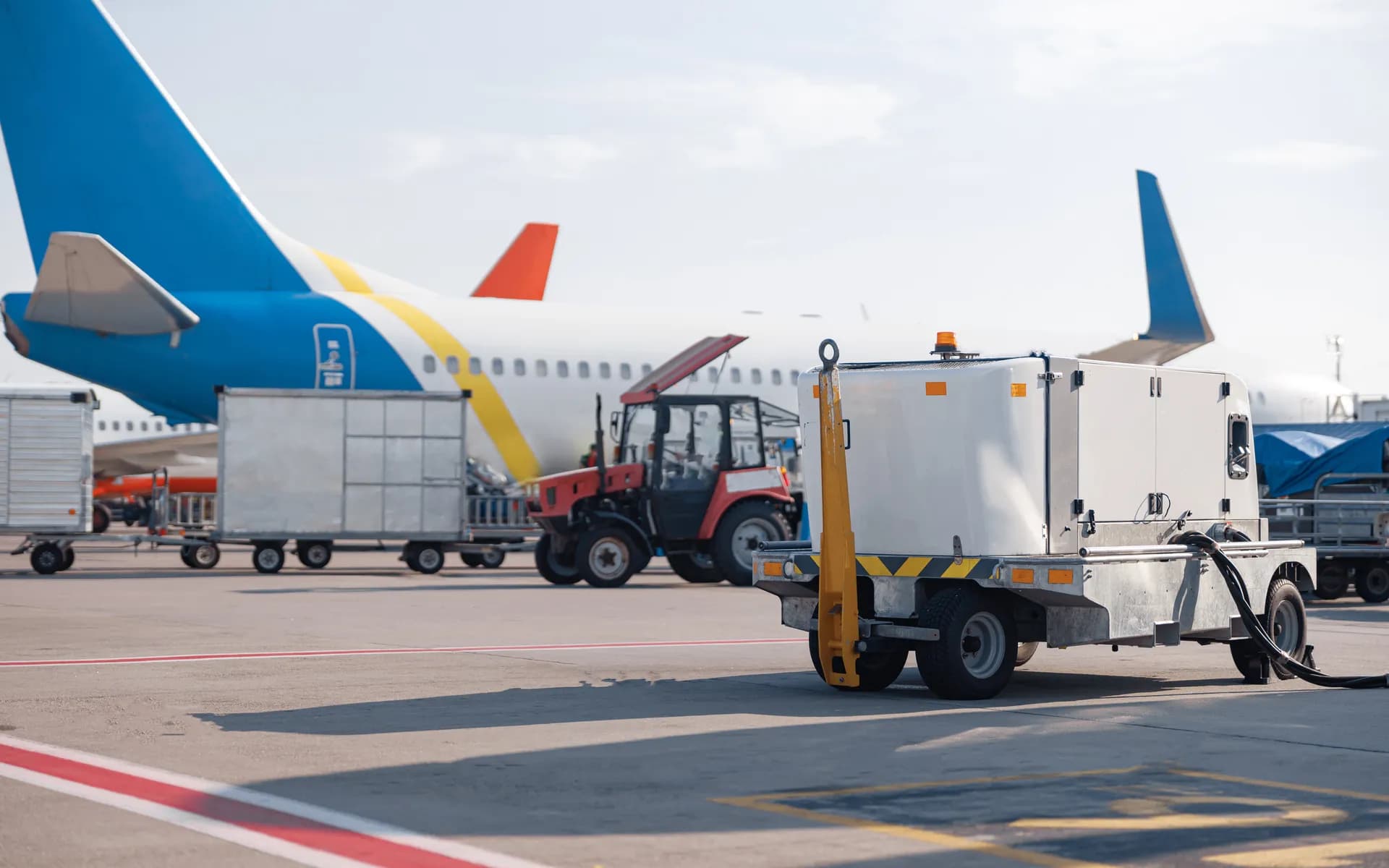
Airport Ground Support
Equipment Tracking
A full-stack airport GSE tracking platform with apron geofencing, utilisation reporting, collision and proximity alerts, electric GSE battery telemetry, and turnaround analytics, from the ruggedized tracker on the tug to the ramp control dashboard.
 THE CHALLENGE
The Apron Is Crowded, Fast, and Unforgiving
Ground support equipment moves between aircraft on a tight apron under time pressure, where a wrong turn is a safety event and a late tug is a missed slot. Most handlers track GSE on a generic vehicle portal that does not know what a stand is, cannot warn a driver closing on an aircraft, and has no view of an electric unit running out of charge. This GSE tracking is built for the apron specifically, where positioning is stand level, geofences enforce the movement areas, proximity is sensed, and turnaround is measured as it happens.
Built within the Telematics and GPS Tracking ecosystem, and frequently paired with Asset Tracking Solutions.
WHAT'S INCLUDED
The Hardware and Software for Ground Handling
Apron-Grade Tracker
An STM32 host with multi constellation GNSS, a Quectel modem, optional UWB ranging, and a CAN interface, in an IP67 enclosure rated for jet blast, weather, and washdown, with power conditioning for both diesel and electric GSE.
Stand Level Positioning
GNSS is fused with vehicle motion and UWB or BLE anchors at the gates so the platform knows which stand a tug or loader is at rather than roughly where it is. Stand assignment and turnaround timing depend on that precision.
Apron Geofencing
Geofences on stands, service roads, restricted areas, and runway and taxiway boundaries, with per zone speed limits and alerts when a unit enters a restricted zone or strays toward a movement area. An operational tool and a safety layer.
Collision and Proximity Alerts
Motion sensing plus short range UWB ranging so a unit knows when it is closing on an aircraft, another vehicle, or a stand boundary. The driver gets an in-cab warning and the event is logged with location and speed for the safety team.
Electric GSE Battery Telemetry
BMS data read over CAN for state of charge, voltage, temperature, and charge cycles per unit, flagging a low unit before it strands a turnaround, scheduling charging around the flight bank, and tracking battery health over time.
Turnaround Analytics
Timestamps for when each unit arrives at and leaves a stand, turning a turnaround into a sequence of real events. It shows where the turnaround slipped and supports an on-time performance claim with evidence.
ON THE RAMP
What Each Role Gets From the Platform
A ground handling operation has a driver who needs safety warnings, a ramp controller who needs the live picture, and a manager who needs utilisation and turnaround numbers. All three views are built from one feed.
The Driver
Gets an in-cab proximity warning when closing on an aircraft or a boundary, and a clear zone speed limit. Safety stops depending on a clean line of sight on a crowded apron.
The Ramp Controller
Sees which equipment is at which stand in real time, gets an alert on a restricted zone breach or a low electric unit, and can redirect the nearest suitable unit to a stand that needs it.
The Operations Manager
Sees utilisation per unit and per type, battery health across the electric fleet, and turnaround timing against the schedule, turning fleet size and on-time claims into measured numbers.
HOW IT WORKS
From Tug to Ramp Control
Sense on the Unit
The tracker fixes position from GNSS, refines it with UWB or BLE anchors for stand level accuracy, reads the BMS over CAN on electric units, and ranges proximity to nearby objects, all on the equipment itself.
Ingest and Match
Data flows over MQTT into an event driven pipeline on a time series store. The platform matches each unit to its stand geofence and movement areas and computes utilisation, proximity events, and turnaround timing continuously.
Alert and Report
In-cab and ramp control alerts fire on proximity, zone breaches, and low charge, while dashboards roll up utilisation, battery health, and turnaround analytics for planning and on-time performance.
SAFETY AND INTEGRATION
Built to Fit Airport Operations
Apron Safety
Per zone speed enforcement, restricted area alerts, and logged proximity events give the safety team the data to find and close recurring risk points on the ramp rather than reacting after an incident.
System Integration
REST APIs and webhooks expose GSE position and turnaround events so they feed your resource management and flight information systems, aligning equipment movements with the flight schedule.
Electrification Ready
CAN battery telemetry and charge scheduling are built in, so as the GSE fleet moves from diesel to electric the same platform manages charge state and protects turnaround reliability.
FAQ
Common Questions
How precise does positioning need to be on the apron?
The apron is a tight environment with stands a few metres apart, so standard GNSS alone is not enough. A multi constellation GNSS fix is fused with vehicle motion and, where stand level accuracy is needed, UWB or BLE anchors at the gates. That combination tells you which stand a tug or a belt loader is at rather than roughly where it is, which is what stand assignment and turnaround timing actually depend on.
What does apron geofencing control?
Geofences cover stands, service roads, restricted areas, and runway and taxiway boundaries. The platform knows which equipment is at which stand, alerts when a unit enters a restricted zone or strays toward a movement area, and enforces speed limits per zone. On an apron where a wrong turn is a serious safety event, the geofence is both an operational tool and a safety layer.
How does utilisation reporting change GSE planning?
Ground handlers often own far more equipment than a peak hour needs because no one can see what is genuinely in use. Reports cover engine or motor hours, active time versus idle, and movements per unit and per type, so you see which tugs, loaders, and GPUs are working and which sit idle. That lets you right size the fleet, balance equipment across terminals, and justify or defer the next purchase with real numbers.
How do the collision and proximity alerts work?
The tracker carries motion sensing and, where the layout demands it, short range proximity ranging over UWB so a unit knows when it is closing on an aircraft, another vehicle, or a stand boundary. The driver gets an in-cab warning and the event is logged with location and speed. Apron collisions with aircraft are expensive and dangerous, and a logged proximity record also gives the safety team the data to find the recurring risk points.
What battery telemetry is available for electric GSE?
For electric tugs, loaders, and GPUs the battery management system is read over CAN to report state of charge, voltage, temperature, and charge cycles per unit. The platform flags a unit running low before it strands a turnaround, schedules charging around the flight bank, and tracks battery health over time so degradation is visible before a unit fails on stand. Electrification only works if charge state is managed, and that needs live data.
What does turnaround analytics measure?
Each piece of equipment is timestamped as it arrives at and leaves a stand, so a turnaround becomes a sequence of real events, when the tug arrived, when the belt loader started, when the GPU connected, rather than a planned schedule. That shows where a turnaround actually slips, whether equipment arrived late or a step ran long, and gives the handler the evidence to fix the bottleneck and to support an on-time performance claim.
What hardware survives the apron environment?
The tracker is built on an STM32 host with a multi constellation GNSS front end, a Quectel modem for cellular backhaul, optional UWB for ranging, and a CAN interface for the battery and equipment data. The enclosure is rated to IP67 for jet blast, weather, and washdown, with power conditioning for both diesel and electric GSE electrical systems. It is built for the duty cycle of equipment that runs all day in a harsh outdoor environment.
Ready to Build Your GSE Tracking System?
Share your apron layout, your equipment mix, and your electrification plans to get a tailored approach covering stand level positioning, proximity safety, battery telemetry, and turnaround analytics.
Schedule a Free Consultation