

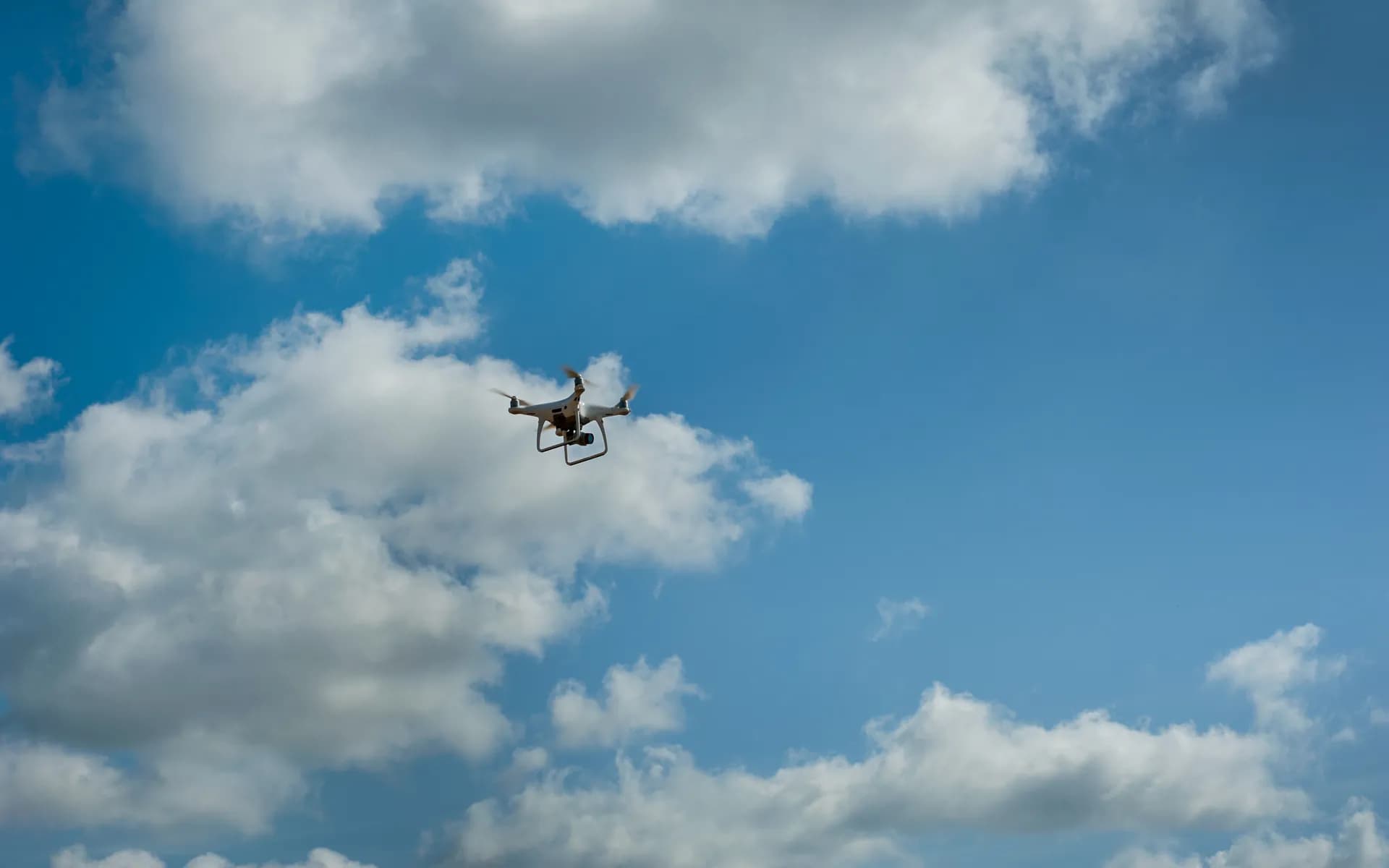
Drone and UAV
Telemetry Tracking
A drone tracking system spanning onboard telemetry firmware to a live ground station, with Remote ID compliance, geofence and no-fly enforcement, BVLOS-grade visibility, and link redundancy. The firmware, the link, and the ground software are built as one stack.
 THE CHALLENGE
When You Cannot See the Aircraft, Telemetry Is the Aircraft
A drone that flies beyond line of sight is only as safe as the data coming back from it and the link carrying that data. Most operators stitch together a flight controller, a separate Remote ID module, and a ground app that was never built to hold a fleet or survive a dropped link. This drone telemetry tracking stack is one system, where the onboard firmware, the redundant link, the geofence enforcement, and the ground station are designed together so the picture stays live and the aircraft stays inside its volume.
One layer of the full Telematics and GPS Tracking platform, working closely with GPS Tracking Device Development.
WHAT'S INCLUDED
The Firmware, Link, and Ground Software
Onboard Telemetry Firmware
Firmware that reads the flight controller over MAVLink and packages position, altitude, speed, heading, battery, and link quality into compact, GNSS timestamped frames, with payload and sensor health where you need it. It runs on a companion module so the autopilot stays untouched.
Remote ID
A Remote ID broadcast of identity, position, altitude, and operator location in the format your regulation requires, kept consistent with the network telemetry to your ground station so a third party receiver and your console agree. Updatable as the rule evolves.
Geofence and No-Fly Enforcement
The operating volume and no-fly polygons loaded onto the aircraft so enforcement does not depend on the link. The firmware reacts to its own position with a hold, return to launch, or altitude cap as it nears a limit, while the ground station alerts early.
Live Ground Station
A single screen showing the aircraft, full live telemetry, active zones, battery and link health, and planned versus flown track, with every aircraft in a fleet visible at once and per aircraft alerting. It records the whole flight for the log and review.
Link Redundancy
A primary cellular path over a Quectel modem with an RF datalink fallback and automatic failover, local telemetry buffering that backfills after a dropout, and a defined behaviour on total link loss so the aircraft is never flying blind.
APIs and UTM Feed
Live and historical telemetry exposed through APIs so it feeds a UTM or your operations platform, with data formatted and forwarded to a traffic management or airspace authorisation system rather than running two separate tracking stacks.
IN FLIGHT
What the Operation Sees in the Air
A drone operation lives and dies on the ground station during a flight. The remote pilot needs the live state, the safety pilot needs early warning, and the fleet operator needs every aircraft at once. All three views are built in.
The Remote Pilot
Sees live position, altitude, speed, battery, and link health on one map, with the planned track overlaid. When the link degrades the buffered telemetry backfills so the trail has no gaps.
The Safety Pilot
Sees the aircraft approaching a geofence or no-fly boundary with an early alert, before the onboard enforcement action fires. The warning is on the screen in time to intervene rather than after the fact.
The Fleet Operator
Sees every aircraft in the air at once with per aircraft alerting, and a recorded log of each flight for compliance and review. BVLOS scale becomes one console instead of one app per pilot.
HOW IT WORKS
From Flight Controller to Ground Station
Read and Package
The companion firmware reads the autopilot over MAVLink, fuses GNSS time, and packages a compact telemetry frame. It checks position against the loaded volume and no-fly zones on every cycle so enforcement is local.
Carry and Backfill
Frames go out over the primary cellular link with RF fallback and automatic failover. A local buffer holds telemetry through a dropout and backfills the ground station the moment a path returns, so the trail stays complete.
Display and Distribute
The ground station fuses the feed into the live map, runs the zone and battery alerting, records the flight, and forwards telemetry through APIs to a UTM or operations platform. One pipeline serves the pilot and the regulator.
COMPLIANCE AND SAFETY
Built Around the Rules of the Airspace
Remote ID
Identity and position broadcast in the regulated format, kept consistent with your network telemetry, and updatable in firmware as the Remote ID requirement for your jurisdiction changes.
Containment
Onboard geofence and no-fly enforcement that does not depend on the link, with a defined fallback on total link loss, so the aircraft stays inside its approved volume even when communications fail.
Flight Record
Every flight recorded with full telemetry and the active zones, exportable for the operations log and for any post-flight review or incident investigation.
FAQ
Common Questions
What telemetry does the onboard firmware actually send?
The firmware reads the flight controller over MAVLink and packages position, altitude, ground speed, heading, battery voltage and current, and link signal quality into a compact telemetry frame. Each frame is timestamped against GNSS time and forwarded over the air to the ground station. Payload status and sensor health can be added where you need them, so the ground picture is the real state of the aircraft rather than a dot on a map.
How do you handle Remote ID compliance?
The Remote ID broadcast transmits the aircraft identity, position, altitude, and operator location in the format the regulation requires, alongside the network telemetry to your own ground station. The two are kept consistent so what a third party receiver sees and what your console sees agree. The build targets the prevailing Remote ID rule for your jurisdiction and keeps the firmware updatable as the requirement evolves.
What does the system do for BVLOS operations?
Beyond visual line of sight, the eyes that a visual operation relies on are gone, so the telemetry and the link become the safety case. Scope covers continuous position and health over a cellular or RF backhaul, geofence and no-fly enforcement that the aircraft itself reacts to, and a ground station that holds the live picture and the alerting. This is the tracking and telemetry layer that a BVLOS approval and your operations team depend on, working alongside your detect-and-avoid and airspace approvals.
How do geofences and no-fly zones get enforced?
The operating volume and the no-fly polygons are loaded onto the aircraft so enforcement does not depend on the link staying up. The firmware watches its own position against those boundaries and triggers the configured action, a hold, a return to launch, or an altitude cap, as it approaches a limit. The ground station mirrors the same zones and raises an alert early, so the operator sees the aircraft approaching a boundary before the automatic action fires.
What does the live ground station show?
The ground station shows the aircraft on a map with its full live telemetry, the active geofence and no-fly zones, battery and link health, and the planned versus flown track. For a fleet it shows every aircraft in the air at once with per aircraft alerting. It is the single screen the operator and the safety pilot work from, and it records the whole flight for the log and any later review.
How do you keep the link from being a single point of failure?
Link redundancy is designed in so the telemetry does not die with one radio. A typical build runs a primary cellular path over a Quectel modem with an RF datalink as the fallback, with automatic failover between them, and the firmware buffers telemetry locally so a brief dropout backfills when the link returns. On loss of all links the aircraft falls back to its onboard logic, return to launch or hold, rather than flying blind.
Can this integrate with your existing drone fleet and UTM?
Yes. Standard flight controller telemetry is read over MAVLink, so the system works with common autopilots rather than requiring a specific airframe, and the live and historical telemetry is exposed through APIs so it can feed a UTM or your own operations platform. Where a traffic management or airspace authorisation system needs a feed, the data is formatted and forwarded to it rather than asking you to run two separate tracking stacks.
Ready to Build Your Drone Telemetry System?
Share your airframe, your operations, and your BVLOS and Remote ID requirements to get a tailored approach to the onboard firmware, the redundant link, and the ground station that hold your fleet in view, along with a realistic timeline.
Schedule a Free Consultation