

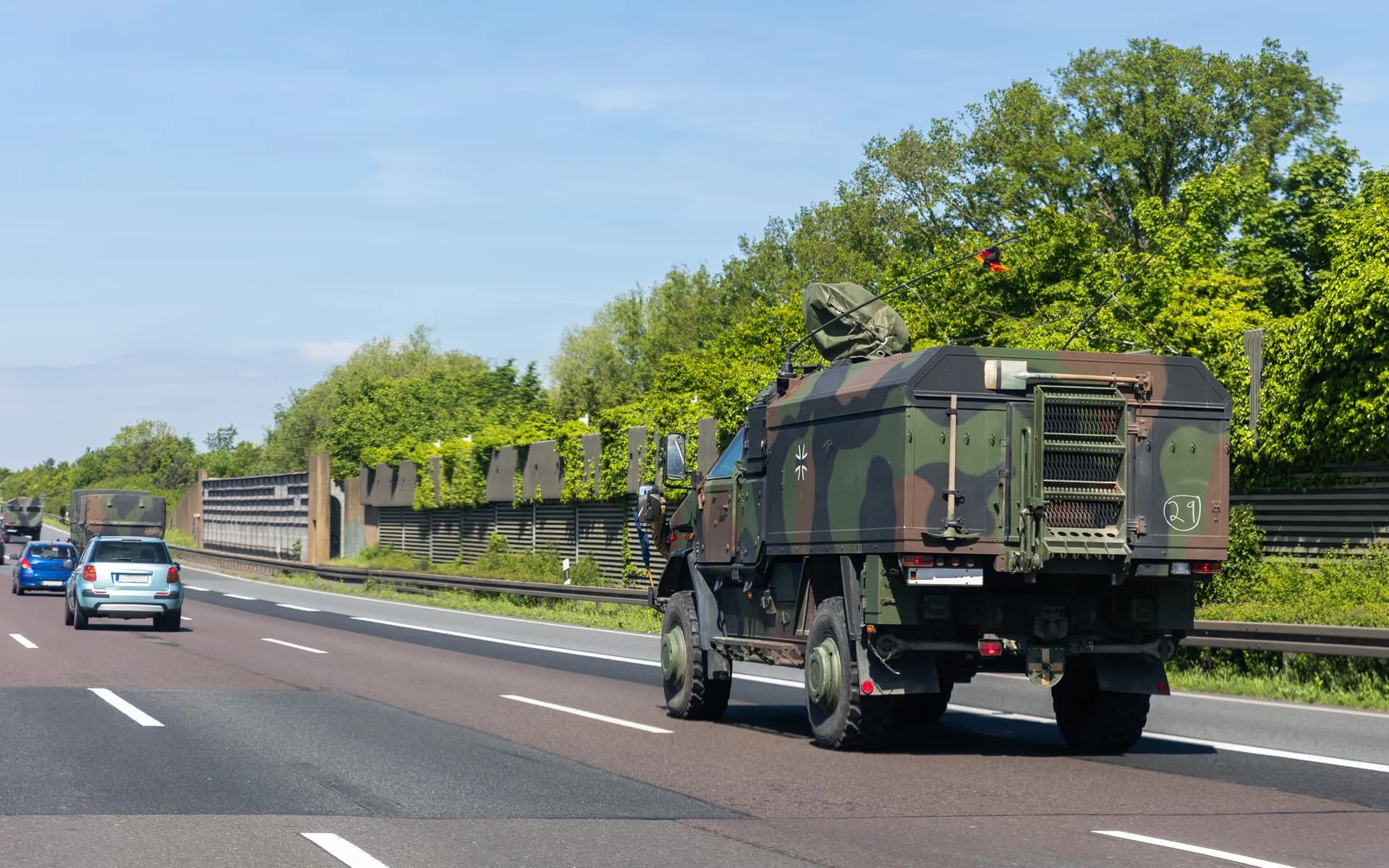
Defense Asset and
Convoy Tracking
Defense vehicle tracking on hardened hardware with payload encryption, NavIC sovereign positioning, convoy formation tools, and comms-denied resilience. The scope runs from the ruggedized tracker to a backend inside your own perimeter, a full stack owned end to end.
 THE CHALLENGE
Tracking That Survives a Contested Environment
A commercial tracker assumes a foreign GNSS signal, a public cloud, and a reliable cellular link. None of those assumptions hold for a defense fleet. Positioning may be degraded, the link may be jammed, the data must never leave the perimeter, and the hardware has to take shock, heat, and a noisy electrical bus. This is defense vehicle and asset tracking built on a sovereign and hardened foundation, where NavIC carries positioning, encryption protects the payload end to end, and the system keeps working when communications are denied.
Part of the Telematics and GPS Tracking stack, and commonly built alongside Asset Tracking Solutions.
WHAT'S INCLUDED
The Hardware and Software for Defense Fleets
Hardened Tracker
An STM32 host on conformal coated boards in an IP67 or IP69K enclosure rated for shock and vibration, with power conditioning for a wide and noisy military bus. Board and enclosure design is done in Altium so thermal and mechanical fit is owned rather than bolted on.
NavIC Sovereign Positioning
A NavIC capable GNSS front end fused with GPS, GLONASS, and Galileo where available, so the device keeps a fix from several sources while always holding an Indian sovereign one to fall back on if the others are degraded or withheld.
Encrypted Backend
Mutual TLS from the device plus application level payload encryption, with keys held on a secure element rather than in flash. The backend runs inside your own network or an air gapped segment so the asset picture never leaves your perimeter.
Convoy Formation Tools
A convoy is presented as a live picture of order, spacing, and gaps. The command vehicle sees which element fell behind, where the column stretched, and when a vehicle broke the interval, with geofenced corridors and halt points raising an alert on a stray.
Comms-Denied Resilience
Local track buffering with forward-on-reconnect so nothing is lost in a blackout, multiple backhaul paths with failover where the brief allows, and short range mesh between convoy vehicles to keep a local picture when the long haul link is jammed.
Battery Asset Variant
A battery powered build for towed equipment, containers, and stores, running a low power profile over NB-IoT or Cat-M1 with wake on movement, so dormant assets last and any unauthorised move out of a dump triggers a geofence alert.
IN OPERATION
What the Crew and the Command See
The system is judged on a move under load, out in the field where it has to perform. The convoy lead needs the column at a glance, the command post needs the asset picture without holes, and the maintainer needs to keep the fleet current without pulling units.
The Convoy Lead
Sees the formation as order, spacing, and gaps, with an alert when a vehicle drops the interval or the column leaves its corridor. Corrections happen on the move instead of at the next halt.
The Command Post
Sees every tracked vehicle and store inside the perimeter, with buffered tracks filling in after any blackout so the picture has no silent holes. Geofences flag any asset that moves without authorisation.
The Maintainer
Pushes signed, authenticated firmware over the air and reads device health, so the fleet stays current and faults surface early without taking trackers out of service for a manual update.
HOW IT WORKS
From Hardened Device to Air Gapped Backend
Fix and Protect
The tracker fixes position from NavIC and other constellations, encrypts the payload, signs it with keys on a secure element, and opens a mutually authenticated session. The data is protected before it leaves the device.
Move or Hold
When a link is available the device forwards over cellular or satellite with failover. When it is denied the device buffers locally and shares a picture over convoy mesh, then forwards the full track the moment a path returns.
Build the Picture
Inside the perimeter the backend fuses tracks into the asset and convoy display, runs geofence and formation logic, and feeds the existing command system through documented APIs rather than a separate screen.
SOVEREIGNTY AND SECURITY
Built for Independence and Control
Sovereign Positioning
NavIC IRNSS as the constellation you can rely on independent of foreign operated signals, fused with other GNSS for accuracy while keeping a sovereign fix as the floor.
Defence in Depth
Mutual TLS, application level payload encryption, secure element key storage, and signed firmware. The device cannot be impersonated and cannot be loaded with anything you did not authorise.
Perimeter Hosting
Deployment inside your own network or an air gapped enclave, with documented APIs to integrate with your command and control. The asset picture stays where you control it.
FAQ
Common Questions
Why NavIC rather than only GPS for defense positioning?
NavIC, the IRNSS constellation, is an Indian system, so positioning does not depend on a foreign operated signal that could be degraded or withheld. A NavIC capable GNSS front end is integrated and fused with GPS, GLONASS, and Galileo where available, so the device keeps a fix from multiple sources but always has a sovereign one to fall back on. For defense use that independence is the whole point.
How is the data encrypted and kept inside the perimeter?
The tracker authenticates to the backend with mutual TLS, with application level encryption layered on the payload so position and telemetry are protected even past the transport. Keys live on a secure element on the device rather than in flash. The backend is deployed inside your own network or an air gapped segment, never a public cloud, so the asset picture never leaves the perimeter you control.
What makes the hardware suitable for the field?
The tracker is designed as a hardened unit on an STM32 host with conformal coated boards, wide temperature rated components, and an enclosure built to IP67 or IP69K with shock and vibration tolerance for tracked and wheeled platforms. Power conditioning handles the wide and noisy input of a military electrical system. Enclosure and board work is done in Altium so the thermal and mechanical design is owned end to end rather than bolted on.
What does convoy formation tracking show?
For a convoy, each vehicle position is tracked and the formation is presented as a live picture of order, spacing, and gaps rather than dots on a map. The command vehicle sees which element has fallen behind, where the column has stretched, and when a vehicle breaks the planned interval. Geofenced halt points and route corridors raise an alert if the convoy strays, so the lead can correct before the gap becomes a problem.
What happens when communications are denied or jammed?
The design assumes the link can fail. The tracker stores its full track locally in a buffer and forwards it when any path returns, so no position is lost during a blackout. Where the brief allows, multiple backhaul paths, cellular and satellite, run with automatic failover, and short range mesh between convoy vehicles keeps the column with a local picture even when the long haul link is down. Resilience is built in rather than assumed away.
Can assets that are not vehicles be tracked?
Yes. The same hardened tracker, in a battery powered variant, fits on towed equipment, containers, generators, and other high value stores. For long dormancy it runs a low power profile over NB-IoT or Cat-M1 and wakes on movement, so a parked asset reports rarely and lasts, while a moving one reports often. Geofencing flags the moment a store leaves its dump or laager without authorisation.
How does this integrate with an existing command system?
The asset and convoy picture is exposed through documented APIs and standard feeds so it can plug into your existing command and control display rather than forcing a separate screen. The build conforms to the data formats and security controls your integrator requires, and the device firmware stays updatable over a signed, authenticated channel so the fleet can be maintained without pulling units out of service.
Ready to Build Your Defense Tracking Capability?
Share your platforms, your environmental envelope, and your security and data residency requirements to get a walkthrough of the hardened hardware, NavIC positioning, and comms-denied design.
Schedule a Free Consultation