

How Real Time Fault Alerts Reduce Elevator Downtime and Improve Service Efficiency.
Discover how real time elevator fault alerts enable faster issue detection, reduce downtime, improve SLA compliance, and enhance maintenance efficiency.
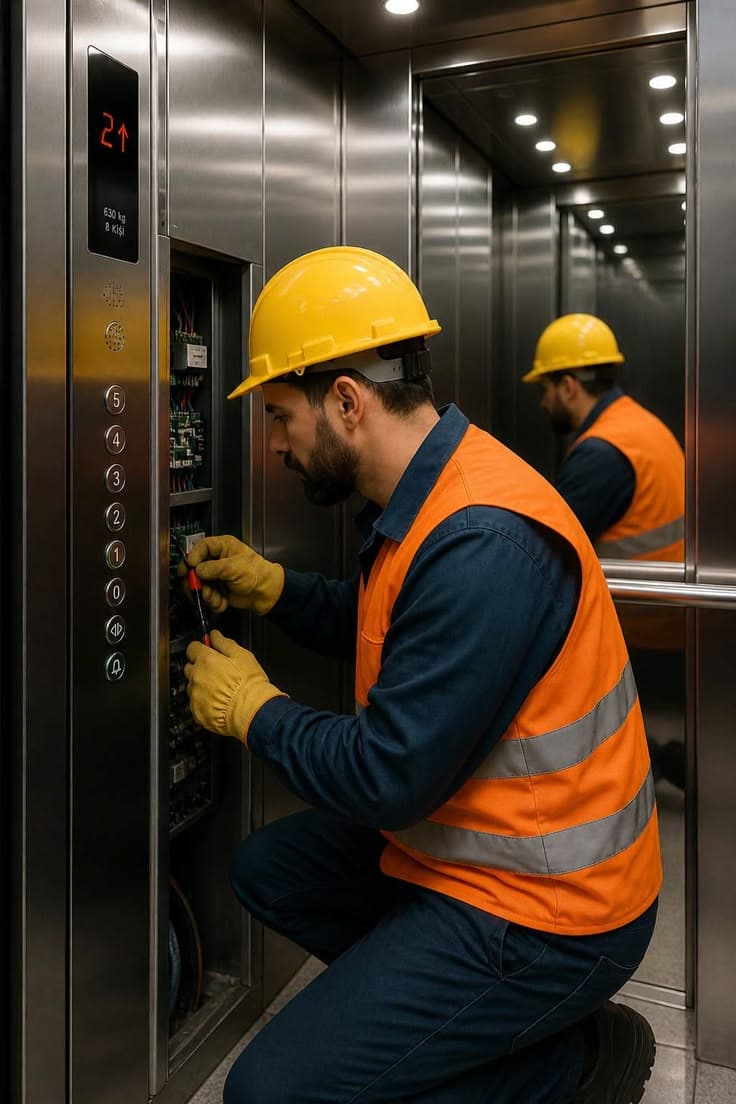
Elevator Downtime Doesn't Start When the Lift Stops
For most elevator service providers, a breakdown becomes visible only after a passenger reports it. By then, the disruption has already affected building occupants, technicians have to be dispatched without knowing the root cause, and service level agreements (SLAs) are already under pressure.
Modern elevators continuously generate valuable operational data from fault codes and motor load to door cycles and controller events. The challenge isn't the lack of data; it's the inability to capture, interpret, and act on it in real time.
This is where real time fault alerting changes the way elevator maintenance is managed.
The Problem with Reactive Maintenance
Traditional maintenance workflows typically follow the same pattern:
- A fault occurs.
- Building occupants report the issue.
- A service ticket is created manually.
- A technician is assigned.
- The fault is diagnosed only after arriving on-site.
This approach creates several operational challenges:
- Longer elevator downtime
- Delayed technician response
- Higher maintenance costs
- Missed SLA commitments
- Poor visibility into fleet health
- Reduced customer satisfaction
As elevator portfolios grow across multiple cities and buildings, managing maintenance reactively becomes increasingly difficult.
What Is Real Time Fault Alerting?
Real-time fault alerting continuously monitors elevator controllers and connected devices for abnormal operating conditions.
Instead of waiting for a complaint, the system automatically detects issues such as:
- Controller fault codes
- Door operation failures
- Emergency brake activation
- Communication loss
- Power interruptions
- Motor overload conditions
Once detected, alerts are immediately sent to the cloud platform, where service teams receive notifications and can initiate maintenance without delay.
From Alerts to Action
A smart elevator platform doesn't simply notify operators that something has gone wrong. It provides context that enables faster decision making.
A typical fault alert includes:
- Elevator identification
- Building location
- Fault category and severity
- Time of occurrence
- Current operational status
- Assigned technician
- SLA deadline
- Maintenance history
With this information available instantly, technicians can arrive prepared with the right tools and replacement parts, reducing diagnostic time and repeat visits.
Improving SLA Compliance
For elevator service providers, meeting response and resolution commitments is just as important as fixing the equipment.
Real-time fault alerts integrate with SLA based workflows by:
- Automatically creating service tickets
- Prioritizing critical incidents
- Escalating overdue requests
- Tracking technician response times
- Recording complete service history
This creates greater operational transparency while helping organizations consistently meet contractual obligations.
Better Visibility Across Every Elevator
Managing hundreds of elevators across multiple locations can be challenging without centralized monitoring.
A cloud based operations dashboard allows maintenance teams to:
- View the live status of every elevator
- Monitor active faults and warnings
- Track technician assignments
- Analyze recurring issues
- Review maintenance history
- Generate operational reports
Rather than managing elevators one building at a time, organizations gain complete visibility across their entire fleet.
Moving Toward Predictive Maintenance
Real-time fault alerts are the first step toward predictive maintenance.
When historical fault trends, equipment usage, and operational data are continuously collected, maintenance teams can identify recurring patterns before they become major failures.
Instead of asking, "Why did the elevator stop?", organizations begin asking, "How can we prevent the next failure?"
This shift from reactive maintenance to proactive service reduces downtime, optimizes maintenance planning, and improves long-term asset reliability. Industry adoption of connected monitoring and predictive maintenance continues to grow as building operators seek higher uptime and lower service costs.
Final Thoughts
Elevator maintenance is no longer just about responding quickly to failures. It's about identifying issues before they impact passengers and providing service teams with the information they need to resolve problems efficiently.
Real-time fault alerting transforms maintenance operations by connecting elevators, technicians, and operational teams through continuous monitoring and intelligent workflows. The result is improved reliability, faster response times, stronger SLA performance, and a better experience for both service providers and building owners.
As buildings become smarter and more connected, real-time monitoring will become a fundamental capability for modern elevator operations.