

Automated Test Jigs: Cost, Payback and When to Build One
Manual testing is where human error enters your product. What an automated test jig does, what it costs to develop and duplicate, and when the maths works.
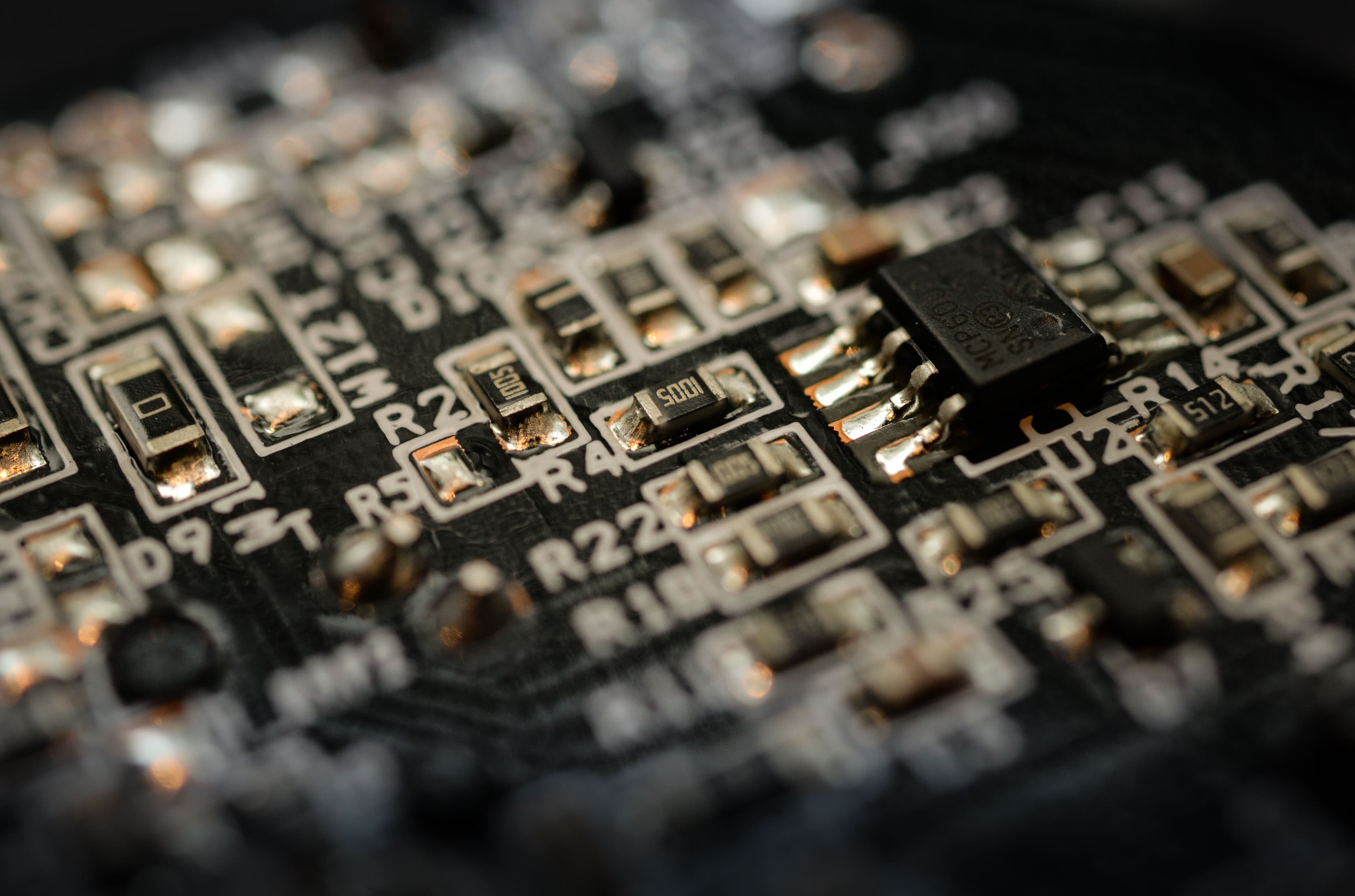
An automated test jig is a fixture that holds a board, makes electrical contact through spring pins, loads test firmware, drives every function, measures the response and records a structured result, usually in under two minutes with one operator action. Development typically starts around 10,000 USD or EUR for the first unit, with duplicate jigs at roughly 300 to 600 each.
Assembly is already automated. Testing usually is not.
Walk through a modern PCB assembly line and almost everything is machine driven. Paste printing, pick and place, reflow, AOI. The boards move through with minimal human contact.
Then they reach test, and suddenly there is a person with a multimeter, a serial terminal, a laptop and a checklist.
That asymmetry is the single largest remaining source of both cost and variability in electronics manufacturing. The assembly is repeatable to within microns. The test is repeatable to within whatever the operator remembered to do on that shift.
What manual testing actually costs you
The obvious cost is labour, and it is real. Functional test is usually the slowest step in the line, so it needs the most parallel operators. On a volume product, test headcount frequently exceeds assembly headcount.
The less obvious costs are larger.
Skipped steps. A checklist with fourteen items under schedule pressure becomes a checklist with eleven items. Nobody decides to do this. It simply happens, and it is invisible.
Inconsistent conditions. How long the operator waits before reading a value, how firmly a probe is held, whether the previous board's state was cleared. Each introduces variance that shows up as unexplained yield noise.
Lost measurements. A manual test almost always records pass or fail because writing down numbers is slow. The numbers are the most valuable output, and they are the first thing discarded.
Transcription errors. Serial numbers typed by hand are wrong often enough to break traceability on exactly the units you later need to find.
No enforcement of sequence. Nothing physically prevents a unit reaching final assembly without a cold test record.
What a well-built jig does
The mechanical part is straightforward. A fixture holds the board in a fixed position and a set of spring-loaded pogo pins makes contact with defined test points, plus connectors for programming, communications and any external interfaces.
The capability sits in what the jig does once contact is made.
- Identify the variant being tested and load the matching test firmware automatically.
- Program the device with test firmware, then later with released application firmware and provisioning data.
- Drive every output. Relays, drivers, indicators, buzzers, displays, motor outputs, under controlled load.
- Measure every input. Rails under load, current draw, sensor channels, ADC accuracy, RF power and sensitivity.
- Read structured logs back from the device over serial, USB or debug interface.
- Verify what a human would look at. A camera checks display output, segment activation, indicator colour and backlight, using image comparison rather than an operator's opinion.
- Apply and record limits. Every measurement compared against a defined window, with the value stored.
- Write identity to the unit. Serial number, MAC address, keys, calibration constants.
- Push results upstream by API into the product record against that serial number.
One button press. One or two minutes. No transcription. No judgement calls.
The cost model, honestly
Development of the first jig, covering fixture design, mechanical build, harness, instrumentation, control software and test scripts, typically starts around 10,000 USD or EUR and rises with the complexity of the product, particularly if RF calibration, high current loads or precision measurement are involved.
Once the design exists, duplicates are inexpensive. Additional jigs generally land in the 300 to 600 range each, because you are reproducing a fixture, not redoing the engineering.
Most volume lines need three to five jigs to keep functional test off the critical path, since functional test is usually the bottleneck.
The payback calculation is usually straightforward at volume. Compare the development cost against the fully loaded cost of the test operators the jigs displace, then add the cost of one avoided field escape. On a product shipping tens of thousands of units a year, the jigs typically pay back inside the first build.
Below a few thousand units a year, the labour maths alone may not justify it, and the decision rests on quality and traceability rather than cost.
The strategic argument that has nothing to do with cost
A jig removes your dependence on somebody else's word.
When production is remote, the honest position is that you do not know what was tested. You know what was reported. An automated jig closes that gap completely, because the jig produces the record, not the operator, and the record arrives in your system directly.
That is worth building even at volumes where the labour arithmetic is marginal.
How jigs connect to S3Suite
- The S3 Hardware Agent is the data logging layer inside the jig, connecting to serial ports, debug interfaces, I2C and SPI buses and digital IO, timestamping and serialising all of it into one stream.
- The S3Suite API accepts test reports directly. The jig can create the device record and post results against the serial number without any manual entry.
- Test firmware and application firmware come from the release gate, so the jig always programs the version allocated to that variant and production load.
- Results, measured values, failures and reworks land in the unit's permanent history, available later in the Operations Suite during RMA analysis.
When to build one
The trigger points are usually one of these: your functional test is the bottleneck in the line, your production is remote and you cannot verify what was tested, your yield has unexplained variance between shifts or stations, you are launching a variant family where wrong-firmware errors are likely, or you have had a field escape traced to a test that should have caught it.
If two or more of those are true, the jig is already overdue.
FAQ
How much does an automated test jig cost?
Development of the first jig typically starts around 10,000 USD or EUR depending on product complexity. Duplicate jigs built from the completed design generally cost 300 to 600 each.
How many test jigs does a production line need?
Usually three to five for a volume line, because functional test is normally the slowest step and needs parallel stations to avoid becoming the bottleneck.
What is the difference between an ICT fixture and a functional test jig?
An ICT fixture measures component-level electrical values through a bed of nails on an unpowered or partly powered board. A functional test jig powers the board, loads firmware and verifies that the product actually works as a system.
Can a test jig check a display or indicator?
Yes. Adding a camera with image comparison lets the jig verify display content, segment activation, backlight and indicator colour, which is otherwise one of the most subjective manual checks.
At what production volume do jigs become worthwhile?
On labour cost alone, usually in the tens of thousands of units per year. Below that, the justification is normally traceability and remote production oversight rather than direct cost saving.
CTA: RND Square designs automated test jigs with camera verification and direct S3Suite integration. [Talk to us about a test jig]
Internal links: /insights/production-test-firmware-for-hardware-manufacturing, /insights/electronics-production-test-sequence, /insights/real-time-production-visibility, /s3suite