

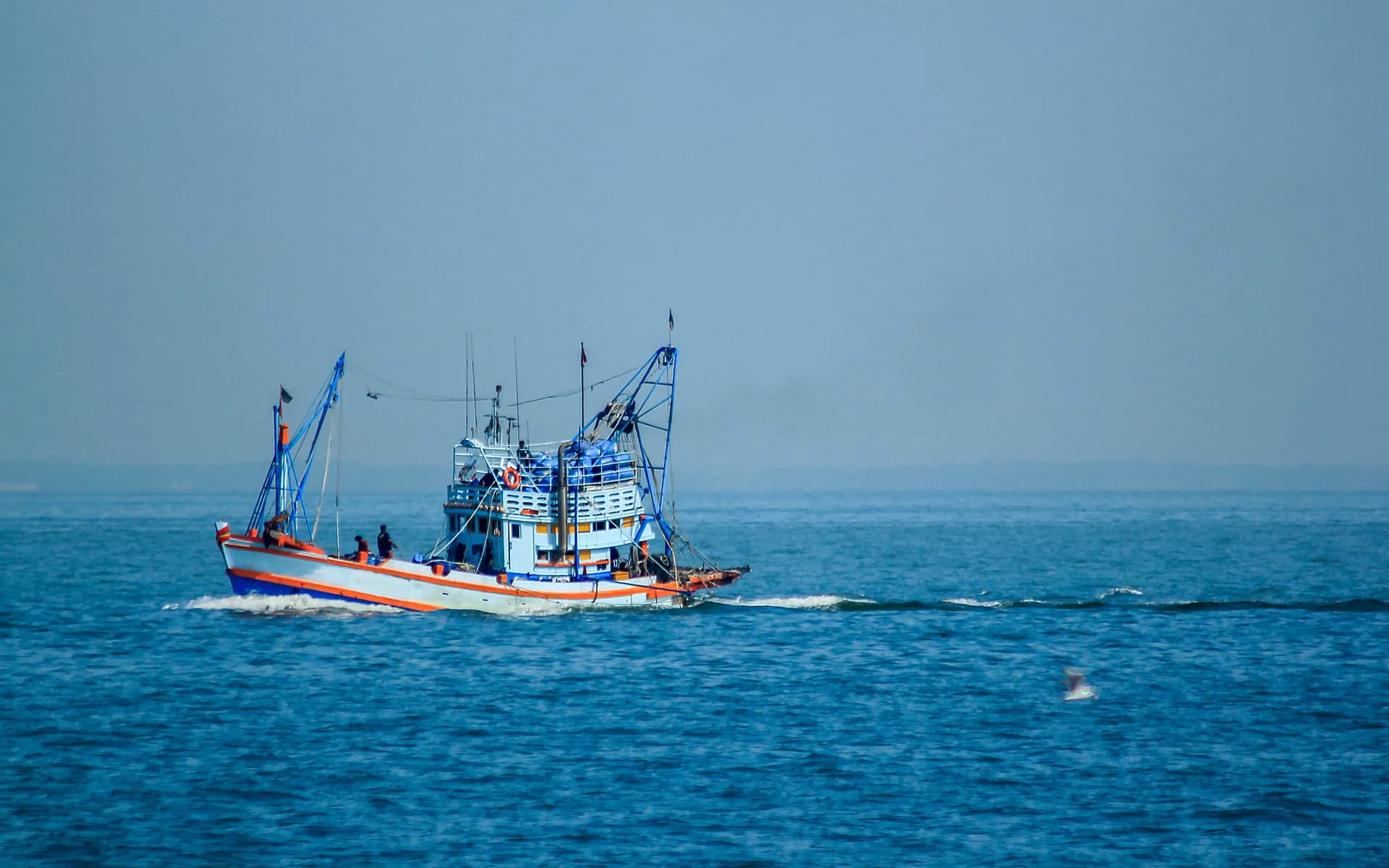
Vessel and Fishing Boat
Tracking and Safety
Marine-rugged trackers with NavIC two-way distress messaging that works beyond cellular range. Boundary line alerts, SOS, and PFZ and weather receive, in an IP67 enclosure built for a working deck.
 THE CHALLENGE
Past the Coast, the Boat Goes Silent and Exposed
A fishing boat that pushes past cellular range loses its communications and its visibility at the same moment. Fishermen cross the international maritime boundary without knowing it and are detained in foreign waters. When something goes wrong at sea, a distress call with no position is close to useless, because the shore side does not know where to search. The crew has no weather warning and no fishing guidance once the phone signal drops. The tracker is built to keep the boat reachable beyond cellular, warn the crew before they cross a boundary, and carry a distress message with a real position when it matters.
One layer of the full Telematics and GPS Tracking platform, working closely with NavIC IRNSS Tracker Development.
WHAT'S INCLUDED
A Marine Tracker That Works Where Cellular Stops
NavIC Two-Way Distress Messaging
The tracker sends and receives short messages over the NavIC messaging service, the IRNSS capability that reaches open sea past cellular range. A distress message carries the boat identity and position outward, and the shore side can acknowledge back, so the crew knows their call was received.
International Boundary Geofence
The maritime boundary line is held as a geofence on the device. As the boat nears the line, it raises a local visual and audible alert on board with no dependence on a network. The crew gets warning before an unknowing crossing, which is the most common cause of detention.
SOS and Panic
A dedicated SOS control raises a distress alert with the current position. The device carries its own backup power, so the SOS and messaging keep working through an engine or battery failure on the boat. In the firmware the distress path is the last thing shed under low power.
PFZ and Weather Receive
Potential fishing zone and weather advisories broadcast to the fleet are received over NavIC and shown to the crew on board. The crew gets weather warnings and fishing guidance at sea, beyond cellular range, without carrying a separate radio set.
Marine-Rugged IP67 Enclosure
The device is built to an IP67 marine enclosure for immersion and spray, with sealed connectors and a corrosion-aware material choice. The antenna and mounting are specified for a deck or wheelhouse install on a working vessel that lives in salt and water.
Satellite Fallback
Where the boat is in cellular range, position and status flow over cellular for the lowest cost. Past that range, the device falls back to the satellite messaging path so the boat stays reachable. The handoff is automatic, so the crew never has to think about which link is live.
HOW IT WORKS
On the Boat, Over the Air, and on Shore
The device fixes position from NavIC and GPS, evaluates the boundary geofence locally, and chooses its link based on coverage. Near the coast it uses cellular. Past it, the IRNSS messaging service carries the distress, status, and advisory traffic. On shore, the messages build a fleet picture for the authority and route a distress event to a response.
On the Boat
The tracker positions continuously, checks the boundary geofence on the device, and shows received PFZ and weather messages to the crew. The boundary and SOS alerts work fully on board, with no need for any link to be up at that instant.
Over the Air
In cellular range the device sends position and status over cellular. Beyond it, the NavIC messaging service carries the distress, status, and advisory traffic. The device handles the handoff automatically so the boat stays reachable across the whole trip.
On Shore
The shore side receives the messages, builds a live fleet picture, and routes a distress or boundary event to the responsible authority. The same record supports vessel registration and the safety history a fleet program needs.
STANDARDS AND PLATFORM
Built on IRNSS Messaging and a Marine-Grade Design
IRNSS Messaging Service
The two-way distress and advisory path is built on the IRNSS, or NavIC, messaging service, the indigenous capability designed for exactly this: short messaging to and from vessels over open sea where cellular does not reach.
IP67 Marine Enclosure
The hardware is sealed to an IP67 marine enclosure for immersion and spray, with corrosion-aware materials and sealed connectors. It is specified to live on a working deck through salt, water, and impact rather than a sheltered install.
Boundary and Safety Alerts
The international boundary geofence and the SOS run on the device so the safety functions do not depend on a live link at the moment they are needed. Backup power keeps the distress path alive through a power failure on the boat.
FAQ
Common Questions
How can a boat send a distress message when it is beyond cellular range?
The tracker uses the NavIC messaging service, the IRNSS broadcast and short messaging capability that works over open sea where there is no cellular coverage. A distress message carries the boat identity and last position to the shore receiving network. This is the channel that lets a vessel reach help when it is far past the point where a SIM card stops working.
How does the device warn a fisherman about the international maritime boundary?
The international boundary line is held as a geofence on the device. As the boat approaches the line, the tracker raises a local visual and audible alert on board, with no dependence on a network. This gives the crew warning before they cross unknowingly into another country's waters, which is the most common cause of fishermen being detained.
What is PFZ and weather receive?
Potential fishing zone and weather advisories are broadcast to the fishing fleet. The device receives these messages over the NavIC messaging service and shows them to the crew on board. The crew gets weather warnings and fishing guidance at sea, beyond cellular range, without needing a separate radio set.
How does the enclosure survive the marine environment?
Salt spray, constant wetting, and impact are the reality on a fishing boat. The device is built to an IP67 rated marine enclosure so it holds up to immersion and spray, with sealed connectors and a corrosion-aware material choice. The antenna and mounting are specified for a deck or wheelhouse install on a working vessel.
Is the distress messaging one way or two way?
It is two way. The boat can send a distress or status message outward over NavIC, and the shore side can acknowledge or send an advisory back to the device. Two way exchange matters in a rescue, because the crew needs to know their message was received and where help is coming from.
What happens to the SOS if the main supply on the boat fails?
The device carries its own backup power so the SOS and distress messaging keep working through an engine or battery failure on the vessel. A dedicated SOS control raises the alert with the current position. The priority in the firmware is that the distress path stays alive even as other functions are shed to save power.
Can the shore authority see the fleet position?
Yes. The position and status messages the devices send build a fleet picture on the shore side, so a fisheries or coastal authority can see where registered vessels are, who has raised a boundary or distress alert, and respond. The same data supports the registration and safety record a fleet program needs.
Keeping a Fishing Fleet Safe at Sea?
Share the fleet size and the waters you operate to get a tailored approach to the NavIC messaging path, the boundary alerting, and the marine hardware that holds up on a working deck.
Schedule a Free Consultation