

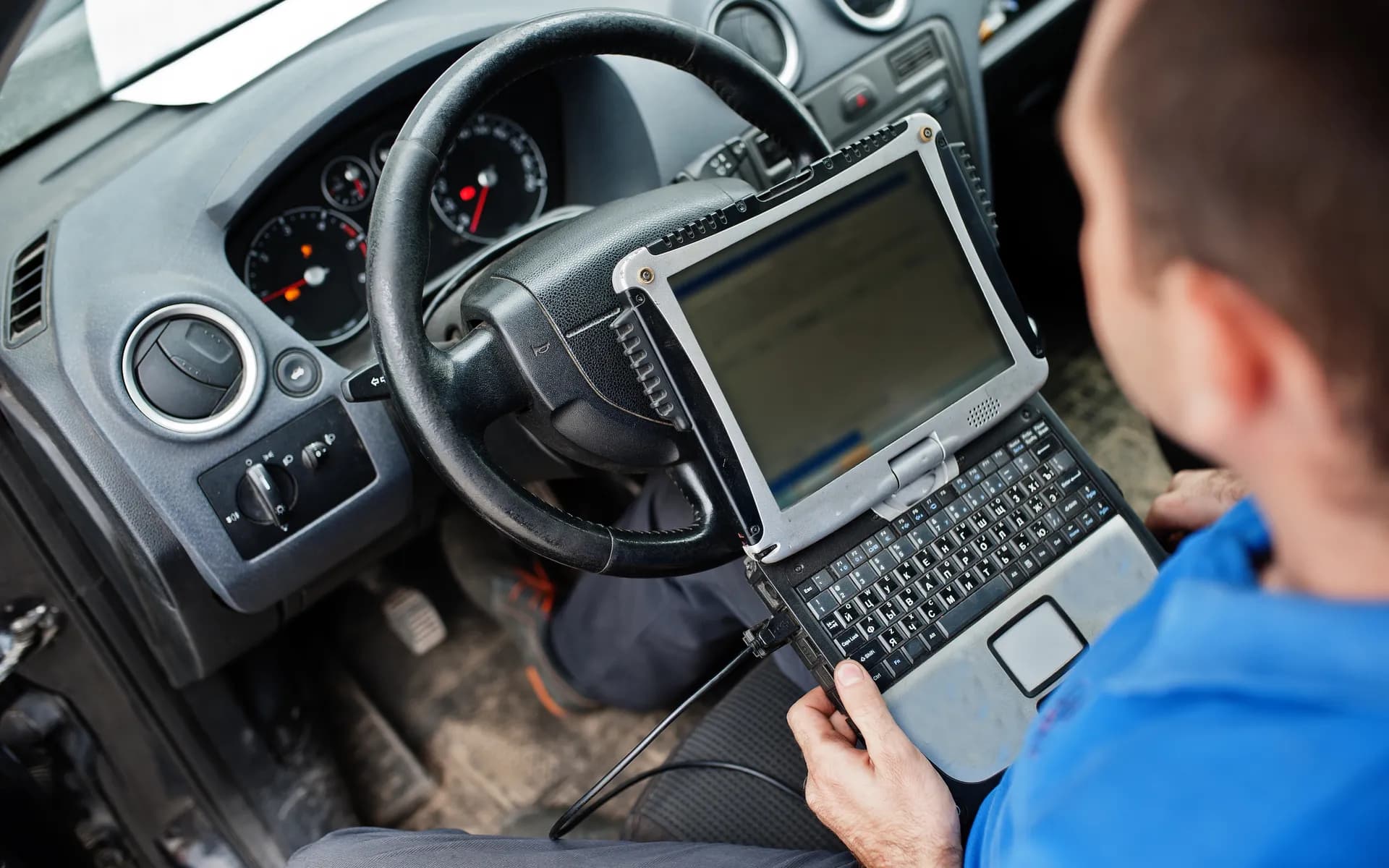
Remote Vehicle
Diagnostics
A remote diagnostics platform that reads fault codes and live engine data off the CAN bus, streams it to the cloud, and turns it into health reports and predictive maintenance for OEM and fleet teams. From the OBD-II interface to the dashboard, the full chain tells you a vehicle is failing before the driver does.
 THE CHALLENGE
The Vehicle Already Knows It Is Failing. You Just Cannot See It.
Every modern vehicle generates a stream of diagnostic data: fault codes from each ECU, live sensor values, freeze-frame snapshots of the moment a fault occurred. Almost all of it stays trapped inside the vehicle until a workshop plugs in a scan tool, by which point the breakdown has usually already happened. The challenge is reading that data continuously, parsing manufacturer-specific codes correctly, and getting it to a dashboard without flooding the network or the analyst. Remote vehicle diagnostics close that gap.
Built within the Telematics and GPS Tracking ecosystem, and frequently paired with Connected Vehicle and OEM Telematics.
WHAT'S INCLUDED
From OBD Port to Predictive Dashboard
OBD-II and CAN Interface
A vehicle interface reads diagnostic trouble codes and live parameter IDs over OBD-II and raw CAN. For commercial vehicles, J1939 is decoded directly, so the unit speaks the same protocol the truck does rather than guessing.
DTC Capture and Freeze Frame
Active and stored diagnostic trouble codes are captured the moment they appear, along with the freeze-frame snapshot of the sensor values at the instant of the fault, so the cause is recorded rather than the symptom alone.
Live PID Streaming
Live parameters such as coolant and oil temperature, RPM, fuel trim, battery voltage, DPF status, and throttle position stream at a configurable rate, with on-device thresholds so only meaningful change is sent over the air.
Edge Firmware
The device firmware runs on an STM32 with FreeRTOS, handling the CAN transceiver, PID polling schedule, and local buffering so data survives a connectivity gap and reaches the cloud intact when the link returns.
Predictive Maintenance Engine
The raw stream is turned into trends. Slow drift in temperature, voltage, or fuel trim becomes an early warning, and recurring code patterns flag a component heading for failure before it strands the vehicle.
OEM and Fleet Dashboards
Dashboards present vehicle health at a glance: active faults by severity, maintenance due, fleet-wide fault trends, and a per-vehicle history that a service team or OEM engineering group can act on.
HOW IT WORKS
From Sensor Drift to Service Ticket
The point of remote diagnostics is to act early. The pipeline is designed so a developing fault becomes a work order while the vehicle is still running fine.
Read on the Edge
The device polls PIDs and listens for DTCs over OBD-II and CAN, applies thresholds locally, and captures freeze frames so the cloud receives clean signal in place of raw noise.
Ingest and Decode
Data reaches the backend over MQTT, where manufacturer-specific and J1939 codes are decoded into plain descriptions and merged with the vehicle's history.
Predict and Notify
The analytics engine watches trends and code patterns, raises a health alert when a component starts to degrade, and pushes it to the dashboard and the maintenance workflow.
WHAT YOU GET
Fewer Breakdowns, Better Service Decisions
Faults Before Failures
You see a component degrading days before it fails, so a planned service replaces a part instead of an unplanned breakdown stranding the vehicle and the driver.
Codes You Can Actually Read
Manufacturer-specific and J1939 codes are decoded into clear descriptions, so your team sees what is wrong rather than a five-character code they have to look up.
One View Across the Fleet
Fleet-wide health on a single dashboard lets you spot a fault pattern affecting a whole vehicle class, going beyond chasing one truck at a time.
Data the OEM Can Use
For OEM teams, the live field data feeds engineering and warranty analysis, showing how components behave in the real world rather than only on the test bench.
PROTOCOLS AND PLATFORM
Built on the Protocols Your Vehicles Speak
OBD-II and J1939
OBD-II is supported for light vehicles and SAE J1939 for trucks and buses, reading both standard and proprietary parameter groups so the device covers mixed fleets.
Reliable Device-to-Cloud
Data moves over MQTT with TLS and local buffering, so diagnostics survive tunnels and dead zones and arrive complete, time-ordered, and secure.
OTA and Lifecycle
Over-the-air firmware updates let PID lists, decode tables, and thresholds be refined across the deployed fleet without recalling a single device.
FAQ
Common Questions
What diagnostic data can you read from a vehicle?
Active and stored diagnostic trouble codes, freeze-frame snapshots of the conditions when a fault occurred, and live parameter IDs such as coolant and oil temperature, RPM, fuel trim, battery voltage, DPF status, and throttle position are read from the vehicle. For commercial vehicles, SAE J1939 parameter groups are decoded directly off the CAN bus.
How does this differ from plugging in a workshop scan tool?
A scan tool reads the vehicle once, after it is already in the bay. The system reads continuously while the vehicle is in service and streams the data to the cloud, so you see a developing fault in real time and can act before the breakdown instead of diagnosing it afterwards.
How does predictive maintenance actually work here?
The analytics engine watches trends in live parameters and patterns in recurring codes. Slow drift in temperature, voltage, or fuel trim, or a code that keeps reappearing, becomes an early warning that a component is degrading, surfaced as a maintenance alert before the part fails outright.
Does the device work over OBD-II and raw CAN?
Yes. Standard OBD-II is supported for light vehicles, with raw CAN and SAE J1939 read for trucks and buses, including proprietary parameter groups. This lets a single platform cover mixed fleets of cars, vans, and heavy commercial vehicles.
What happens to data when the vehicle loses connectivity?
The edge firmware buffers diagnostic data locally during a tunnel or dead zone and forwards it over MQTT once the link returns. Data arrives complete and time-ordered, so a fault that occurred out of coverage is preserved in the vehicle history.
Can OEMs use this for warranty and engineering analysis?
Yes. The same live field data that drives fleet maintenance also feeds OEM engineering and warranty analysis, showing how components behave across a real population of vehicles in real conditions, which is far richer than bench or pilot data alone.
Can diagnostics run alongside tracking on one device?
Yes. Remote diagnostics shares the same CAN interface and cloud platform used for tracking and OBD-II telematics, so location, driver behaviour, and vehicle health can live on one device and one dashboard rather than separate systems.
Ready to Build Your Diagnostics Platform?
Share your vehicle mix, the parameters you care about, and whether this is for a fleet or an OEM program to get a tailored approach across the device, the decode pipeline, and the dashboards, along with a realistic timeline.
Schedule a Free Consultation