

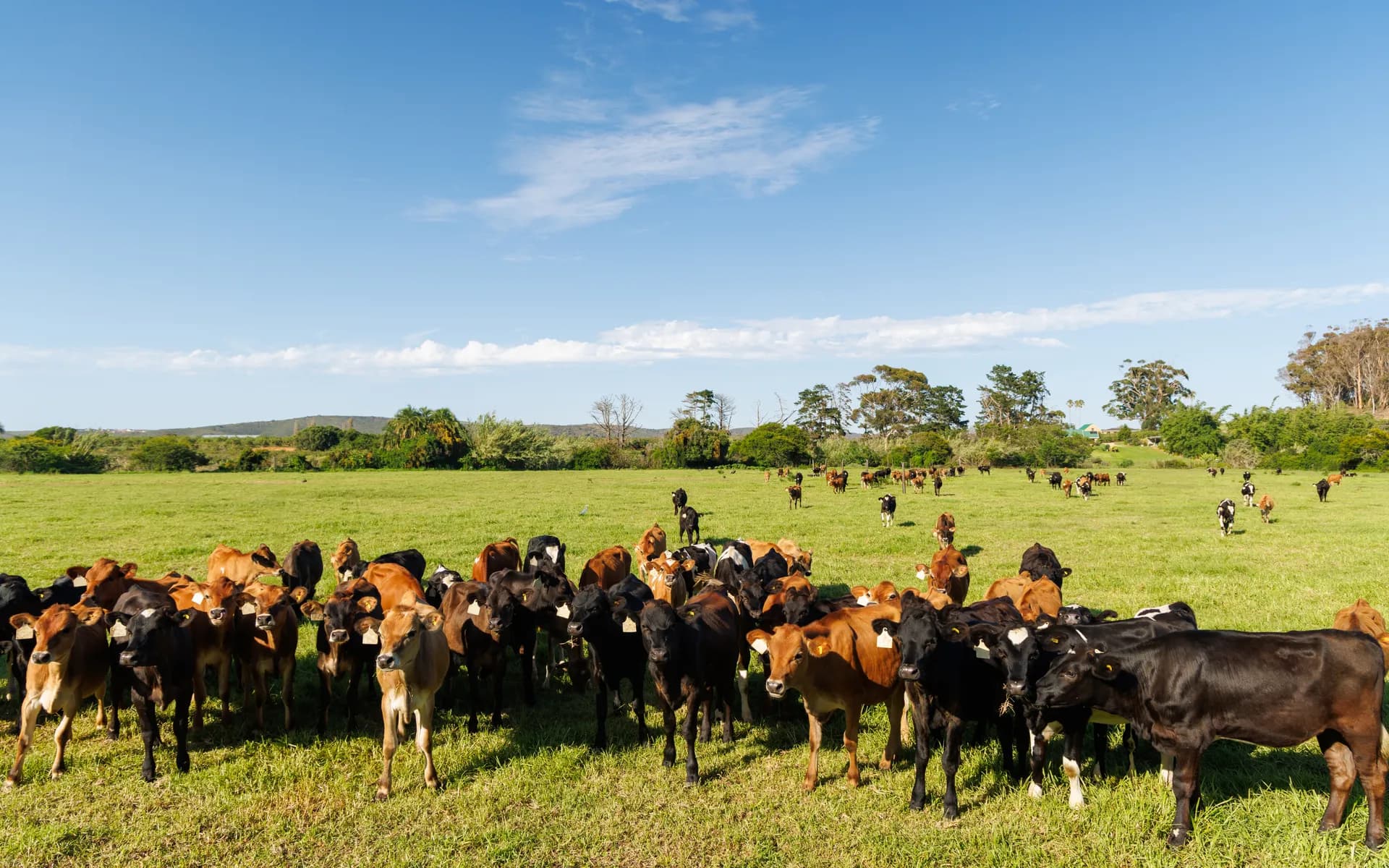
Livestock and Cattle
GPS Tracking
Long-life GPS collars that keep a herd in view across open grazing land. Grazing geofences and stray alerts, theft detection, and activity and rumination monitoring, all on one herd dashboard built for rural connectivity.
 THE CHALLENGE
A Herd You Cannot See Is a Herd at Risk
Cattle stray across open grazing, get stolen overnight, and fall sick with no early signal a farmer can act on. Counting heads by hand and walking the boundary does not scale, and most consumer trackers die in days or lose signal the moment the herd moves out of cellular range. A working livestock tracker has to survive the animal, last months on a charge, and report from land with patchy coverage. Those constraints come first, then grazing geofences, theft alerts, and health monitoring layer on top.
Part of the Telematics and GPS Tracking stack, and commonly built alongside Asset Tracking Solutions.
WHAT'S INCLUDED
A Collar That Lasts and a Dashboard That Watches
Long-Life GPS Collar
The collar is designed around a low duty-cycle GNSS profile and a large primary cell, with a solar harvesting option for herds that stay outdoors, targeting multi-month life instead of a charge every few days.
Grazing Geofence and Stray Alerts
You draw the grazing boundary as a geofence. The collar raises a stray alert the moment an animal crosses it, so you find a wanderer early instead of at the next head count.
Theft Detection
A sudden long-distance move outside grazing hours is flagged as a likely theft. You get the alert and the live track while the animal is still close enough to recover.
Activity and Rumination Monitoring
An onboard accelerometer derives activity and rumination patterns. A drop often shows before visible illness and a spike can signal heat, so the system surfaces animals worth a closer look.
Rural Connectivity
LoRa to a farm gateway handles very low-power short-range reporting, and NB-IoT covers areas where a low-power wide-area network reaches, so the collar stays connected across terrain that defeats normal cellular.
Herd Dashboard
Every animal on the grazing map, strays and health outliers flagged, and filtering by group. You manage the herd by exception rather than counting heads in the field.
BUILT FOR THE FIELD
Power, Coverage, and a Collar That Survives
The three things that decide whether a livestock tracker works in practice are battery life, connectivity over open land, and whether the collar survives the animal. All three are engineered together, because a collar that lasts months but loses signal, or reports well but dies in a week, is no use to a farmer.
Solar and Multi-Month Battery
A low duty-cycle reporting profile paired with a large primary cell, and an optional solar panel for outdoor herds, so the collar runs for months between any intervention.
LoRa and NB-IoT Backhaul
LoRa to a farm gateway for the lowest-power short-range case, and NB-IoT for wide-area low-power coverage, chosen to match the connectivity actually available on the land.
Rugged Collar Enclosure
A sealed enclosure built for impact, mud, water, and constant rubbing, with antenna and sensor placement chosen so it keeps working as the animal grazes, lies down, and moves.
OUTCOMES
What the Herd Owner Gets Back
Fewer Losses
Stray and theft alerts catch animals leaving the grazing area early, so you recover them before they are gone instead of discovering the gap at the next count.
Earlier Health Action
Activity and rumination trends point you at the animals that need attention before illness is obvious, which is where most of the herd-health value sits.
Less Manual Herding
A single dashboard replaces walking the boundary and counting heads, so a smaller team can keep a larger herd in view across more land.
FAQ
Common Questions
How long does the collar battery last in the field?
A multi-month design pairs a low duty-cycle reporting profile with a large primary cell, plus a solar harvesting option for herds that stay outdoors. The collar reports often enough to catch a stray or theft but sleeps deeply between fixes to stretch the battery.
How does tracking work where there is no cellular coverage?
Grazing land is often outside good cellular. LoRa to a farm gateway handles short-range, very low-power reporting, and NB-IoT covers areas where a low-power wide-area network reaches, so the collar stays connected across rural terrain without burning the battery.
Can I get an alert if an animal strays or is stolen?
Yes. You draw the grazing boundary as a geofence and the collar raises a stray alert when an animal crosses it. A sudden long-distance move outside grazing hours is flagged as a likely theft so you can act before the animal is gone.
What health signals does the collar pick up?
An onboard accelerometer derives activity and rumination patterns. A drop in rumination or activity often shows up before visible illness, and a spike can indicate heat, so the herd dashboard surfaces animals worth checking.
Will the collar survive cattle in the field?
A rugged, sealed collar enclosure is built for impact, mud, water, and constant rubbing, with the antenna and sensor placement chosen so it keeps working while the animal grazes, lies down, and moves through the herd.
Can I manage a whole herd from one screen?
The herd dashboard shows every animal on the grazing map, flags strays and health outliers, and lets you filter by group. You manage the herd by exception instead of counting heads by hand.
Ready to Track Your Herd?
Share your herd size, your grazing land, and the connectivity you have on the ground to get a tailored approach covering the collar, the battery and coverage plan, and the herd dashboard.
Schedule a Free Consultation