

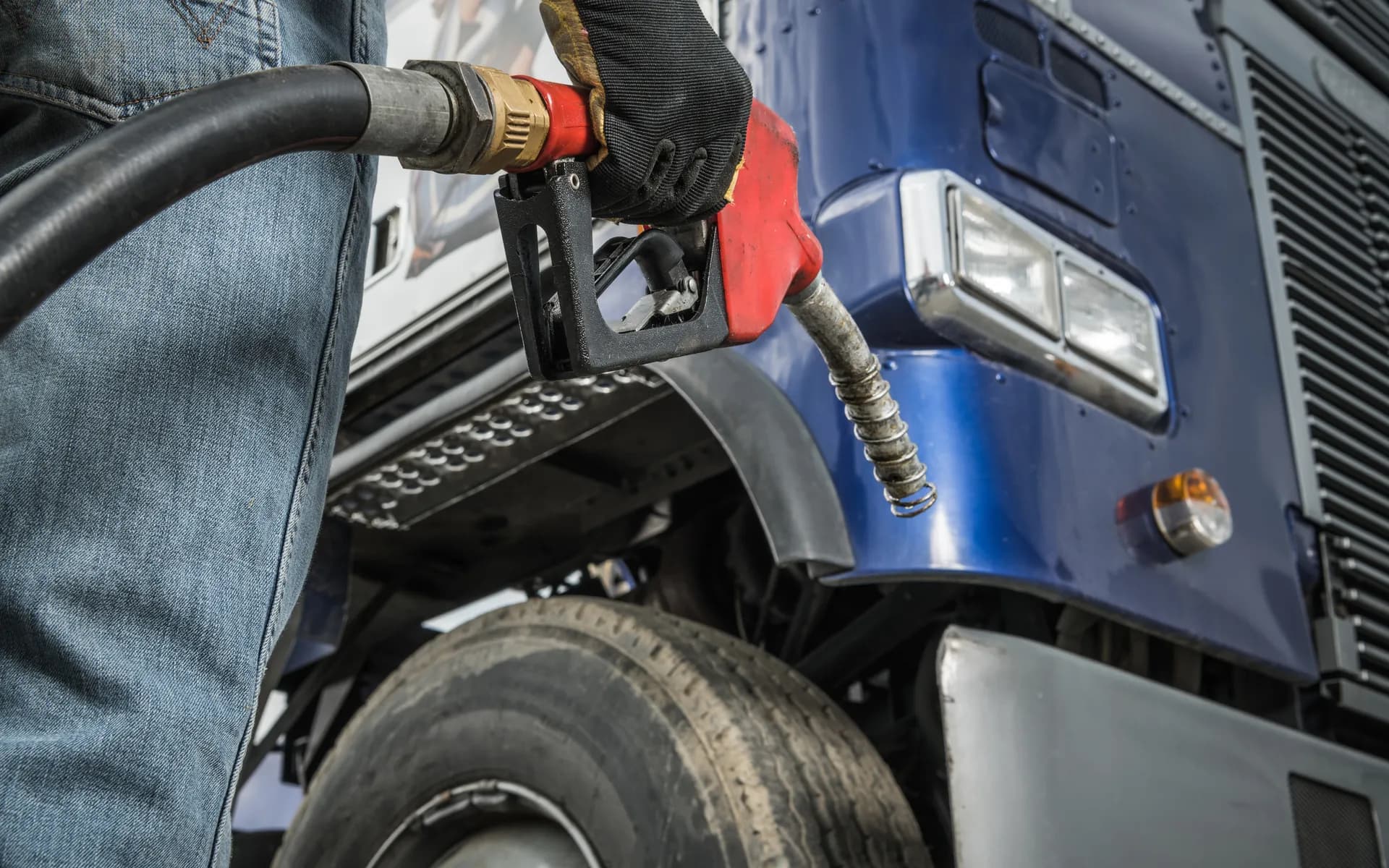
Fuel Monitoring and
Theft Detection
Fuel monitoring that reads tank level over CAN or a capacitive sensor, flags drains and refills with volume and location, tracks fuel against distance, and alerts the moment someone tampers with the system.
 THE CHALLENGE
Fuel Is the Biggest Cost and the Easiest Thing to Steal
For most fleets fuel is the single largest operating expense, and a meaningful slice of it disappears. Some goes to outright theft, siphoned from tanks overnight or skimmed at the pump, and some leaks away through bad routes, idling, and vehicles that quietly burn more than they should. A factory fuel gauge is too coarse to catch any of it, and a monthly spreadsheet reconciliation finds the loss long after the trail has gone cold. Fleets need fuel measured accurately in real time, drains and refills detected as events with volume and place, consumption compared to distance, and an alert the instant someone tampers with the sensor.
Sits inside the Telematics and GPS Tracking stack and shares hardware and platform building blocks with Fleet Management Solutions.
WHAT'S INCLUDED
Accurate Level, Honest Analytics, Real Alerts
Capacitive and CAN Level Reading
Fuel is read from the CAN bus over J1939 or OBD-II where the signal is good, and a capacitive in-tank sensor is fitted where it is not. Either way the level is far finer than a factory float gauge, with both sources fusible on vehicles that support it.
Drain and Refill Detection
The engine watches the level trace for sharp drops that distance cannot explain and sharp rises that mark a fill. Each event is logged with volume, location, and time, so theft and legitimate refuelling are never confused.
Tank Calibration
A per-tank calibration curve is built by recording sensor values against known added volumes, so readings convert to accurate litres. This is what keeps the numbers and the theft alerts trustworthy over time.
Fuel-versus-Distance Analytics
Consumption is paired with distance and engine data to compute true efficiency per vehicle, route, and driver. Outliers surface the trucks losing fuel to a fault, a bad route, or theft.
Tamper Detection
A disconnected or shorted sensor, a lost CAN fuel signal, and device power interruptions are each flagged. The unit keeps reporting these through backup power so cutting it creates an alert and keeps the trail intact.
Reports and Alerts
Consumption, efficiency, event logs, and theft summaries export to PDF and CSV, while drain and tamper alerts fire in real time so you respond the day a theft happens rather than at month end.
MEASUREMENT METHOD
The Reading That Fits the Vehicle
Fuel data quality varies hugely across vehicle types. The measurement method is chosen per vehicle and fused where it helps, so you get a reliable level on a mixed fleet rather than only on the newest trucks.
CAN and J1939
Read level and rate directly from the bus on modern trucks and buses. No tank intrusion, clean data, and engine context like RPM and load alongside the fuel figure.
Capacitive In-Tank Sensor
A capacitive probe in the tank gives high-resolution level on older or non-reporting vehicles, far finer than the factory gauge, with slosh filtering for a stable reading.
Fused and Filtered
Where both exist they are cross-checked, and movement-aware filtering ensures braking, gradients, and tank slosh do not generate false drain events.
The bus-side reading uses the same interface work as CAN bus and J1939 telematics, so engine and fuel data come from one integration.
ARCHITECTURE
From the Tank to the Report
On the Vehicle
An STM32-class controller samples the capacitive sensor or CAN feed, applies the calibration curve and slosh filtering, detects drain and refill events on board, and keeps reporting through backup power if tampered with.
Transport
Level samples and fuel events ride the shared cellular link to the backend over MQTT, alongside GPS and engine data, with store-and-forward so a refuelling stop in a dead zone is not lost.
Backend and Reporting
A time-series store holds the fuel trace and events, the analytics compute efficiency and outliers, and the reporting layer produces logs, summaries, and real-time drain and tamper alerts.
Fuel sits inside the broader cost and efficiency picture covered by fleet management solutions and truck fleet telematics.
ACCURACY AND INTEGRITY
Numbers You Can Act On
Calibrated per Tank
Every vehicle gets its own calibration curve, so reported litres reflect the real tank shape rather than a generic conversion that drifts.
Tamper-Evident
Sensor disconnect, signal loss, and power-cut detection with backup-powered reporting mean an attempt to defeat the system shows up as an event.
Auditable Events
Every drain, refill, and theft event carries volume, location, and time, so the record stands up when you confront a driver, a depot, or a fuel card discrepancy.
FAQ
Common Questions
How is fuel level measured accurately?
Two sources are used depending on the vehicle. On modern vehicles, fuel level and rate are read directly from the CAN bus over J1939 or OBD-II, which is clean and needs no extra hardware. Where the bus signal is missing or coarse, a capacitive fuel-level sensor in the tank resolves level far more finely than a factory float gauge. Either source can run alone or both can be fused, with filtering for the slosh that makes raw readings jumpy.
How does drain and refill detection work?
The level trace is watched over time. A refill shows as a sharp rise while the vehicle is stationary, and a drain shows as a sharp drop that is far faster than normal consumption and is not explained by distance travelled. The engine separates these from gradual burn and from slosh, then logs each event with volume, location, and time, so a theft event and a legitimate fill are clearly distinguished.
Why is tank calibration necessary?
A tank is rarely a clean rectangle, so a given sensor reading does not map linearly to litres. Calibration adds known volumes and records the sensor value at each step, building a per-tank curve that converts raw readings into accurate volume. Without calibration the numbers drift and theft alerts become unreliable, so it is a required step in the rollout.
What is fuel-versus-distance analytics?
Fuel consumed is paired with distance travelled and engine data to compute real efficiency per vehicle, route, and driver. Outliers stand out, so a truck burning far more than its peers on the same route, or a sudden drop in efficiency, points to a mechanical issue, a route problem, or fuel going missing. This is where the monitoring pays for itself beyond catching outright theft.
How is tampering with the sensor stopped?
Thieves go after the sensor and wiring once they realize fuel is being watched. A disconnected or shorted sensor, a sudden loss of the CAN fuel signal, and power interruptions to the device are each detected, raising a tamper alert. The device also keeps reporting these events through its own backup power so cutting it does not simply create a silent gap.
Does this work alongside your existing trackers?
Yes. Fuel monitoring runs on the same telematics unit as position and engine data, sharing the cellular link and the backend, so fuel events arrive alongside GPS and trip data over MQTT. Where trackers are already in place, fuel sensing and analytics are added on top rather than deploying a separate box.
What reports come out of it?
Fuel consumption, efficiency, drain and refill event logs, and theft summaries are produced per vehicle, driver, and route, with the location and time of every event. Reports export to PDF and CSV for the operations and finance teams, and alerts for drains and tamper events can fire in real time so you act on a theft the day it happens rather than at month end.
Ready to Stop Losing Fuel?
Share your fleet mix and where you suspect the losses are to get sensing chosen per vehicle, tanks calibrated, and the analytics and alerts that turn fuel into a number you control.
Schedule a Free Consultation