

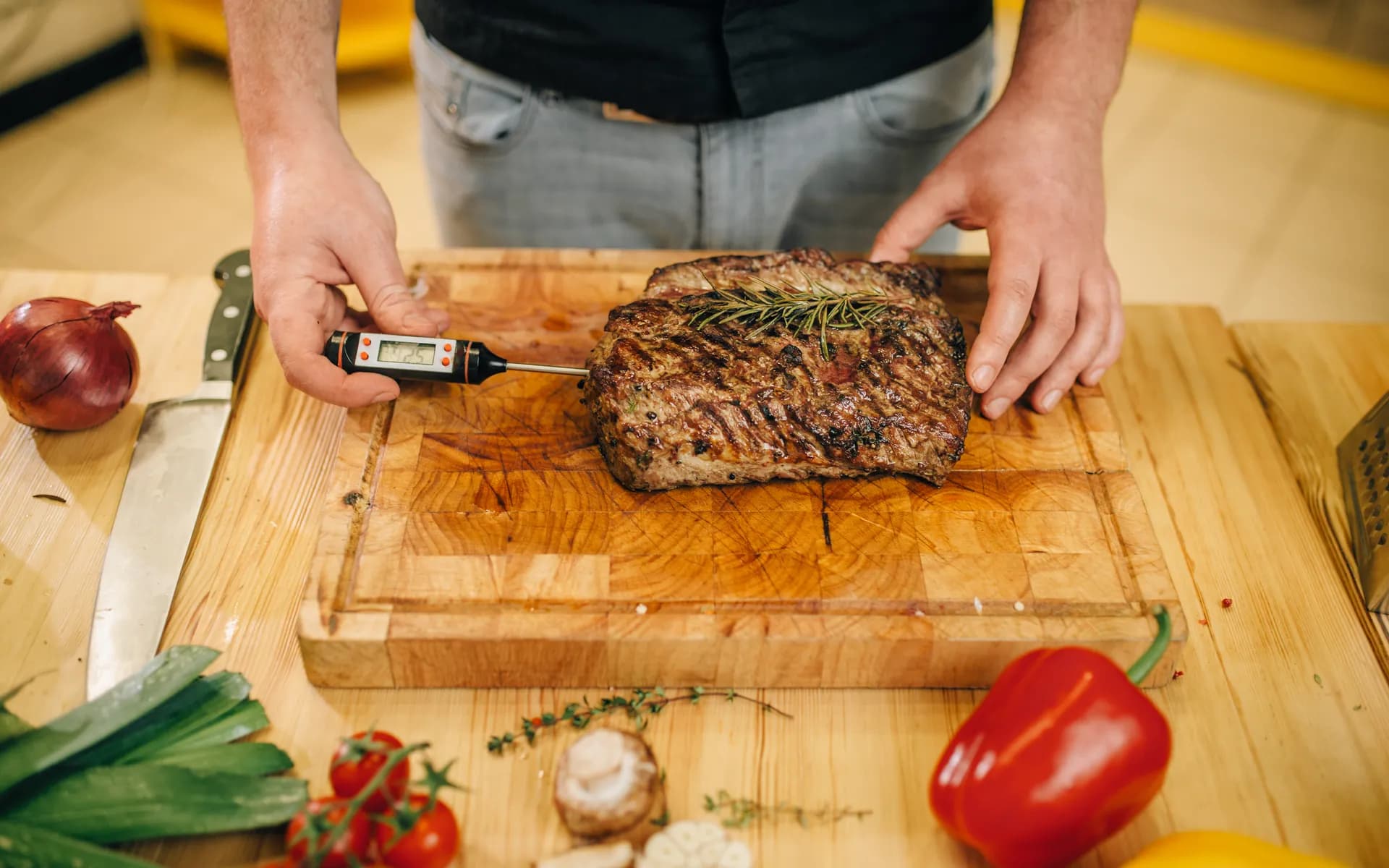
Food Delivery
Temperature Tracking
BLE temperature sensors ride inside delivery bags and boxes and turn the rider's smartphone into a gateway. Every reading streams to the cloud during last-mile delivery, so the restaurant, the dispatcher, and the customer can see that hot food stayed hot and cold food stayed cold from kitchen to doorstep.
 THE CHALLENGE
Nobody Can Prove the Food Stayed Safe on the Way
Once an order leaves the kitchen it goes dark. A bag sits on a scooter in summer heat, a salad rides next to a hot pizza, a rider parks for twenty minutes, and no one records any of it. When a customer reports food that arrived lukewarm or spoiled, the restaurant has no log to defend itself and the delivery platform has no data to settle the dispute. Wiring a cellular logger into every disposable bag is too costly and too fragile to survive daily use. A small BLE temperature sensor inside the insulated bag and the rider's own phone acting as the gateway close this gap, so you get a continuous, time-stamped record of holding temperature across the whole trip without adding a radio to every bag.
Sits inside the Telematics and GPS Tracking stack and shares hardware and platform building blocks with Cold Storage Monitoring.
WHAT'S INCLUDED
BLE Sensors, a Phone Gateway, and a Compliance Log
In-Bag BLE Temperature Sensors
BLE 5.0 sensors are built around Nordic nRF52 silicon with a calibrated digital temperature part or an NTC thermistor front end. The sensor sits inside the insulated bag or box, samples on a tight interval, and advertises readings on a coin cell that lasts a full season between changes.
Rider Smartphone Gateway
The rider already carries a phone, so the design uses it. An SDK runs in the delivery app, picks up the BLE advertisements in the background, and forwards each reading to the cloud over the cellular link with TLS. No extra hardware travels with the order beyond the sensor itself.
Hot and Cold Holding Thresholds
Separate bands for hot holding and cold holding are configured so a pizza, a tub of ice cream, and a chilled salad each get judged against the right limit. The platform tracks time spent inside and outside the safe band, rather than only the latest number.
Excursion Alerts to Rider and Dispatch
When a bag drifts out of its band, an alert goes to the rider so they can close the lid or shorten the stop, and a parallel alert goes to dispatch so they can reroute or flag the order. The customer is warned before a bad meal lands at the door.
HACCP Digital Logs
Every trip produces a time-stamped temperature record tied to the order, the rider, and the bag. These are stored as digital HACCP logs that replace the clipboard, so operators can show a regulator or a client exactly how each delivery was held.
Consumer-Facing Proof of Temperature
A simple temperature summary appears in the customer order screen and the restaurant dashboard. The diner sees that their meal stayed in range the whole way, which turns an invisible step into something the brand can stand behind.
WHAT YOU GET
A Defensible Record for Every Order
You stop arguing about whether the food was held safely and start showing it. The system gives the restaurant, the platform, and the customer the same trusted view of what happened between the kitchen and the door.
Proof the Food Stayed Safe
Each completed delivery carries a temperature trace and a pass or fail against its holding band. The customer and the restaurant see the same record, so a complaint is settled with data instead of a guess.
Alerts Before It Goes Wrong
An excursion is flagged the moment a bag leaves its band, well before the customer bites into a cold meal. The rider and dispatch act while the order is still in motion.
Audit-Ready HACCP Logs
Every trip is logged with time, temperature, order, and rider, ready for an inspection or a client audit. The paper checklist disappears and the record is always there.
HOW IT WORKS
From the Bag Sensor to the Order Record
Sensor Measures and Advertises
The in-bag sensor reads the digital temperature part on a fixed interval and broadcasts a BLE packet with the value, the sensor ID, and battery state. Between reads it drops to deep sleep so the coin cell survives a full season.
Phone Picks Up and Forwards
The rider app scans for the sensor over BLE, pairs each reading to the active order and GPS position, and pushes the stream to the backend over MQTT with TLS, buffering locally when the rider passes through a dead zone.
Cloud Scores and Logs
The backend ingests the stream, compares each reading against the hot or cold holding band, raises excursion alerts, and writes the time-stamped HACCP record that the restaurant, dispatcher, and customer can all see.
ENGINEERING DETAIL
Built for the Bag, the Phone, and the Heat
Calibrated and Traceable
A delivery temperature record is worthless if the number is wrong. Each sensor is calibrated against a NIST-traceable reference, the correction is stored in the part, and the digital sensor and NTC front end are rechecked so the reading you log is the reading that matters.
Phone-First Firmware
The FreeRTOS firmware and BLE advertising interval are tuned so a standard smartphone catches every reading in the background without draining the rider battery. The sensor and the app SDK are designed together so reads do not get missed in a busy pocket.
Survives the Real Route
Delivery sensors get jostled, spilled on, and baked on a hot dashboard. The electronics are potted, the housing is qualified to IP67, and the part is validated across the temperature swing of a real summer route, rather than a bench at room temperature.
Cellular Fallback Option
Where a sensor must report on its own, a Quectel BG95 variant on Cat-M1 or NB-IoT uplinks directly without the phone. The same backend ingests both paths, so a fleet can mix phone-gateway bags with standalone cellular units.
FAQ
Common Questions
How is this different from cold storage monitoring?
Cold storage monitoring watches fixed fridges and freezers at one site. This rides with the order during last-mile delivery, inside the bag on a scooter or in a car. The sensor moves, the rider phone is the gateway, and the goal is consumer trust and a per-order record rather than a static room log.
Why use the rider phone instead of a cellular logger in every bag?
A cellular logger in every disposable bag is expensive and fragile, and it needs its own charging. The rider already carries a phone with a data plan, so an SDK turns it into the BLE gateway. You only put a cheap, long-life sensor in the bag, which lets you cover the whole fleet.
Can it handle both hot food and cold food?
Yes. Separate hot holding and cold holding bands are set and tied to the order contents, so a pizza is judged against its hot limit and a chilled salad against its cold limit. The platform tracks time inside and outside each band, rather than only the last reading.
How accurate is the temperature reading?
Each sensor is calibrated against a NIST-traceable reference, with the correction stored in the part. With a calibrated digital temperature sensor or a trimmed NTC front end, the logged value holds tight enough to defend a HACCP record and settle a customer dispute.
What happens to the alerts during a delivery?
When a bag leaves its holding band, an alert goes to the rider so they can close the lid or shorten a stop, and a matching alert goes to dispatch so they can reroute or flag the order. The warning lands while the food is still moving, not after it arrives.
Does the customer actually see the temperature data?
Yes. A plain temperature summary appears in the customer order screen and the restaurant dashboard, showing the meal stayed in range across the trip. The full time-stamped HACCP log sits behind it for the operator and any audit.
Ready to Prove Every Delivery Stayed in Range?
Share your menu, your bags, and your rider app to see how an in-bag BLE sensor and a phone gateway give you a HACCP log and a temperature record your customers can trust.
Schedule a Free Consultation