

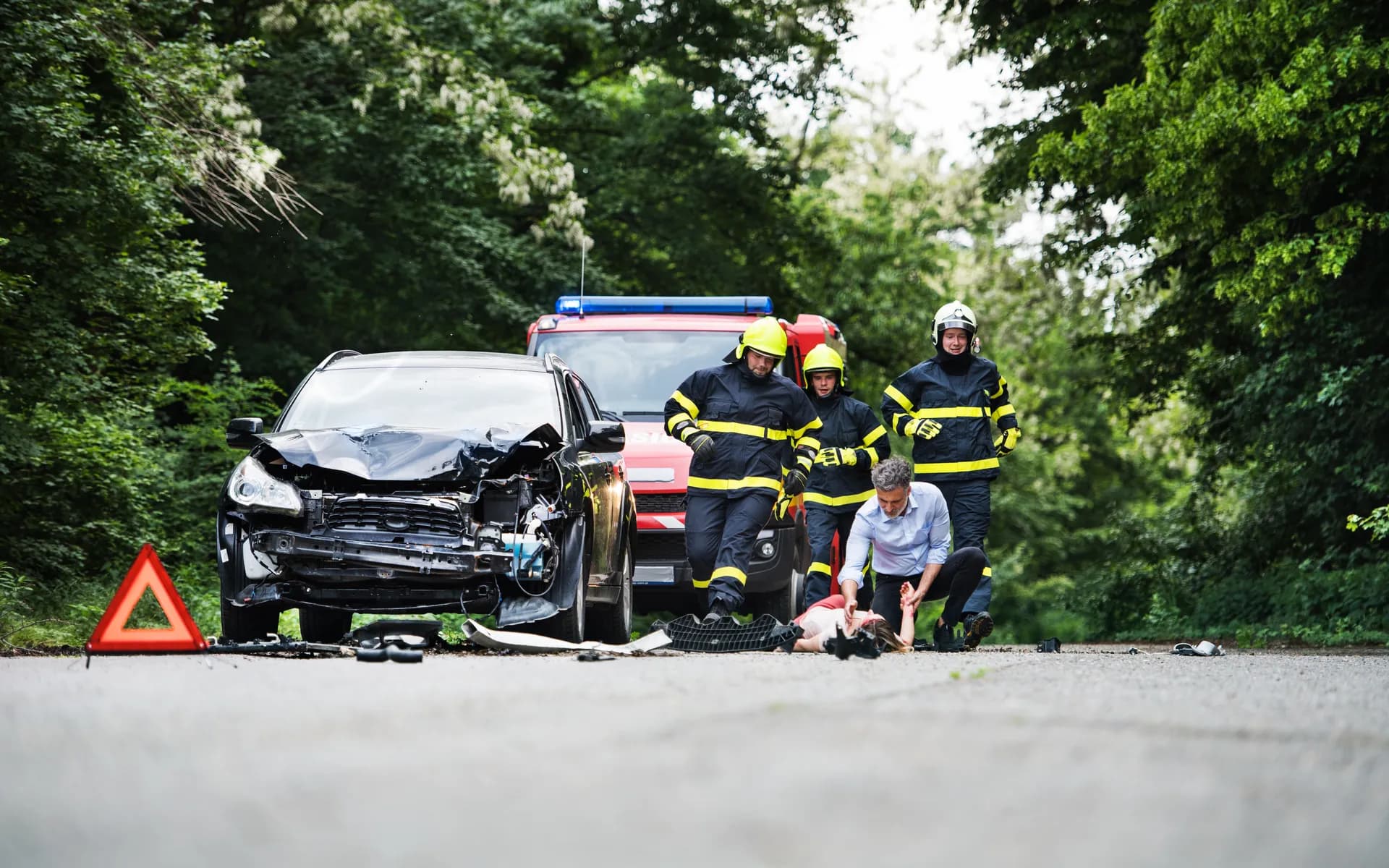
eCall and Emergency
Call System
A full in-vehicle eCall stack that detects a crash, places an automatic emergency call, and pushes a minimum set of data to the response centre while opening a live voice channel to the occupants. From the crash-sensing input on the airbag line to the cellular voice path and type approval, the build covers the full emergency call chain.
 THE CHALLENGE
A Crash Call Has to Work the First Time, Every Time
An emergency call system is a safety device that may sit idle for the entire life of a vehicle and then has to perform flawlessly during the worst few seconds it will ever see. The hard part is placing a call reliably. That means sensing the crash without false triggers, encoding an accurate minimum set of data, holding a voice channel open on a damaged vehicle with a possibly damaged battery, and proving all of it to a type approval lab. The eCall in-vehicle system is engineered around that single requirement: that it works after an impact, well beyond a bench test.
Part of the Telematics and GPS Tracking stack, and commonly built alongside Connected Vehicle and OEM Telematics.
WHAT'S INCLUDED
The Full In-Vehicle eCall Stack
Crash Sensing and Trigger Logic
The trigger comes from the airbag deployment line or a dedicated high-g IMU, run through debounce and severity logic so a genuine impact fires the call and a kerb strike does not. The trigger also exposes a manual SOS button input for occupant-initiated calls.
MSD Encoder
The minimum set of data encoder packs vehicle identification, last known and current GNSS position, direction of travel, time stamp, and occupant or fuel-type context into the compact MSD frame, ready to transmit the instant the call connects.
In-Band Modem and Voice Path
The in-band modem sends the MSD over the established voice call, then the same channel is handed to the occupant. The audio path uses an echo-cancelled handsfree front end so the response centre can hear and speak to people inside the vehicle.
Cellular and GNSS Core
The radio core is built around a Quectel EC200 or u-blox cellular module with a GNSS receiver supporting GPS, GLONASS, Galileo, and NavIC for fast, accurate position fixes. Antenna placement and RF matching are tuned for reception inside a metal cabin.
Backup Power and Survivability
A backup battery and supervisor circuit keep the unit running if the main vehicle battery is severed in the crash. The firmware on STM32 with FreeRTOS sequences the call, retries, and call-back acceptance even on reserve power.
Diagnostics and Service Mode
Self-test, status indicators, and a service interface confirm GNSS lock, cellular registration, microphone, speaker, and backup battery health, so a workshop can verify the system is armed without staging a real crash.
WHAT HAPPENS IN A CRASH
From Impact to Voice in Seconds
The value of an eCall system is in the sequence it runs without anyone touching it. That sequence is designed so the response centre has position and vehicle data before they even speak to the occupant.
Detect and Decide
The airbag line or high-g IMU signals an impact. Severity logic confirms it is a real crash, the unit wakes the radio core, and a manual SOS press follows the same path for non-deployment events.
Connect and Send MSD
The modem registers, places the emergency voice call, and the in-band modem pushes the minimum set of data with position, heading, and vehicle identification while the call is still establishing.
Open Voice and Hold
Once the MSD is acknowledged, the channel becomes a handsfree voice call to the occupants. The unit accepts a call-back from the response centre and stays alive on backup power if needed.
WHAT YOU GET
Built for the Real Conditions of an Accident
Accurate Position Under Cover
A tuned GNSS front end and antenna let the unit report a precise location even when the vehicle has come to rest under a flyover or against a wall, where a phone fix would drift.
False-Trigger Resistance
Severity logic separates a true collision from potholes, speed breakers, and minor knocks, so the response centre is not flooded with calls that did not need to happen.
Works After the Battery Fails
The backup cell and power supervisor keep the call alive when the main harness is cut, which is exactly the situation a serious crash creates.
Clear Two-Way Audio
Echo cancellation and a tuned handsfree path mean the operator can actually talk to occupants over engine noise, alarms, and a cabin that is no longer sealed.
STANDARDS AND APPROVAL
Engineered to Pass Type Approval
MSD and Call Conformance
The MSD frame structure and the in-band modem transfer are validated against the eCall test suite, including position accuracy, transmission timing, and MSD acknowledgement handling.
AIS 140 SOS Context
For the Indian market the SOS and panic call behaviour aligns with the AIS 140 framework, sharing the same GNSS and cellular core used in VLTD work so the emergency function sits inside a compliant platform.
EMC, RF and Crash Resilience
The unit is prepared for EMC, RF type approval, and mechanical reliability testing, validating that the call still completes after the kind of shock and power interruption a crash produces.
FAQ
Common Questions
What is the minimum set of data and how is it sent?
The minimum set of data, or MSD, is a compact frame carrying vehicle identification, current and last known GNSS position, direction of travel, a time stamp, and context such as fuel type or occupant count. It travels over the established emergency voice call using an in-band modem, so the response centre receives the data before the voice conversation begins.
How does the system know a crash happened?
The primary trigger comes from the airbag deployment line, which is the most reliable signal that a serious impact occurred. A dedicated high-g IMU with severity logic can also be added for events that do not deploy airbags, plus a manual SOS button for occupant-initiated calls.
What happens if the main battery is destroyed in the crash?
The unit carries its own backup battery and a power supervisor circuit. If the main vehicle harness is severed, the system switches to reserve power and continues to place the call, transmit the MSD, hold the voice channel, and accept a call-back from the response centre.
Can the emergency call system meet AIS 140 requirements?
Yes. The emergency and SOS function is built on the same GNSS and cellular core used for AIS 140 VLTD work, so the panic and emergency call behaviour fits inside a compliant platform rather than living as a separate, unverified add-on.
Which cellular and GNSS hardware is used?
The typical design uses a Quectel EC200 or u-blox cellular module paired with a multi-constellation GNSS receiver covering GPS, GLONASS, Galileo, and NavIC. The exact part depends on your target markets, voice-call requirements, and certification region.
Is type approval testing handled?
The unit is engineered to pass and prepared for the labs. That covers MSD and call conformance against the eCall test suite, EMC and RF type approval, and mechanical and power-interruption reliability, so the system is validated for the conditions of an actual accident.
Can the same hardware support stolen vehicle and tracking features?
Yes. The cellular and GNSS core is shared, so the emergency call function can sit alongside tracking, immobilisation, and recovery features in one connected platform. These are designed as a coherent system rather than bolting separate boxes into the vehicle.
Ready to Build Your eCall System?
Share your vehicle platform, target markets, and certification needs to get a tailored crash-sensing, MSD, voice, and type approval path for your emergency call system.
Schedule a Free Consultation