

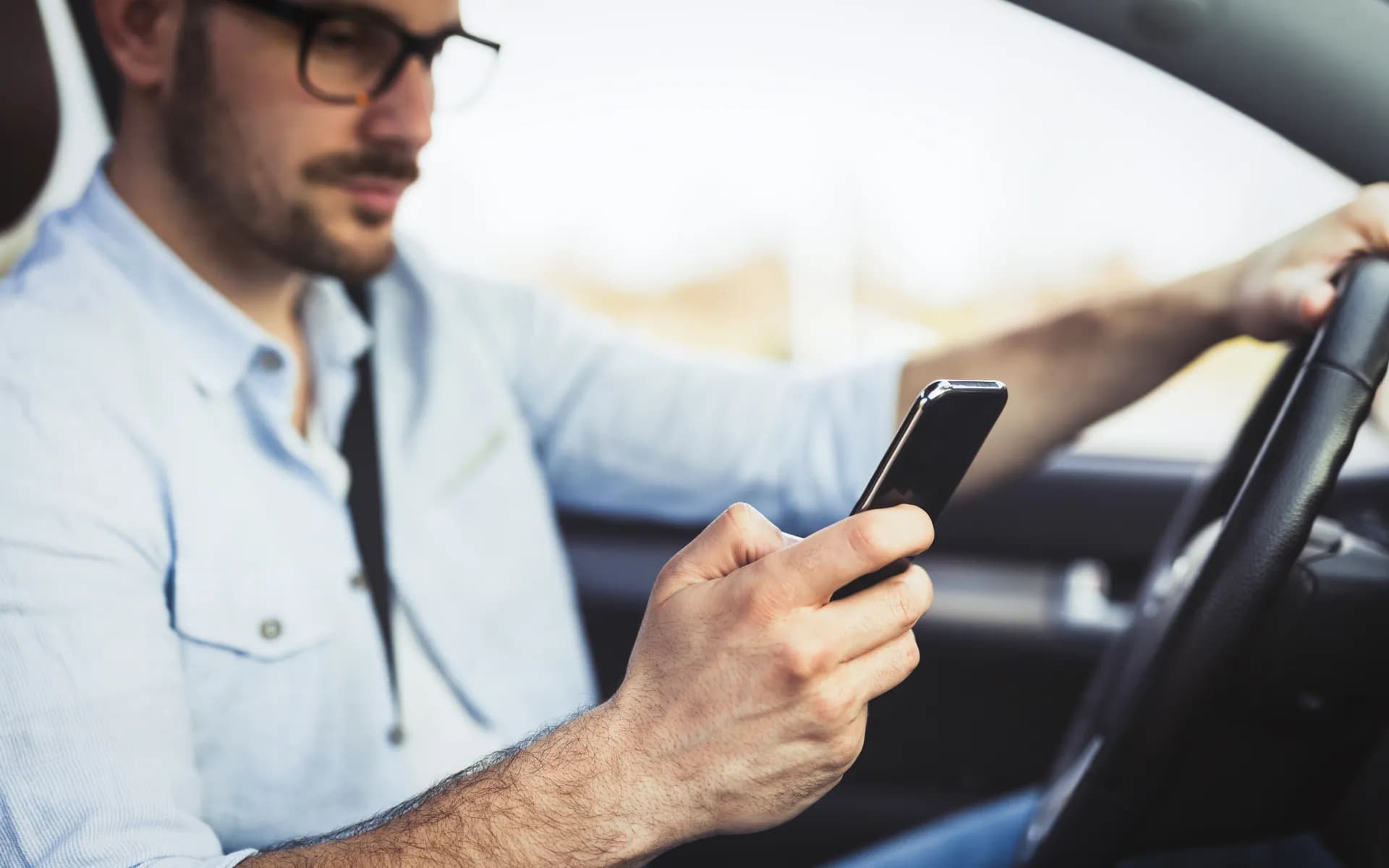
Driver Fatigue and
Distraction Monitoring
An in-cab driver monitoring system that catches drowsiness, distraction, and phone use the moment they happen. The camera runs AI on the edge, alerts the driver in real time, and sends event clips to a fleet review dashboard.
 THE CHALLENGE
Fatigue and Distraction Cause Crashes You Never See Coming
A tired or distracted driver gives almost no warning. By the time a fleet learns about it, there has usually already been a near miss or a collision. Hours-of-service logs and after-the-fact reports do not catch the driver who nods off for two seconds on a night shift or glances at a phone in heavy traffic. Fleets need something that watches the driver continuously, warns them before an incident, and gives safety managers the evidence to coach the people who need it. That means a camera that runs detection inside the cab, alerts in real time, and ties every event back to who, where, and when.
A component of the broader Telematics and GPS Tracking capability, often deployed with Video Telematics and AI Dashcam.
WHAT'S INCLUDED
The Camera, the Edge AI, and the Review Platform
In-Cab DMS Camera
The driver-facing camera unit is built around an infrared sensor and IR illuminator so detection holds up at night, in low sun, and through most sunglasses. Housing is designed for windshield or A-pillar mounting, with a wide enough field of view to keep the driver framed across seat positions.
Edge Inference Engine
Face landmark, head pose, and object models run on an NPU-equipped SoC inside the unit. Drowsiness (PERCLOS, blink, yawn), distraction, phone use, smoking, no-seatbelt, and driver-absent detection all run locally, so alerts fire in a fraction of a second without a cloud round trip.
Real-Time Audio and Visual Alerts
An in-cab buzzer and voice prompt fire the instant an event crosses threshold. Alerts are graded by severity so a mild attention drop sounds different from a hard drowsiness event, and the policy for which events alert versus log is configurable per fleet.
Event Clip Capture and Upload
A rolling buffer keeps a few seconds before and after every flagged event. On trigger, the clip is saved with event type, severity, timestamp, and GPS location, then uploaded on event or on request so cellular data and cloud storage stay manageable.
Connectivity and Vehicle Integration
The unit shares the cellular gateway and vehicle bus with the tracker. Quectel or SIMCom LTE handles uplink over MQTT, ignition and CAN signals gate when monitoring is active, and the same backend receives both driver events and position data.
Fleet Review Dashboard
A web dashboard lets safety managers review flagged events, watch clips, score drivers, and track trends over time. Events are filterable by driver, vehicle, severity, and route, which turns raw alerts into a coaching workflow.
DETECTION COVERAGE
What the Model Watches For
Each behavior is a distinct model output with its own threshold, so you decide what alerts the driver and what only gets logged. Sensitivity is tuned during the pilot against real ground-truth clips before any fleet-wide rollout.
Drowsiness and Fatigue
Eye closure duration, PERCLOS, blink rate, yawning, and prolonged downward head tilt. Graded so a brief microsleep and a sustained nod-off are handled differently.
Distraction and Phone Use
Eyes off road beyond a calibrated window, phone to the ear or in hand, and head turned away. The most common preventable causes of in-traffic incidents.
Compliance and Presence
No seatbelt, smoking in cab, and driver absent from the seat. Useful for policy enforcement and for confirming the cab is occupied during a trip.
ARCHITECTURE
From the Cab to the Dashboard
Edge
IR camera feeds an NPU SoC running quantized models. Inference, alert decision, and the rolling clip buffer all live here. The raw video never leaves the unit, which keeps the feed private and the cellular bill low.
Transport
Event metadata and clips go up over LTE through a Quectel or SIMCom modem using MQTT, sharing the gateway and SIM with the GPS tracker so driver events and position arrive on one pipeline.
Cloud and Dashboard
The backend ingests events, stores clips in object storage, correlates them with trip data in a time-series store, and serves the review dashboard. Models are pushed back to devices over the air for updates and retraining.
This is the same vision stack used for dashcams and other in-vehicle AI. See the Vision AI capability for how edge models are trained, quantized, and deployed, and the video telematics and AI dashcam page for the road-facing side.
STANDARDS AND PRIVACY
Built to Pass Review and Respect the Driver
Edge-Only Video
Continuous footage stays on the device. Only flagged event clips upload, which keeps the system aligned with driver-privacy expectations and reduces the data you are responsible for storing.
Automotive Power and Mounting
Wide-input automotive power, ignition-gated operation, and vibration-tolerant mounting. The unit is built to survive cab heat, cold, and the electrical noise of a working vehicle.
Auditable Event Records
Every event carries type, severity, timestamp, and GPS so records hold up in incident review and coaching. Retention windows and access are configurable to match your policy.
FAQ
Common Questions
How does the system detect drowsiness without a wearable?
An infrared camera aimed at the driver feeds a face landmark model on the edge processor. The model tracks eye aspect ratio, blink rate, eye closure duration (PERCLOS), and head pose. Sustained eye closure and prolonged downward head tilt trigger a graded alert before the driver fully disengages, and the infrared illuminator keeps detection working at night and through most sunglasses.
What distraction events can it flag?
Detected events include phone use to the ear or in hand, looking away from the road for longer than a calibrated threshold, smoking, no seatbelt, and driver absence from the seat. Each event class is a separate model output, so you can tune sensitivity and decide which events alert the driver in-cab versus which only get logged for review.
Does inference happen in the vehicle or in the cloud?
Inference runs on the edge, on an NPU-equipped SoC inside the camera unit. Running on the edge keeps the camera feed local, cuts cellular cost, and lets the in-cab buzzer fire within a fraction of a second of an event. Only event metadata and short clips go to the cloud, so a continuous video stream never leaves the cab.
How do you keep false alerts low?
False alerts erode driver trust, so thresholds are tuned per fleet and temporal smoothing is applied, which keeps a single noisy frame from triggering an alarm. An event has to persist across a window of frames, eye and head baselines are calibrated per driver where possible, and detection is validated against ground-truth clips during the pilot before fleet-wide rollout.
How does this connect to the rest of your telematics?
The DMS unit shares the vehicle bus and the cellular gateway with the tracker, so driver events arrive alongside GPS position, speed, and harsh-event data on the same backend over MQTT. A drowsiness event can be correlated with location, time of day, and trip duration, which is what makes the fleet review dashboard useful for coaching.
What gets stored for a review after an event?
For each flagged event, the system stores a short clip (typically a few seconds before and after), the event type, severity score, timestamp, and GPS location. Clips are retained on the device on a rolling buffer and uploaded on event or on request, which keeps cellular data and cloud storage manageable while preserving evidence for coaching and incident review.
Can it run your own model or a custom event class?
Yes. The inference runtime accepts retrained or quantized models. For a region-specific seatbelt style, a custom distraction class, or a different alert policy, the model can be retrained on your labeled data and deployed over the air to the fleet.
Ready to Put Eyes on Driver Safety?
Share your fleet, your shift patterns, and the events you most need to catch to get a tailored approach across the camera, the edge models, and the review dashboard, plus a realistic path to a running pilot.
Schedule a Free Consultation