

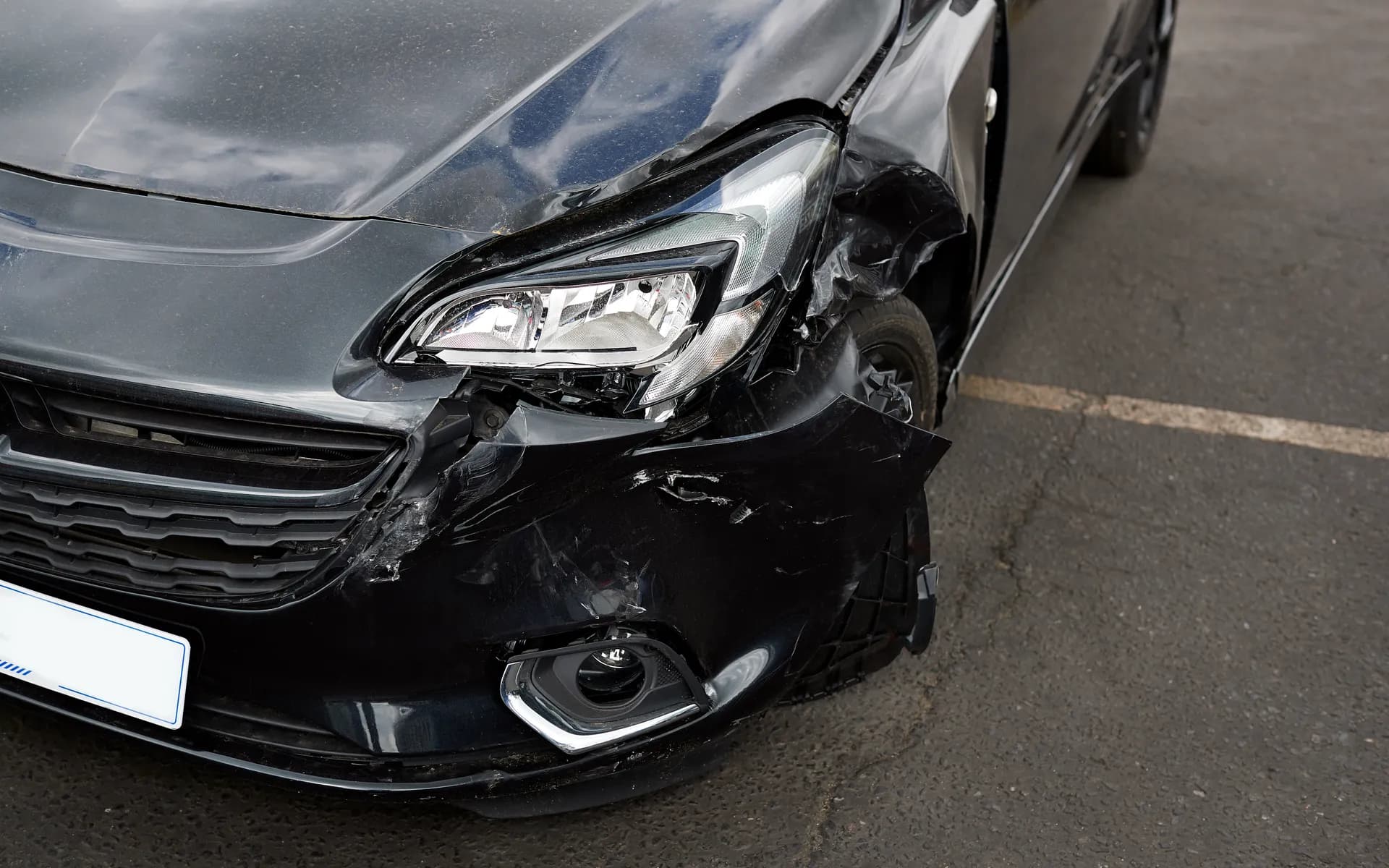
Crash Detection and
Reconstruction
A crash detection system that captures the event at high rate, classifies severity, and reconstructs what happened, so first notice of loss is automatic and false positives stay out of it. The scope covers the IMU sensing, the event firmware, and the backend that turns a crash into evidence.
 THE CHALLENGE
A Crash Is Over in 150 Milliseconds
The whole impact of a collision happens in a fraction of a second, and a normal telematics device reporting position once a second sees almost none of it. That leaves insurers and fleets with no objective record of what happened, slow first notice of loss, and crash detection that either misses real events or cries wolf over a pothole. The system captures the event at high sample rate, classifies its severity, reconstructs the sequence, and rejects the false positives, so a real crash triggers an automatic, evidence-backed first notice of loss.
Part of the Telematics and GPS Tracking stack, and commonly built alongside Usage-Based Insurance Telematics.
WHAT'S INCLUDED
High-Rate Capture to First Notice of Loss
High-Rate IMU Sensing
The device is built around a six-axis MEMS IMU sampled at hundreds of hertz, fused with GNSS speed and heading. That rate is what captures the impulse of an impact, the delta-v, and the direction of force, instead of a single smeared data point.
Event Capture and Buffering
A rolling pre-trigger buffer keeps the seconds before the impact as well as after. When a candidate event fires, the firmware freezes the full high-rate window around it so the reconstruction has the run-up, the impact, and the aftermath.
Severity Classification
Each event is classified by peak acceleration, delta-v, and duration into minor, moderate, and severe bands. Severity drives what happens next, from a quiet log entry to an automatic emergency escalation, so the response matches the real risk.
Crash Reconstruction
The sequence is reconstructed from the IMU and GNSS trace, including approach speed, impact direction, and rotation. The output is a structured event record an investigator or claims adjuster can read, rather than a raw dump of numbers.
First Notice of Loss
A confirmed crash automatically raises a first notice of loss with location, severity, and the reconstructed event attached. The clock on the claim starts at the moment of impact instead of when someone gets around to calling it in.
False-Positive Rejection
Potholes, kerb strikes, door slams, and harsh braking are filtered out of the crash stream using signature analysis on the high-rate data. A system that alarms on every speed bump gets ignored, so rejecting noise is as important as catching impacts.
WHO IT SERVES
One Event Record, Several Consumers
The same high-rate crash capture serves emergency response, claims, and fleet safety. The event is structured so each of these gets what they need from a single objective record of what happened.
Emergency Response
A severe event escalates immediately with location and severity, so help is dispatched on the strength of the data rather than waiting for an occupant who may be unable to call.
Insurance Claims
Reconstruction and severity feed first notice of loss and the claim file, giving the insurer an objective account of the impact that speeds settlement and exposes inconsistencies.
Fleet Safety
Event trends across the fleet surface high-risk routes, vehicles, and behaviours, so the same data that handles one crash also helps prevent the next one.
HOW IT WORKS
Detect, Reconstruct, Report
Detect at the Edge
STM32 firmware runs the IMU at high rate against a candidate trigger, with the pre-impact window held in a rolling buffer. The first decision happens on the device in milliseconds so no part of the event is missed waiting for the network.
Classify and Reconstruct
The firmware computes delta-v, peak force, and direction, rejects non-crash signatures, and assigns severity. For deeper reconstruction the high-rate window is fused with the GNSS trace on the backend into a structured event.
Report and Escalate
The event uploads over MQTT with TLS through a Quectel or u-blox modem, raising first notice of loss and, for severe events, an emergency escalation. Store-and-forward guarantees the record survives a dropped link after impact.
STANDARDS AND ENGINEERING
Engineered for the Moment It Matters
Automotive Grade
The device is built for the vehicle environment with wide temperature range, vibration tolerance, and a backup power path so it captures and uploads the event even if vehicle power is cut by the impact.
Vehicle Data Aware
CAN and OBD-II are read where available so airbag and brake context can corroborate the IMU event, sharpening severity classification and reconstruction with signals straight from the vehicle.
Evidence Integrity
Event records are timestamped, signed, and transmitted over TLS so the crash data holds up as evidence. The reconstruction is reproducible from the stored high-rate trace rather than a one-off summary.
FAQ
Common Questions
Why does the IMU need such a high sample rate?
The impact phase of a collision lasts on the order of a hundred to a few hundred milliseconds. A device reporting once a second sees almost none of it. The six-axis IMU is sampled at hundreds of hertz to capture the impulse, the delta-v, and the direction of force, which is what makes severity classification and reconstruction possible at all.
How are false crash alerts from potholes and kerbs avoided?
Signature analysis runs on the high-rate data to separate the profile of a genuine impact from potholes, kerb strikes, door slams, and harsh braking. A rolling pre-trigger buffer also captures the run-up, which helps distinguish a real collision from a sharp but harmless jolt. Rejecting noise reliably is what keeps the system trusted.
What does crash reconstruction actually produce?
The high-rate IMU window is fused with the GNSS speed and heading trace to reconstruct approach speed, impact direction, and rotation, output as a structured event record. An investigator or claims adjuster reads a clear account of the sequence rather than a raw stream of numbers.
How does first notice of loss get triggered automatically?
A confirmed crash raises a first notice of loss automatically, attaching location, severity, and the reconstructed event. The claim clock starts at the moment of impact instead of when the driver remembers to report it, which is one of the largest sources of delay and dispute in claims.
Does the device keep working if the vehicle loses power in the crash?
Yes. The device has a backup power path so it can finish capturing the event and upload it even if vehicle power is cut by the impact. Store-and-forward means a temporarily dropped cellular link after the crash does not lose the record.
Can it use vehicle data to improve accuracy?
Where CAN and OBD-II are available, airbag deployment and brake signals are read so vehicle data corroborates the IMU event. That extra context sharpens severity classification and reconstruction and further reduces the chance of a false positive.
Ready to Capture and Reconstruct Crashes?
Share your vehicles, your insurance or fleet workflow, and the event data you need, to see how high-rate capture, severity classification, and reconstruction turn a crash into automatic, evidence-backed first notice of loss.
Schedule a Free Consultation