

What to Lock Down Before Your Hardware Goes to Manufacturing
A product crosses from engineering into manufacturing once. Here is the hardware manufacturing readiness checklist that decides whether it scales cleanly or returns from the field
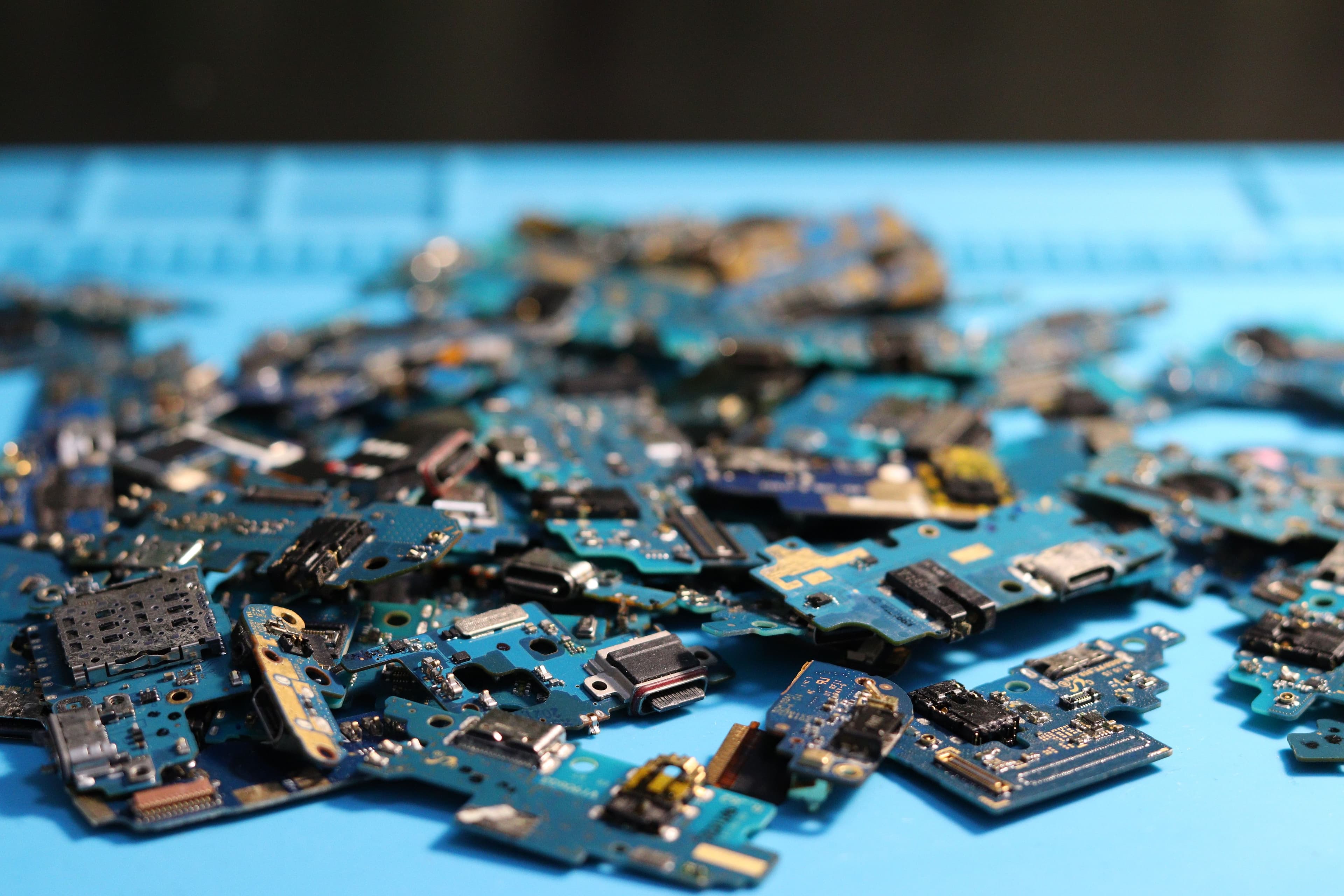
Every hardware company reaches the same moment. The prototype works, the demo lands, and now the product has to be built in volume. That crossing, from engineering into manufacturing, is the highest leverage point in the entire program. Get it right and production is boring in the best way. Get it wrong and you pay for it in every batch, for the life of the product.
The difference is rarely talent. It is readiness. Here is what hardware manufacturing readiness actually means, point by point, before a single panel gets built.
1. Lock the release before anything moves
Manufacturing should never start from an engineer's working folder. Before the product enters production, every deliverable needs to be a proper released version, not a draft someone exported on a Friday.
That means released hardware design files, Gerbers, the PCB stackup, the bill of materials, the mechanical build files, and version controlled firmware builds. Each one approved, each one allocated through a system that records what was released, on what date, by whom. That record is your traceability, and you will need it the first time a field unit misbehaves and you have to ask which exact version shipped.
Put a real gate between engineering and manufacturing. Nothing crosses it until it is released. This single discipline prevents more downstream chaos than any other step on this list.
2. Do not procure until DFM is done
Procurement is expensive to undo. Do not start it until the design for manufacturing phase is complete.
DFM is where the product is optimized to be built, not just to work. The goal is to cut the number of assembly cycles and the labor each unit demands. A product with hundreds of fiddly pieces and a product that snaps together cleanly may behave identically on the bench. At ten thousand or a million units, they are not remotely the same. Complex assembly burns time, effort, and money on every single unit, and that cost only grows as you scale.
DFM is not optional. It is the step that decides your unit economics in volume. Confirm it is done before parts are ordered and before the EMS clears its line for you.
3. Get documentation, training, and test jigs ready
A released design is necessary but not sufficient. The floor needs the instructions to build it correctly and consistently.
Assembly documentation, programming guides, and assembly training videos should all exist before the run starts. They turn tribal knowledge into a repeatable process that survives a shift change.
Then decide on test jigs. If you intend to scale, automate testing rather than leaning on one skilled technician to test, program, and judge every board by hand. Test jigs let you assemble volume with automated testing, automated programming, and automated loading, with consistent pass and fail limits on every unit. They also keep your firmware out of the manufacturing site, which matters if your IP lives in the code. Ask early whether your product needs jigs, because building them is itself a lead time.
4. Mechanical: decide mold versus print
For the enclosure, the question is volume. 3D printing is fine for low quantities and early units. For real volume production, tooling and injection molding is usually the right call, though the exact answer depends on the enclosure type and the numbers.
Make this decision deliberately, because mold tooling has a long lead time and a real cost that needs to sit in the plan, not surprise you halfway through.
5. Choose your production model, then keep control
There are two common ways to run production with an EMS. In the first, you carry the material cost and hand the EMS the parts for assembly, testing, and box build. In the second, you hand the EMS everything, and they procure, assemble, box build, and ship the finished product.
Either model works. What does not work is handing over control along with the work. Whichever route you choose, insist on random quality checks to confirm the process is holding, and use a software system where you can see every test report the EMS produces. Visibility is not micromanagement. It is the only way to catch drift before it becomes a shipment of defective units.
6. Plan for variation, not perfection
Manufacturing is a world of variables. Components vary within tolerance. Materials vary. Every unit you build will differ slightly from the gold sample. That is normal. The risk is not variation itself, it is uncontrolled variation that nobody recorded.
So measure and log every unit, and have the system tell you whether each one sits inside the acceptable range or outside it. A unit that ships out of range is a field failure waiting for a date. Capture it on the line, not in an RMA report.
Two records make this work in practice. Log every rework against the board it was performed on. And when a component goes out of stock and gets substituted for one not in the original BOM or not previously tested, document that change against the specific variant, through the system. An undocumented substitution is one of the most common and most expensive sources of field returns.
7. The box is the product
Your customer does not receive a PCB. They receive a box, and everything in it has to be right.
Build a delivery checklist that captures everything shipped with each unit. Screws, cables, connectors, batteries, accessories, all of it, so nothing gets missed. Keep that checklist in the system so every box build is verified as a complete unit.
Photograph each assembled product before box build. You are not going to open every unit back in your lab. If a unit tests good, you ship it. So the photo is your evidence. The loose screw, the misaligned gasket, the wrong label, the small things get caught when someone at your base reviews images, not when the customer opens the package. A platform like S3Suite is built to hold these per unit photos and records so the review actually happens.
Handle connectivity before assembly, not after. If the product takes a physical SIM and the case has to be opened to insert it, ship the SIMs or eSIMs to the EMS before assembly. Otherwise you reopen every single unit later, which is exactly the kind of avoidable rework that eats a launch. While you are at it, print and apply a proper quality label with IMEI, MAC ID, and the relevant FCC ID, CE ID, or certification marks for the chipsets and the product.
8. Respect the timeline
Standard production is not instant. Plan for a minimum of six to eight weeks, often more, for a standard run. Tooling, jigs, procurement lead times, and first article approval all live inside that window. Compressing the plan in your head does not compress reality. Build the schedule around the real numbers
9. After the line, every device should live in your system
When the run is finished, manufacturing readiness becomes manufacturing traceability. Every device should exist in your system with its complete record. The production test results, the variations, the component changes, the reworks, and the photos, all tied to the unit.
That gives you an unbroken trace from the manufacturing floor to the customer, and back again if the unit returns. You never lose a device in a lab or an EMS. You always know exactly what was built, how it tested, and what was done to it. That is the difference between a product line you can stand behind and one you are constantly chasing.
The bottom line
Hardware manufacturing readiness is not paperwork for its own sake. It is the set of decisions that determine whether scaling your product is a calm, repeatable process or a recurring fire. Release properly. Finish DFM before you procure. Document, automate, and label. Plan for variation and record all of it. Treat the box as the product. Trace every unit for life.
Do this before you cross the line into manufacturing, because you only cross it once per product, and the field remembers everything you skipped.
RNDSquare is the engineering services brand of RIOD Logic, with over ten years of hardware-first engineering across firmware, IoT, vision AI, and EV charging. We take products from design through DFM, test jig development, EMS coordination, and full production traceability, so what ships at scale matches what you proved on the bench.
Talk to our engineers about your manufacturing plan → rndsquare.com