Struggling with Product Development ?
Building a hardware product is exciting but for most startups, it quickly becomes overwhelming. What begins as a promising idea often turns into months of debugging, redesigns, unclear specifications, supplier issues, and certification delays. Unlike software, hardware doesn’t allow endless quick fixes after release. Every design decision impacts cost, manufacturability, compliance, and long-term support. Many innovative startups fail not because their ideas lack value, but because hardware product development is complex, expensive, and unforgiving. The good news? These challenges are solvable with the right approach and the right partners.
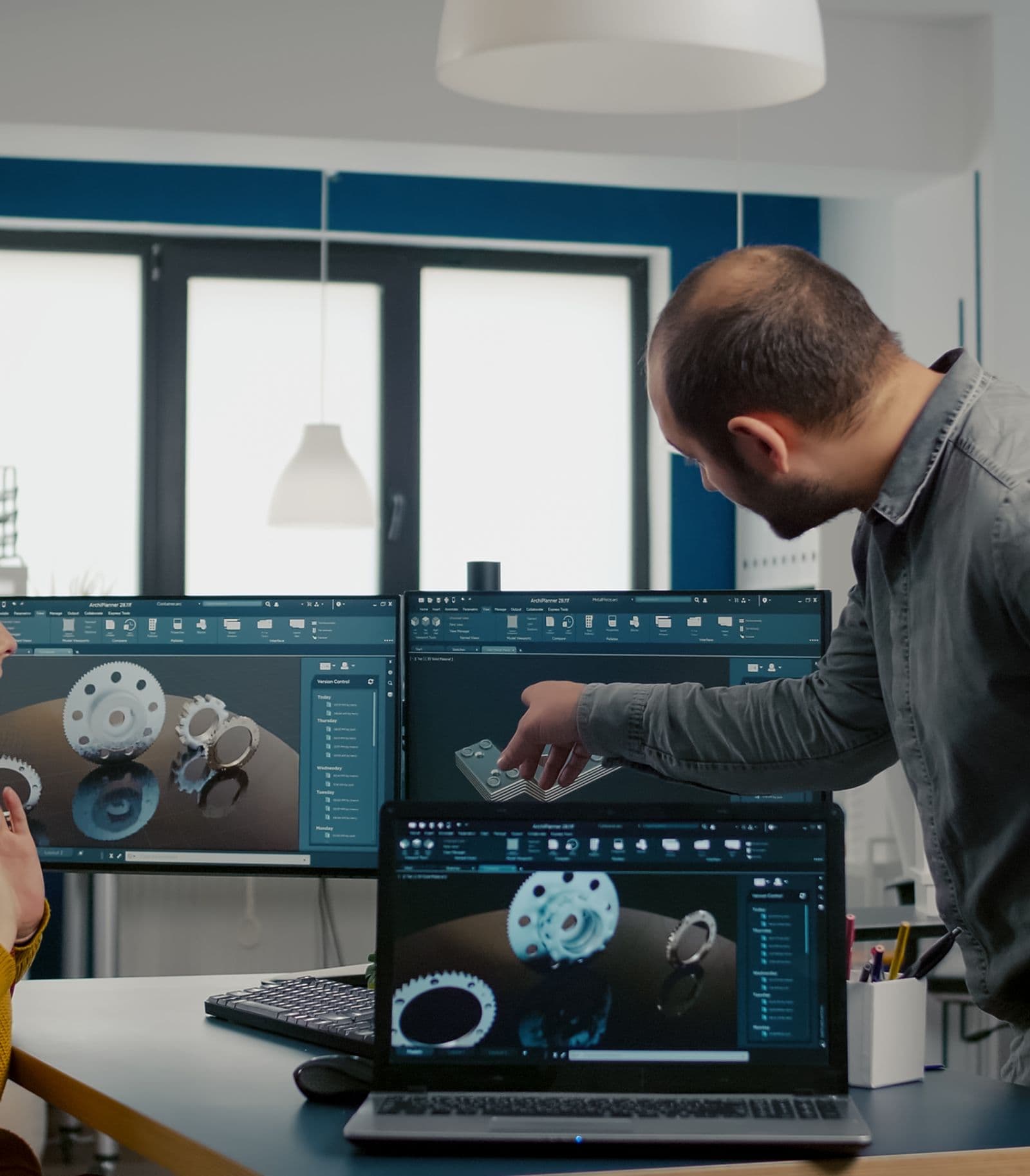
Why Hardware Product Development Is Harder Than It Looks
Hardware development is a multi-disciplinary journey involving electronics, firmware, mechanics, manufacturing, testing, certification, and lifecycle support. Each phase introduces risks that can slow progress or derail timelines.
Common struggles include:
- Difficulty converting concepts into functional prototypes
- Unclear or evolving product specifications
- Choosing the wrong technology stack early
- Manufacturing delays and quality inconsistencies
- Certification and compliance hurdles
- Rising costs and delayed time to market
For startups, these challenges are amplified by limited resources, tight budgets, and pressure from investors and early customers.
The Prototyping Trap: From Concept to Reality
One of the earliest roadblocks startups face is prototyping. Translating an idea into a working prototype requires multiple iterations across hardware design, firmware logic, and mechanical integration. Each iteration takes time and money.
Without proper design-for-manufacturing (DFM) thinking, prototypes often:
- Work in the lab but fail in real-world conditions
- Use components that are hard to source at scale
- Ignore power, thermal, or enclosure constraints
- Require costly redesigns later
Effective prototyping is not about building something quickly it’s about building something correctly, with scalability in mind from day one.
Defining Specifications: The Foundation of Success
Many startups rush into development without locking down clear specifications. This leads to constant scope changes, missed expectations, and rework.
Strong specification development answers questions like:
- What exact problem does the product solve?
- Who is the target user?
- What are the functional, performance, and environmental requirements?
- What standards and certifications must it comply with?
- What cost targets must be achieved?
Clear specifications act as a single source of truth, aligning engineering, manufacturing, and business teams while reducing ambiguity and risk.
Choosing the Right Technology Stack Early
Selecting the right technology is one of the most critical and irreversible decisions in hardware development. The wrong choice can lock a product into higher costs, limited scalability, or performance constraints.
Technology decisions typically include:
- MCU vs MPU vs Linux-based platforms
- Connectivity options (Wi-Fi, BLE, Cellular, LPWAN)
- Sensor selection
- Firmware architecture
- Cloud and backend integration
These decisions should balance performance, cost, availability, power consumption, and long-term support. Startups often benefit from guidance rooted in real-world deployment experience not theoretical comparisons.
Manufacturing Roadblocks: Where Many Products Stall
Getting a product manufactured reliably at scale is often harder than building the first prototype. Startups struggle with:
- Identifying reliable manufacturers
- Managing BOM costs and component availability
- Scaling from small batches to mass production
- Ensuring consistent quality across units
Manufacturing-ready design considers:
- Component sourcing and alternates
- Assembly complexity
- Testability
- Yield optimization
A product designed without manufacturing in mind will almost always face delays and cost overruns.
Quality Control Is Not Optional
Quality issues discovered late in development or worse, after launch can permanently damage a startup’s credibility. Robust quality control ensures:
- Hardware reliability
- Firmware stability
- Compliance with safety and industry standards
- Reduced returns and support costs
Quality must be engineered into the product through testing strategies, validation plans, and production test setups not inspected in at the end.
Certification: The Hidden Bottleneck
Certification is one of the most underestimated aspects of hardware development. Whether it’s FCC, CE, EMC, safety, or industry-specific certifications, navigating compliance can be complex and time-consuming.
Startups often face:
- Unexpected redesigns due to certification failures
- Delays caused by missing documentation
- Higher costs from late-stage compliance fixes
Early certification planning combined with pre-compliance testing can save months of delay and significant expense.
Lifecycle Support: Beyond Product Launch
Launching a product is not the finish line it’s the beginning of its lifecycle. Hardware products require:
- Firmware updates
- Component replacements
- Cost-reduction revisions
- Field issue resolution
Without a lifecycle strategy, startups struggle to maintain product quality and customer satisfaction as volumes grow. Long-term success depends on planning for maintenance, scalability, and evolution from the start.
Time to Market: The Startup Survival Factor
In competitive markets, speed matters but not at the cost of quality. Delayed launches mean:
- Missed market opportunities
- Increased burn rate
- Lost investor confidence
The key is accelerating development without cutting corners, which requires experience, structured processes, and parallel execution across engineering and manufacturing.
Why Partnering Makes a Difference
Building an in-house hardware team is expensive and time-consuming. For startups, partnering with an experienced product engineering company offers:
- Access to seasoned engineers without long-term hiring costs
- Proven development frameworks
- Faster problem-solving
- Reduced trial-and-error
Instead of learning through costly mistakes, startups can leverage industry know-how to move faster and smarter.
From Concept to Production: A Structured Approach
Successful hardware development follows a clear progression:
- Specification Development – Defining clear product requirements
- Technology Selection – Choosing scalable and reliable platforms
- Prototyping & Validation – Iterative, test-driven development
- Manufacturing Readiness – DFM, BOM optimization, test planning
- Certification Support – Compliance from early stages
- Production & Scaling – Reliable mass manufacturing
- Lifecycle Management – Ongoing support and optimization
This structured approach minimizes risk while maximizing speed and efficiency.
A Partner, Not Just a Service Provider
True product development success comes from collaboration. The right partner doesn’t just execute tasks—they understand your vision, challenge assumptions, and guide decisions that affect long-term outcomes.
By offloading the complexities of hardware development, startups can focus on:
- Refining their product vision
- Engaging customers
- Building their business
Turning Ideas into Market-Ready Products
Hardware development doesn’t have to be a bottleneck. With the right expertise, clear specifications, and a manufacturing-first mindset, startups can overcome common challenges and bring reliable, scalable products to market.
If you’re struggling with prototyping, technology choices, manufacturing, or certification, you don’t have to navigate it alone. The journey from idea to production is complexbut with the right partner, it becomes achievable, efficient, and far less risky.
Let your innovation lead the way while the complexities are handled by experience.
 Related Blogs